How to Import General Ledger into QuickBooks Online Using SaasAnt Transactions Online
August 21, 2025
SaasAnt Transactions Online simplifies this process by offering an intuitive interface for uploading, mapping, and validating data. Whether you're managing one company or multiple, STO ensures seamless data migration and accurate financial records. Importing a General Ledger (GL) into QuickBooks Online (QBO) ensures accurate financial reporting and smooth business operations. SaasAnt Transactions Online (STO) simplifies the import process by allowing you to upload and map data quickly and efficiently.
Why Use SaasAnt Transactions Online for General Ledger Imports?
Say goodbye to manual data entry and ensure error-free General Ledger imports with SaasAnt Transactions Online. You can simplify your import process, improve accuracy, and save time with just a few clicks.
Benefits of Using SaasAnt Transaction for GL Imports
Faster Data Entry: Save valuable time by automating GL imports.
Error-Free Imports: STO automatically detects and highlights errors for correction.
Multi-Company Support: Easily handle imports for multiple company accounts with the Scale and Automation plan.
Improved Compliance: Maintain accurate financial records to ensure regulatory compliance.
This article provides a step-by-step guide on uploading GL using SaasAnt Transaction Online
1) Login to SaasAnt Transaction Online
2) Select the Bulk Upload Tab.
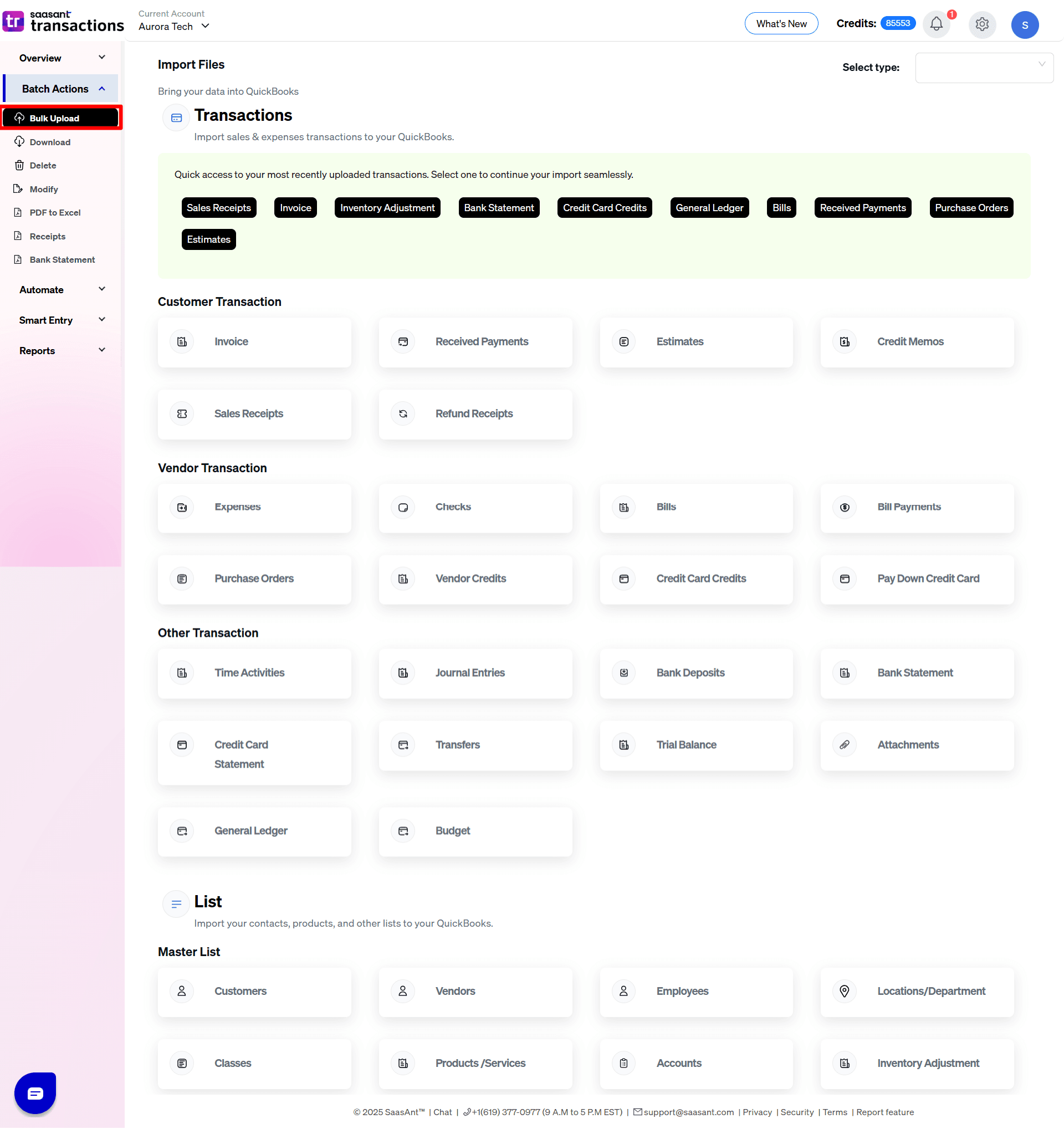
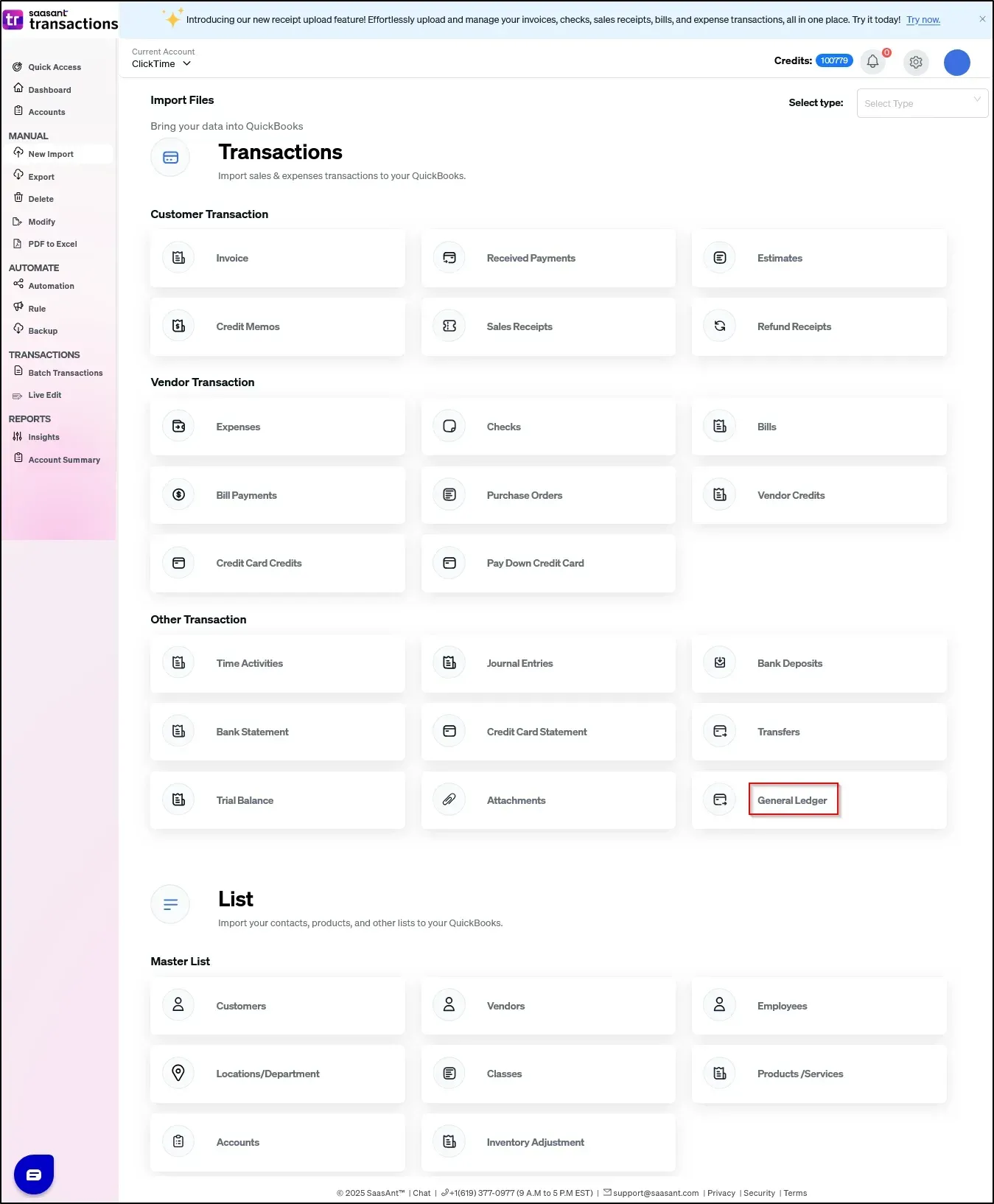
3) Choose the QuickBooks entity as "General Ledger."
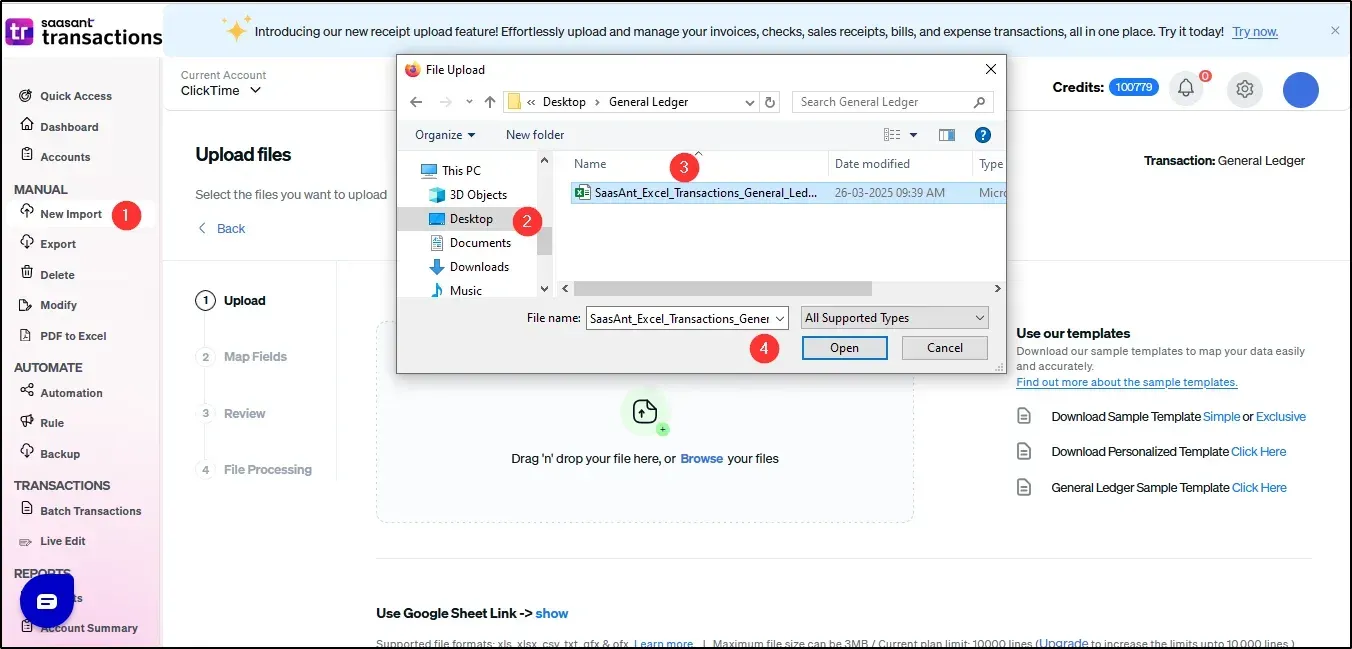
4) Select the file you want to upload
5) Set up the Mapping of the columns in your General Ledger.
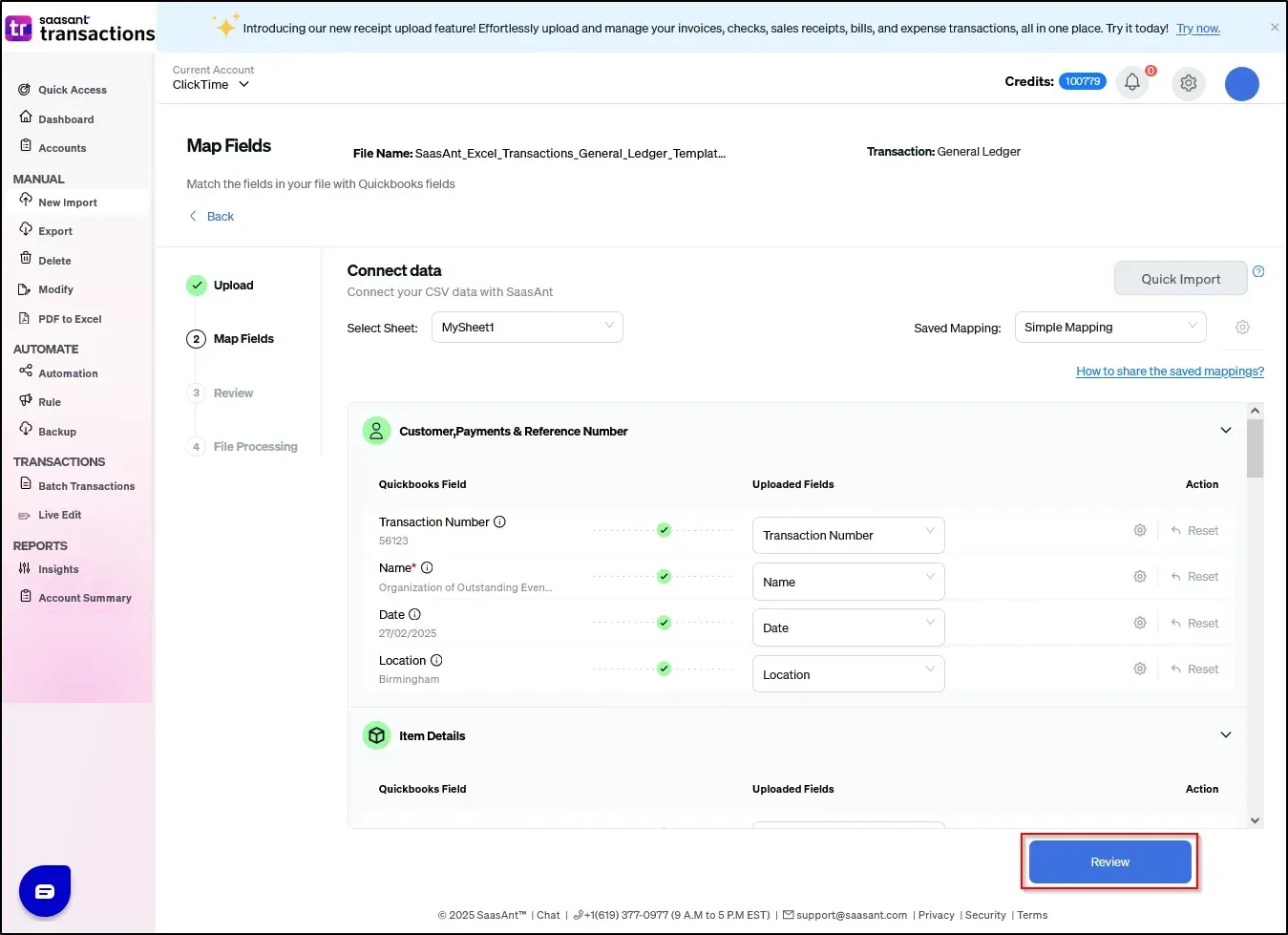
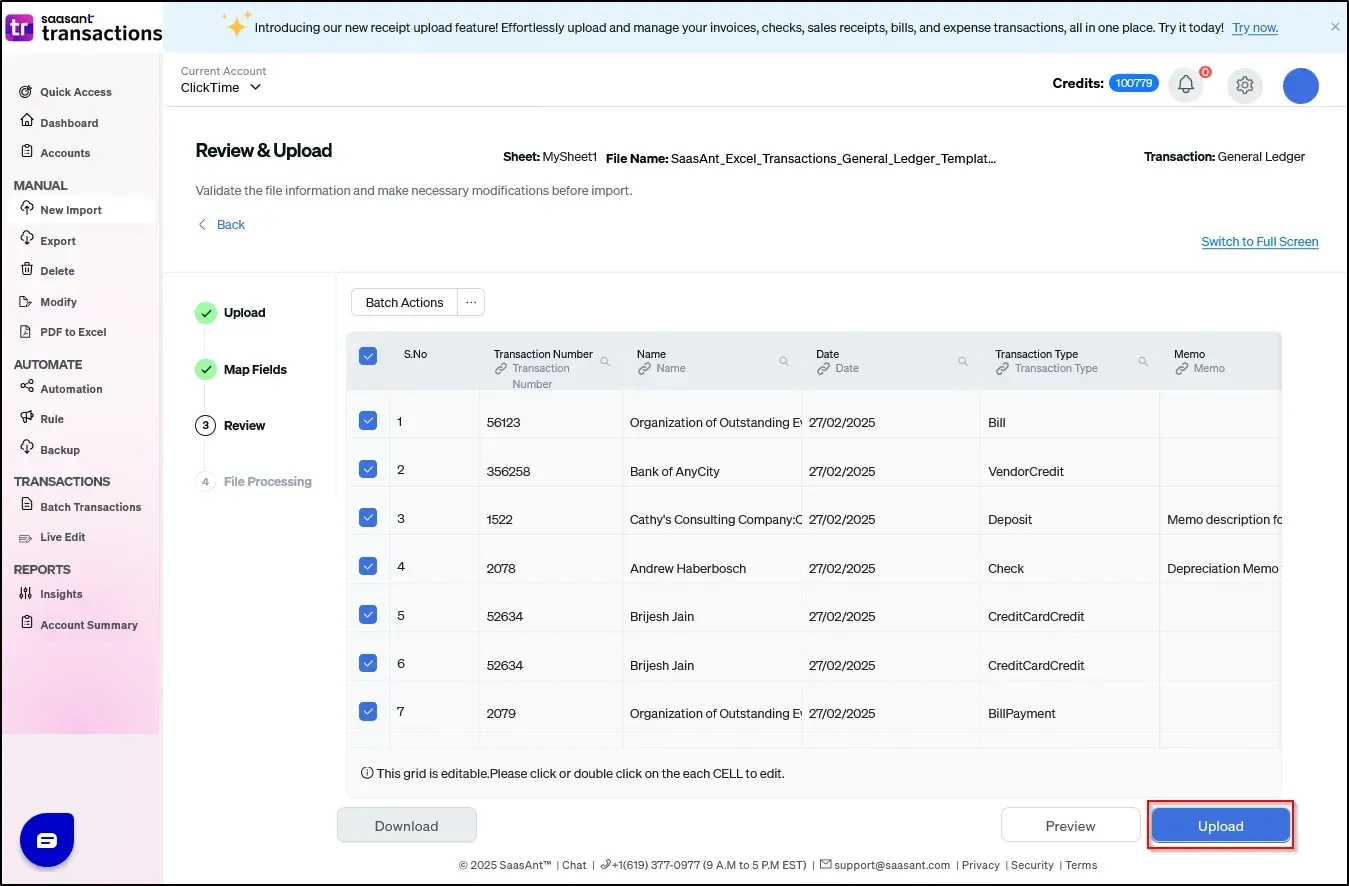
6) Select the Upload Tab
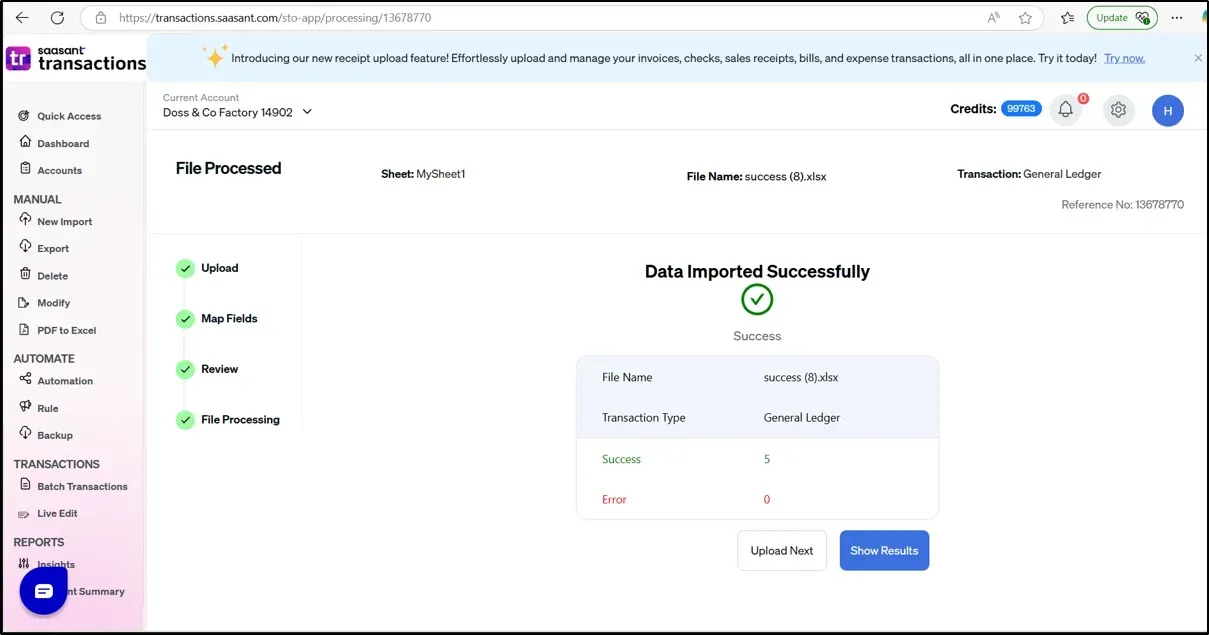
The General Ledger was imported successfully into Quickbooks.
General Ledger Settings Reference Guide
The General Ledger Settings panel manages global automation behaviors, date configurations, data validation overrides, and account lookup logic specifically optimized for importing ledger entries.
Automation & Global Rules
Do you want to apply suggestions automatically?
What it does: Uses automated matching logic and default fallback values to resolve minor data gaps or map closely matched values during the import process.
Do you want to create Customers, Vendors, Locations, Classes, and Accounts automatically?
What it does: Instantly builds new contact profiles or chart of accounts records in QuickBooks during the import if a name or account in your file does not exist, preventing validation failures.
Do you want to skip the mapping screen?
What it does: Streamlines your workflow by completely bypassing the Step 2 mapping screen on future uploads if you are using a predefined or recognized template layout.
Date Format
What it does: Sets the specific date format pattern (e.g., DD/MM/YYYY) to tell the parser exactly how to interpret the date rows in your upload file, preventing day/month translation issues.
Transaction Control & Data Formatting
Do you want to use the Transaction Reference Numbers from the uploaded file?
What it does: Instructs QuickBooks to record the explicit transaction or document reference numbers provided in your import file instead of generating its own sequential numbers.
Do you want to disable the optimisation for the batch import?
What it does: Slows down processing from high-speed parallel bundles to a line-by-line verification import. This is ideal for detailed auditing or troubleshooting tricky entry sequences.
Do you want to process the transactions with Duplicate Reference Numbers?
What it does: Allows the system to import transactions even if their reference numbers match entries already existing inside QuickBooks. (Note: Enabling this can impact your overall import speed).
Do you want to Import each Line as a Separate Transaction?
What it does: Treats every single row within your upload file as an entirely unique, separate transaction in QuickBooks rather than grouping identical reference numbers together.
Convert Negative Amounts to Positive
What it does: Flips negative financial values to positive numbers during processing to comply with QuickBooks' standard requirement for positive transaction entries.
Truncate Text If It Exceeds QuickBooks Limits
What it does: Automatically shortens text fields (like Memos, Notes, or Descriptions) that surpass QuickBooks' character limits to avoid structural error rejections.
Do you want to auto generate Transaction Numbers If Missing in File?
What it does: Automatically creates and assigns sequential document reference numbers if your spreadsheet leaves those fields empty.
Validation, Overwrites & Lookups
Do you want to stop the import if the payment due amount mismatches?
What it does: Hard-stops the import and flags an error if the amount in a payment file does not match the remaining balance of its corresponding Invoice or Bill.
Do you want to Update the address (Customer & Vendor) in QuickBooks from the file?
What it does: Overwrites existing billing/shipping address text stored in your QuickBooks profiles with the new address data pulled directly from your upload file.
Do you want to send invoice emails to your customers after the invoice import automatically?
What it does: Instantly triggers QuickBooks to email newly imported or updated invoices to their respective customer emails immediately following a successful import.
Do you want to identify the vendor based on their Account Number?
What it does: Instructs SaasAnt to use the unique vendor account number saved inside your QuickBooks files to match up and map your supplier rows cleanly.
Find GL Account by Account Number
What it does: Forces SaasAnt to find and match your General Ledger accounts inside QuickBooks using their numerical chart of account codes rather than matching by text name.
Frequently Asked Questions (FAQs)
Is this feature available for both Single Company and Multi-Company Plans?
Ans: This feature is available only for the Scale and Automation plan
What file types does SaasAnt Transactions Online support for QuickBooks Online imports?
For almost all entities in QuickBooks Online, SaasAnt Transactions Online supports XLS, XLSX, XLSM, CSV, TXT, Google Sheets, and IIF. Additionally, PDF, PNG, and JPEG are supported only for Receipts, Invoices, Bank Statements, Checks, and Expenses.
Can I import historical GL data into QBO using STO?
Ans: Yes, you can import historical data by ensuring that the date fields in your GL are correctly mapped before uploading.
How can I review errors during the import process?
Ans: If there are any errors during import, STO provides a detailed error report identifying which rows failed and the reasons for failure. You can download this report and fix the mistakes before re-uploading.
If you have any questions or need assistance, please contact us at support@saasant.com.