How to Export Sales Tax from QuickBooks Desktop using SaasAnt Transactions Desktop
March 10, 2026
SaasAnt Transactions Desktop enables QuickBooks Desktop users to export sales tax records efficiently in bulk. This guide provides clear steps to export your sales tax data seamlessly.
Prerequisites
Ensure you have administrative access to QuickBooks Desktop and a stable internet connection for the initial setup. Verify that your QuickBooks company file is open and updated to the latest version.
Video Tutorial for How to Export Data from QuickBooks Desktop using SaasAnt Transactions Desktop:
Steps for Exporting Sales Tax from QuickBooks Desktop
Step 1: Download, Install, and Connect SaasAnt
Before exporting sales tax, set up the SaasAnt Transactions Desktop application.
Download: Visit the Saasant.com website and download the SaasAnt Transactions Desktop application.
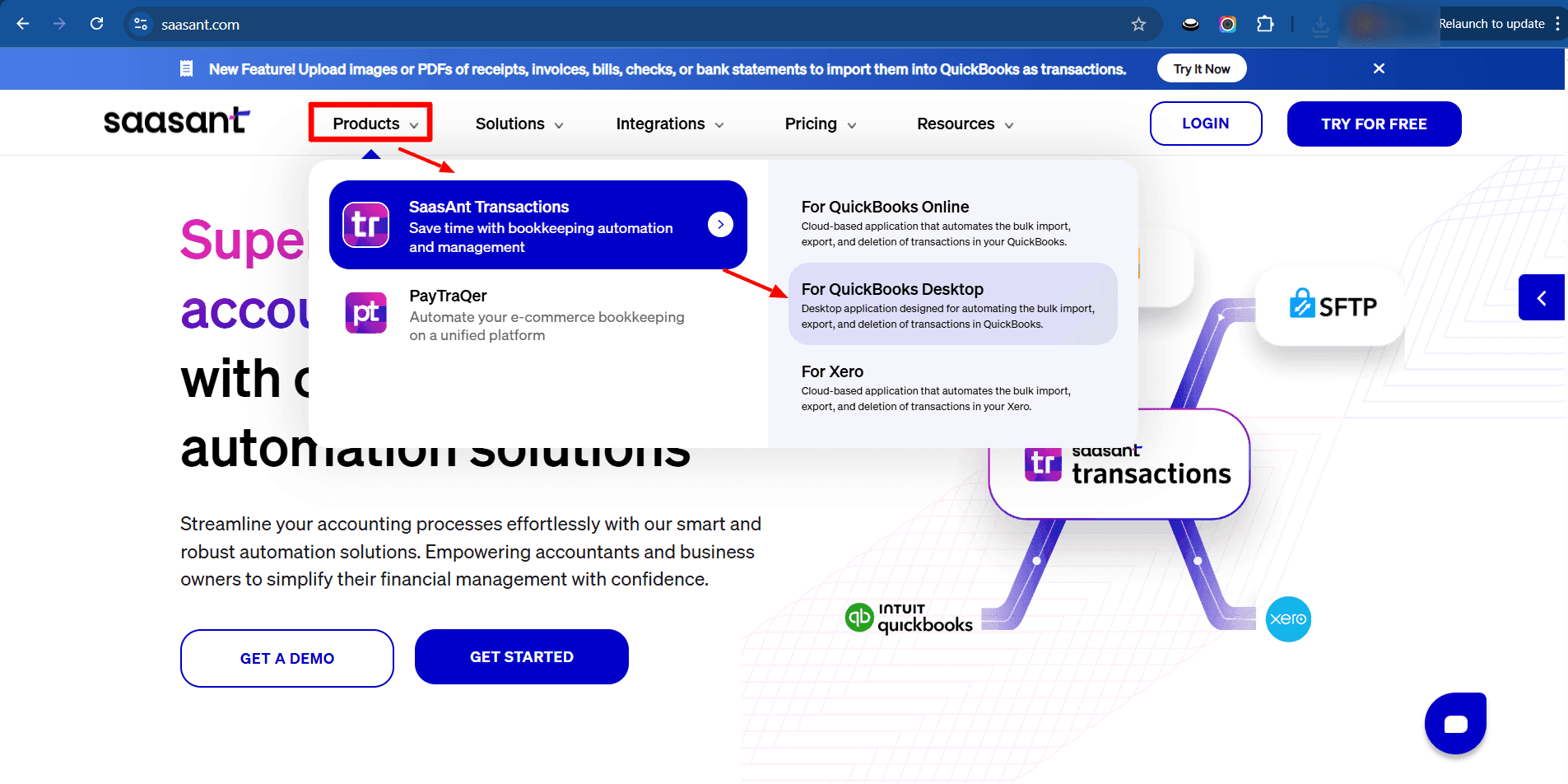
Install: Run the installer file and follow the prompts to complete installation on your computer.
Connect: Launch the SaasAnt application, then connect it to your QuickBooks Desktop company file using the on-screen instructions to authorize data access.
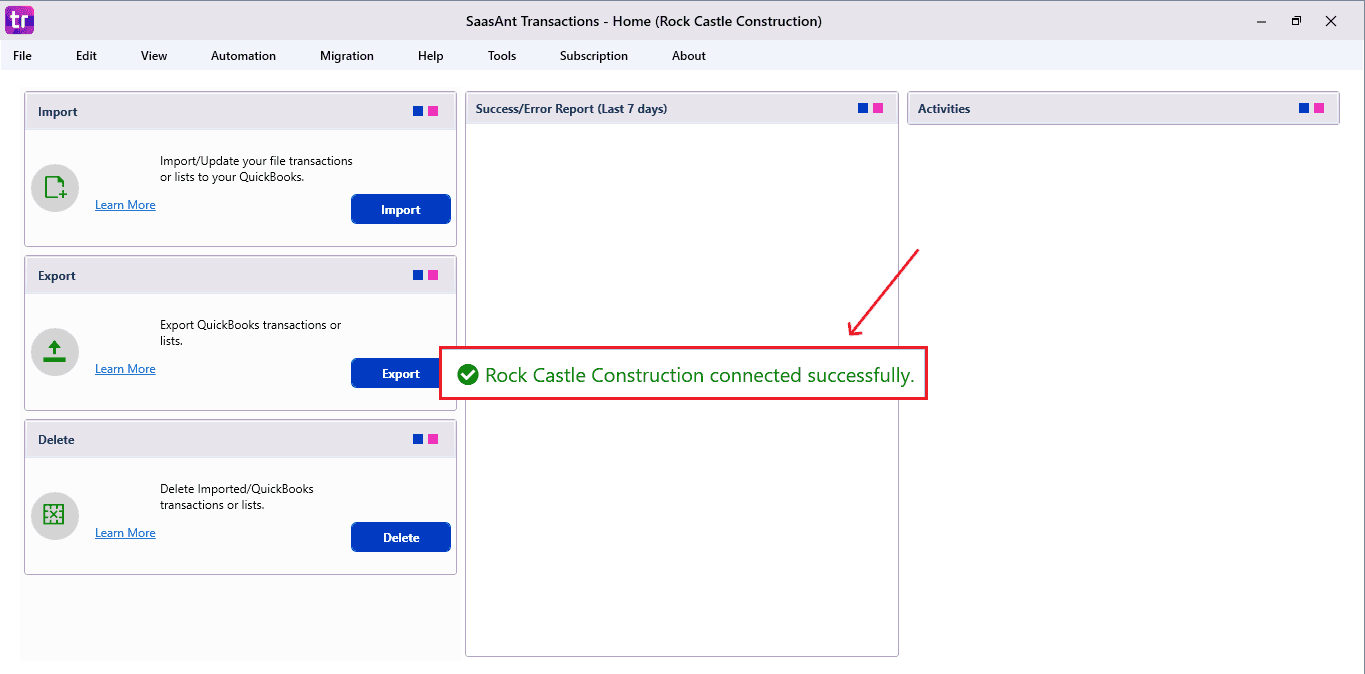
Step 2: Configure Export Settings
Access the Export module in SaasAnt Transactions Desktop after connecting to QuickBooks.
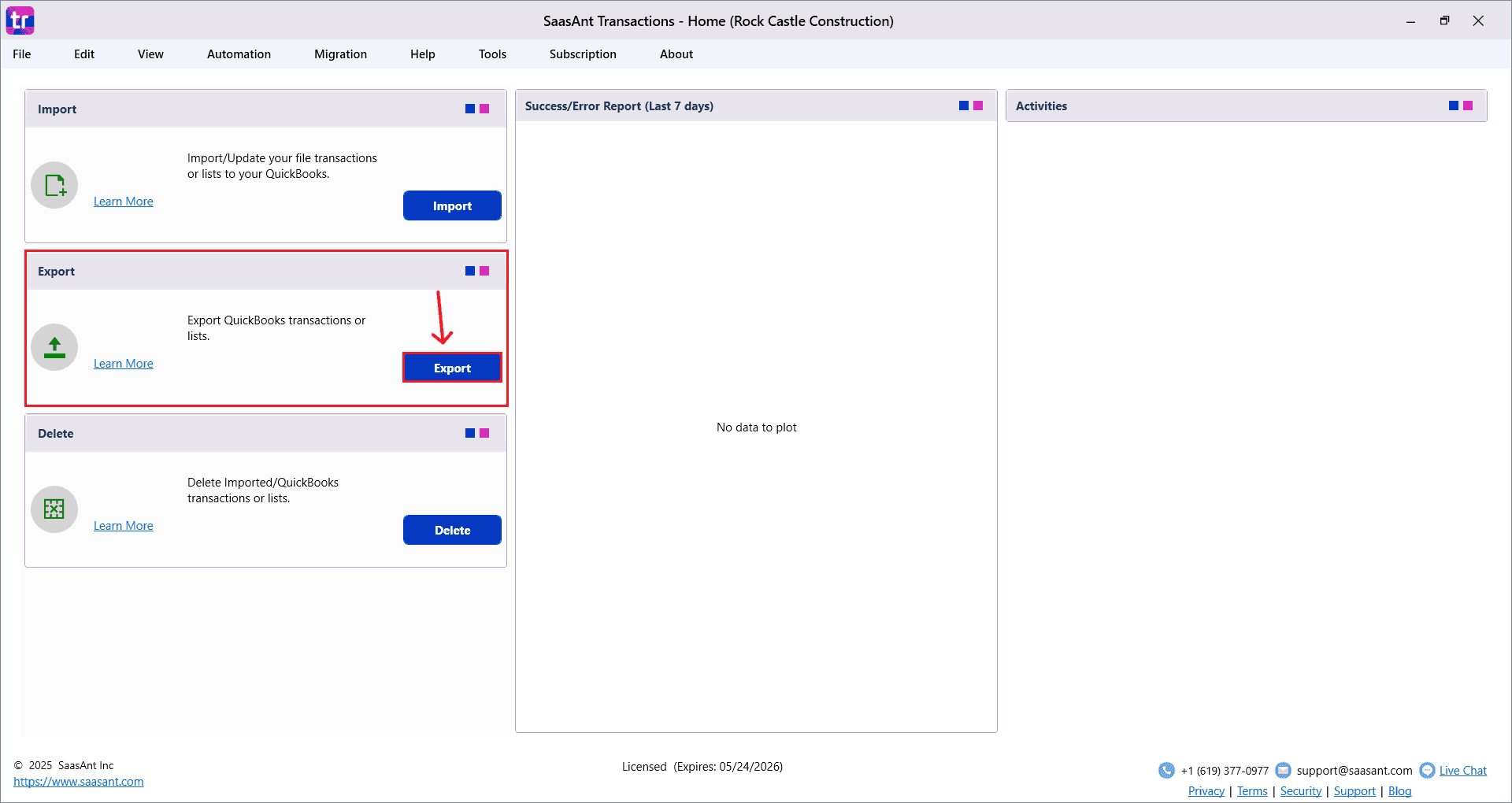
Select Sales Tax as the QuickBooks data type to focus on sales tax data.
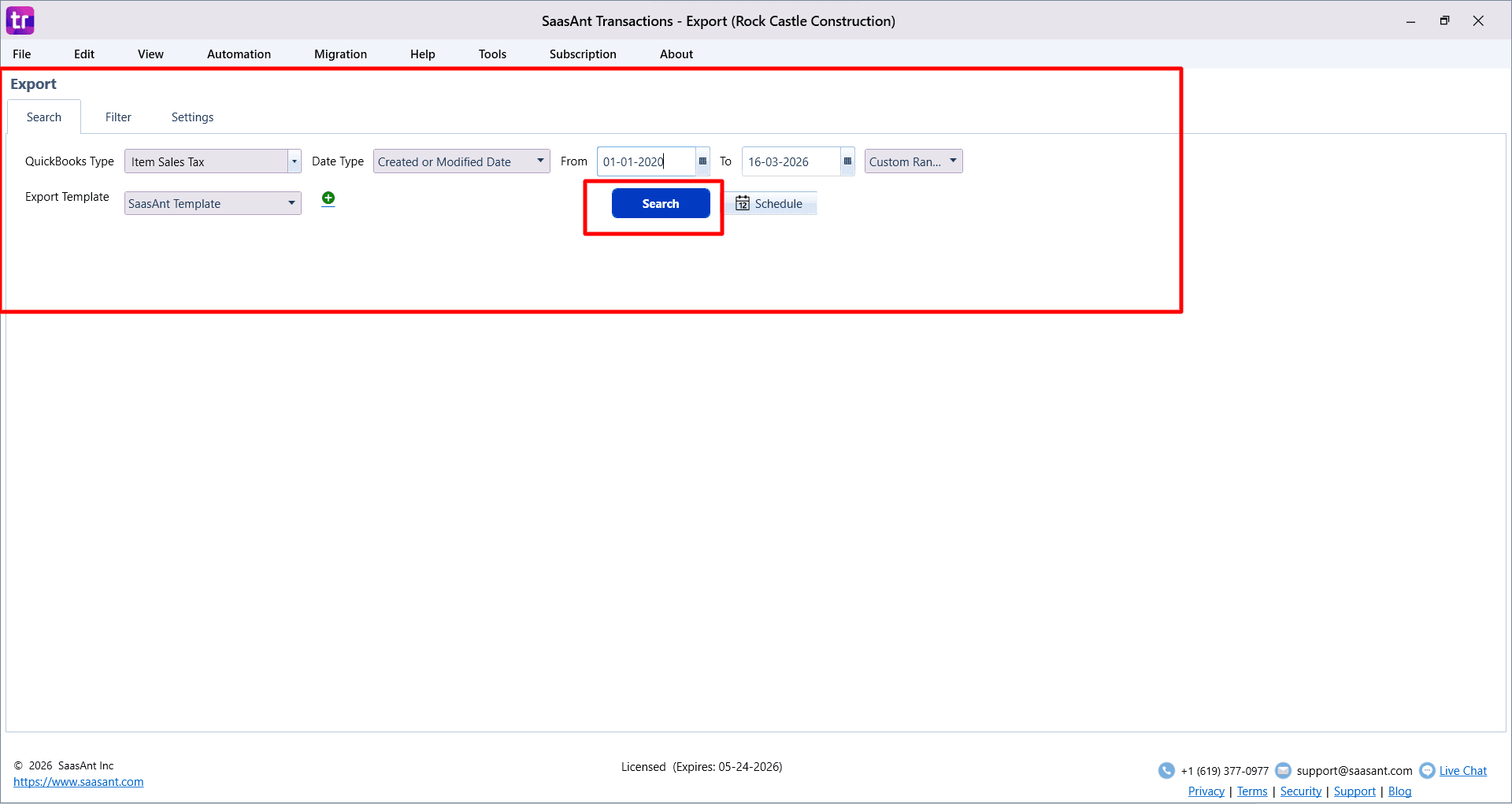
Step 3: Set Date Range
For sales tax exports, use Created/Modified Date to control the timeframe.
Created/Modified Date refers to when the sales tax record was created in QuickBooks or last updated.
Select a range using the custom date picker, or pick from quick options like Today, From yesterday, Last 7 days, Last 30 days, etc.
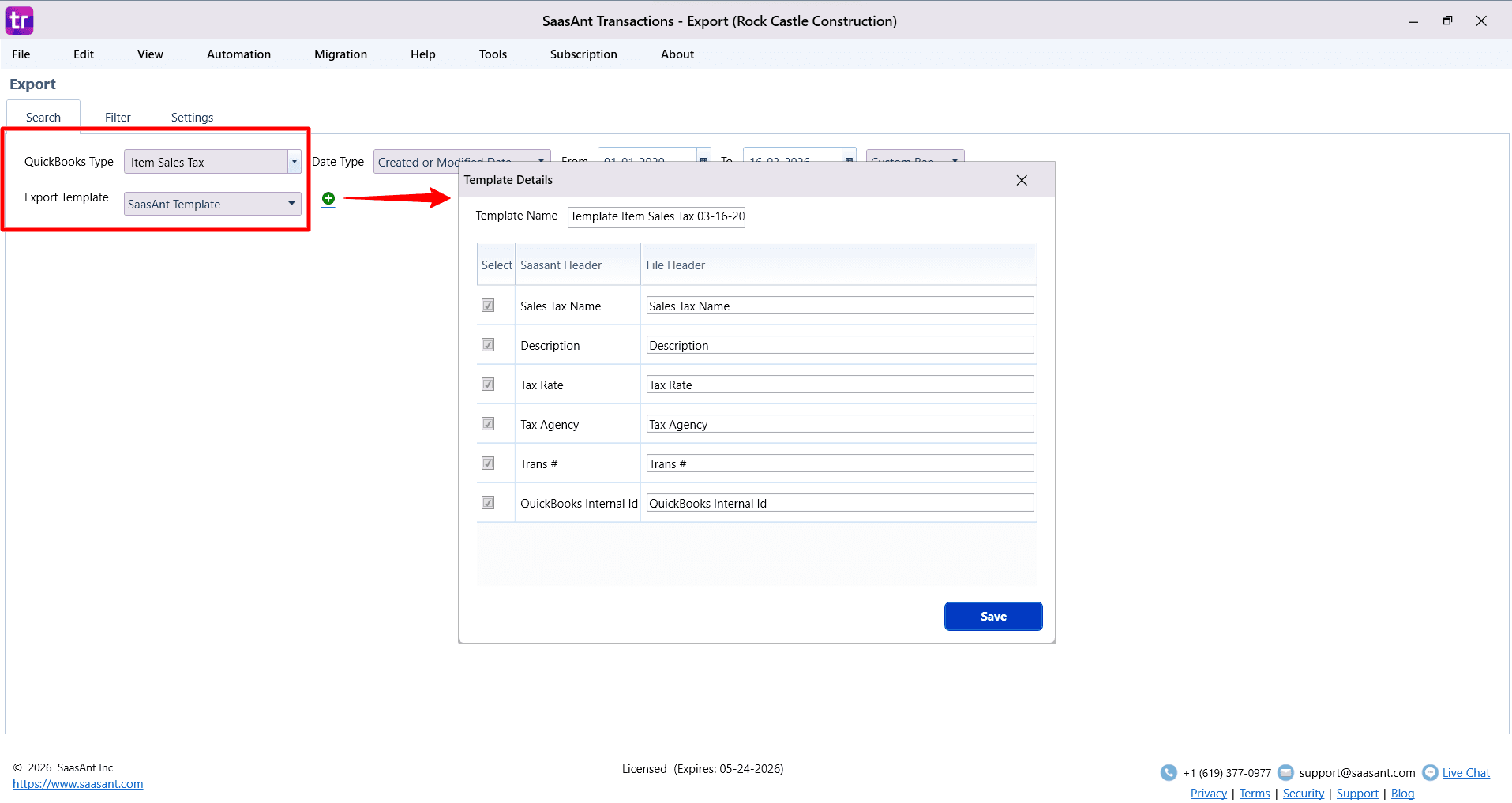
Step 4: Set Export Template
Use the default SaasAnt template for standard sales tax fields.
To customize, click the “+” icon, select desired fields (for example: tax item name, tax rate, tax agency, tax code, tax type, description, active status if available), name the template, and save it for reuse.
Step 5: Apply Filters (Optional)
No filters are available for Sales Tax in the Export Filter tab.
Use the Date Range in Step 3 to narrow the results before you run the search.
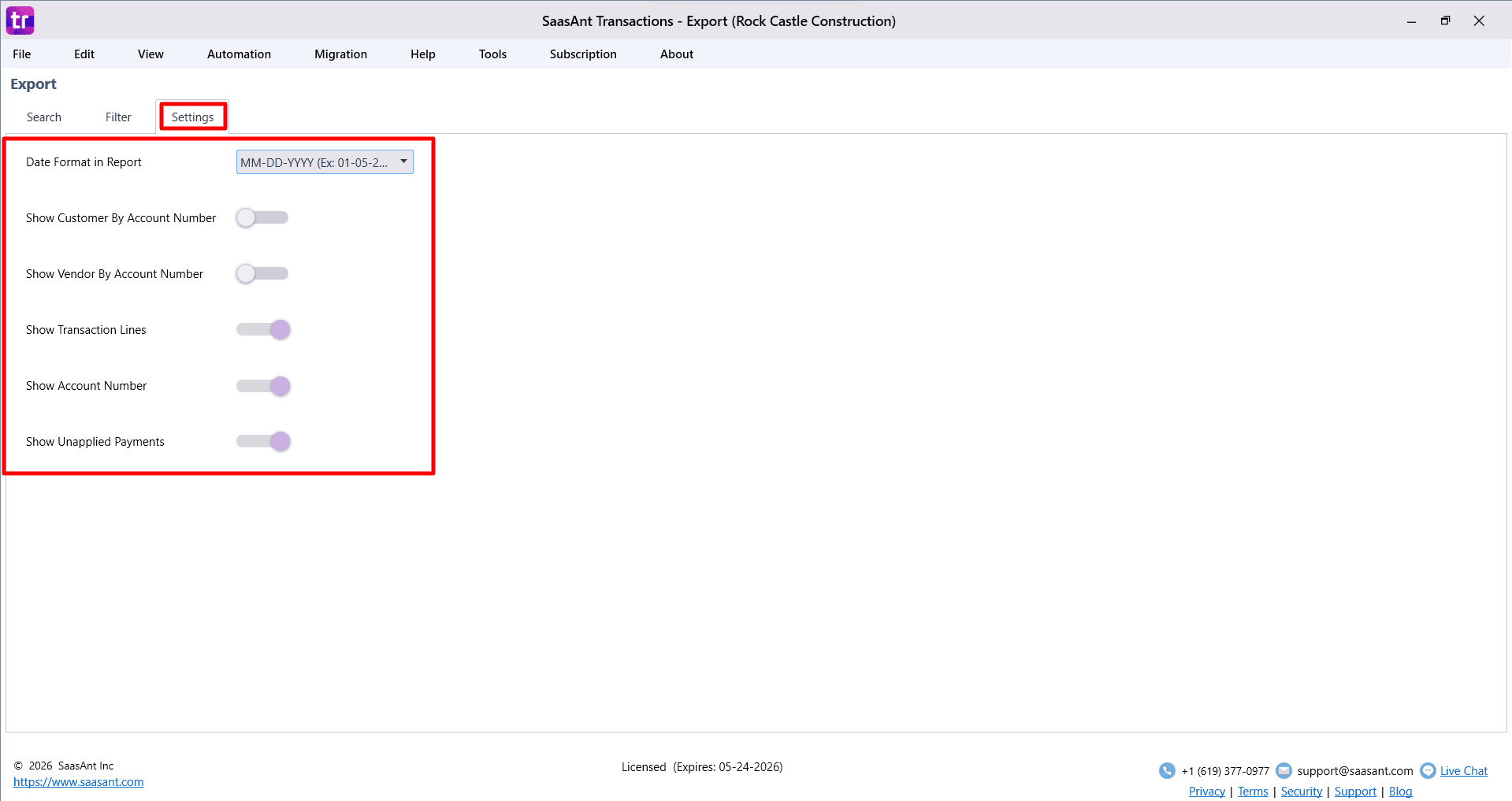
Step 6: Adjust Settings
Customize the export output via settings to match your reporting or integration needs.
Date Format: Switch between formats like MM/DD/YYYY or DD/MM/YYYY for compatibility with other systems.
Show Account Numbers: Enable this only if your sales tax export includes account-related fields and you want account numbers shown alongside names.
Toggle settings on or off as needed.
Step 7: Run Search
Click Search to retrieve matching sales tax records based on your date range and settings. Review the preview before proceeding to export.
Step 8: Review and Download Results
SaasAnt displays sales tax records matching your criteria.
Select your preferred format: Excel for spreadsheets with formulas or CSV for simple data import elsewhere.
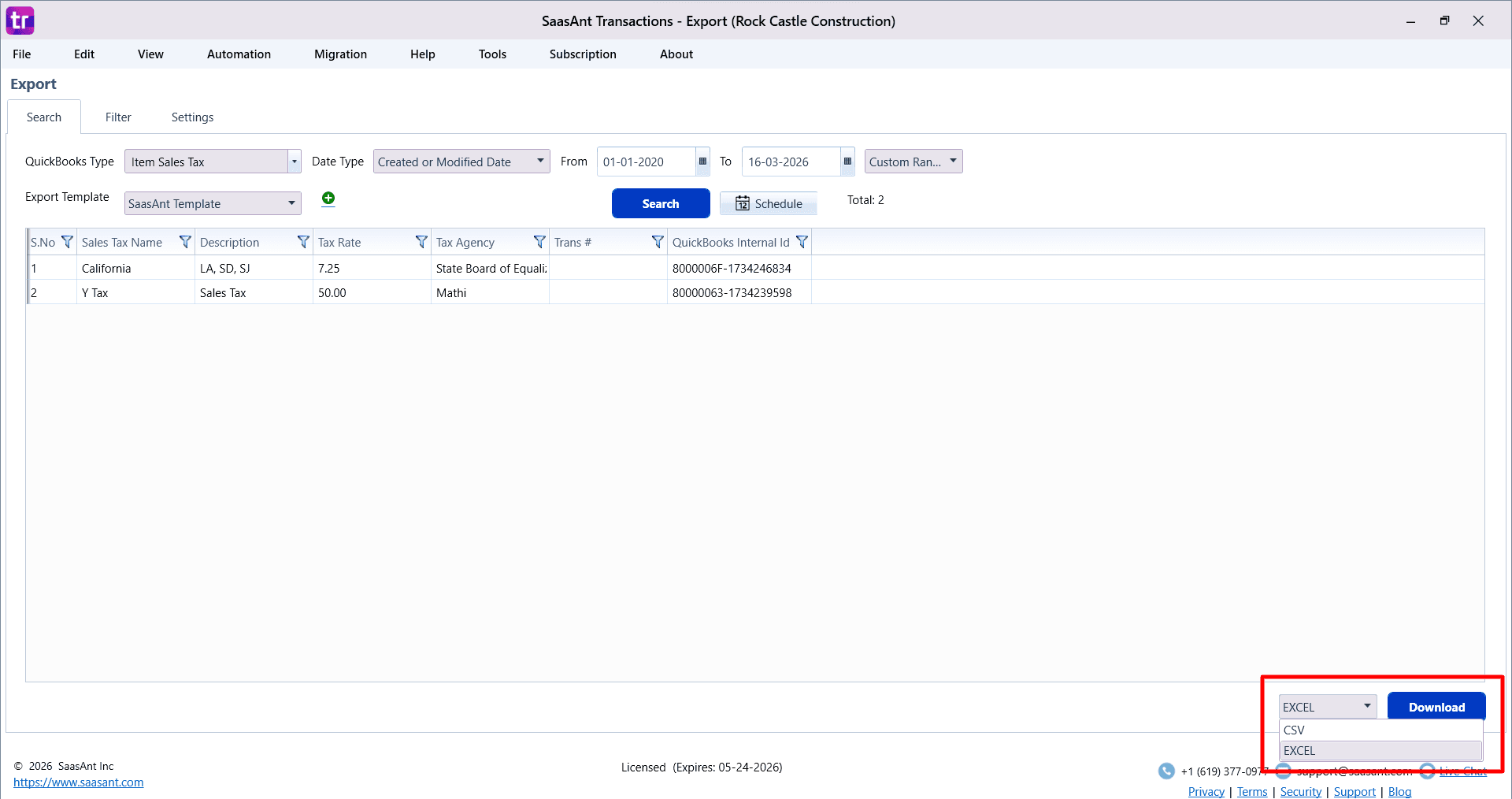
Click Download to export the file to your computer. Verify the downloaded file contains all expected sales tax data before use.
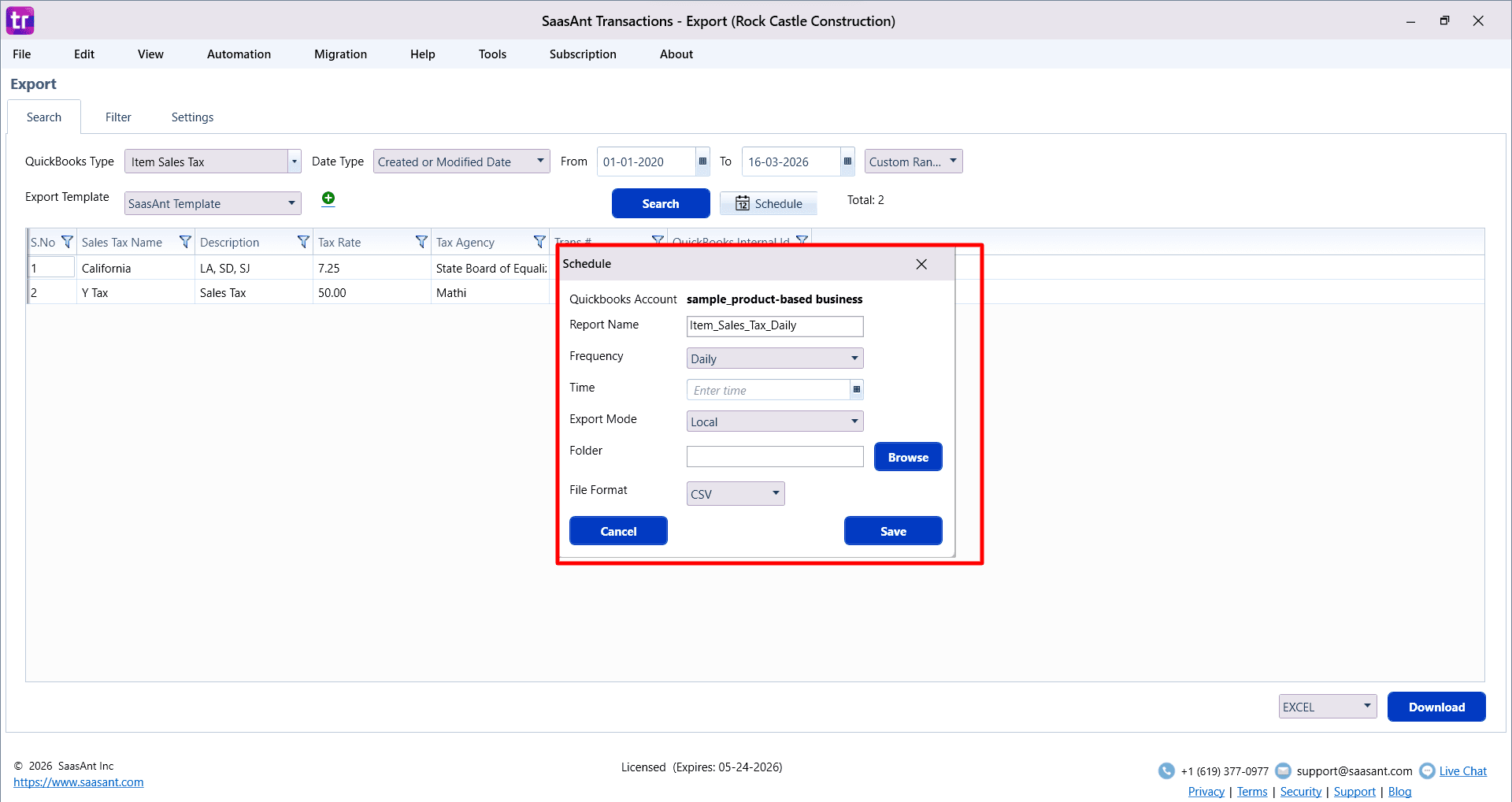
Step 9: Schedule Recurring Exports (Optional)
SaasAnt offers automated scheduling for regular sales tax exports without manual intervention.
Provide a Report Name for easy identification.
Set Frequency as Daily, Weekly, Monthly, or use a Cron Expression for advanced scheduling.
Specify the export Time.
Choose Export Mode: Local folder, FTP or SFTP server, Email delivery, or Database connection.
Select the destination Folder and File Format (Excel or CSV).
Click Save to activate the schedule. Monitor scheduled jobs via the SaasAnt dashboard for status and logs.