How to Export Locations and Departments from QuickBooks Online using SaasAnt Transactions Online
February 24, 2026
At a Glance
The Solution: Use SaasAnt's Download (Export) feature to extract your complete Location/Department List into a clean Excel/CSV format.
The Key Benefit: Native QuickBooks Online exports often struggle to display clear hierarchical views (Parent vs. Child locations). SaasAnt exports your locations in a flat file, clearly separating the location name from its parent location, which is critical when mapping QBO segments to a new ERP or reporting tool.
Quick Steps: Quick Access > Download (Export) > Select Location / Department > Search > Download.
Getting Started
Install: Get SaasAnt Transactions Online from the QuickBooks App Store and start a free trial.
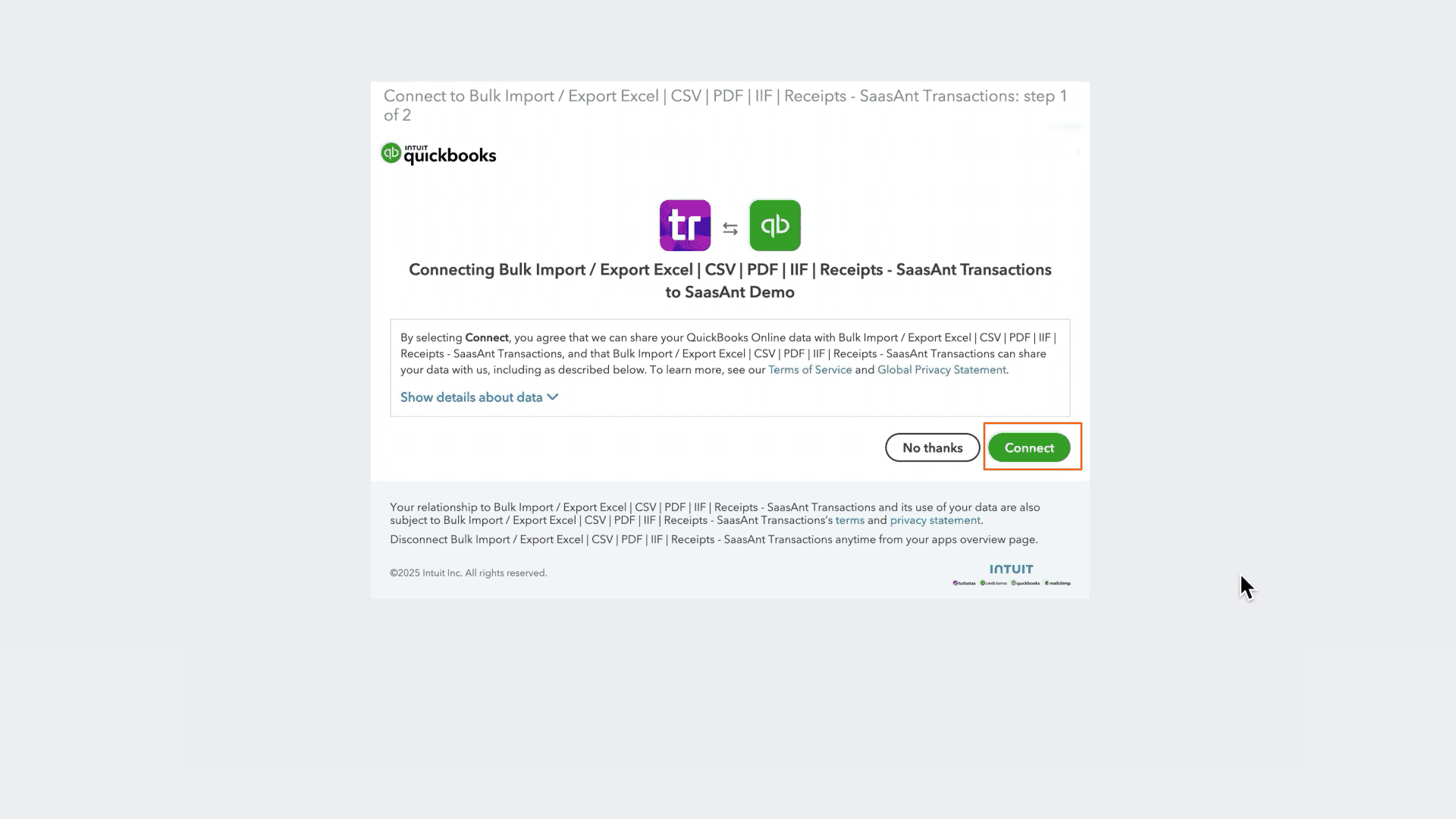
Connect: Securely authorize the connection to your QuickBooks Online company. We do not store your customer data; we simply process the transfer.
How to Export Locations and Departments Step-by-Step
1. Navigate to Download (Export)
From the Quick Access, click the Download (Export) button listed in the main menu.
2. Select Entity
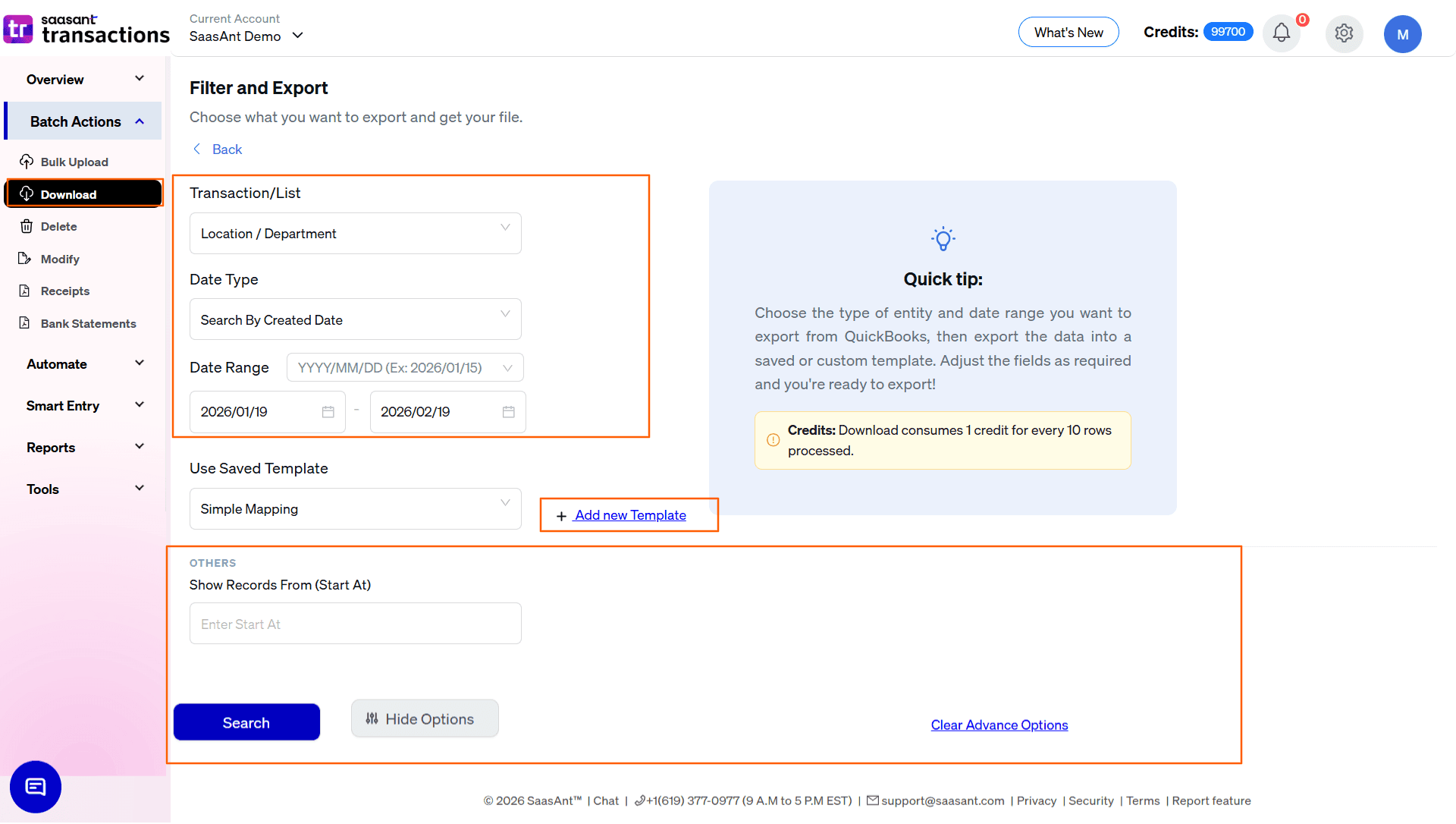
In the Transaction/List dropdown, select Location / Department. (Note: Depending on your QBO settings, you might call this "Locations", "Departments", "Divisions", or "Stores"—they all pull from this same entity).
3. Select Date Strategy
Because Locations are "Lists," choose the Date Type that fits your reporting needs:
Search By Created Date: Exports based on when the location was first added to QuickBooks.
Search By Last Updated Date: Exports based on when the location record was last modified (e.g., if a sub-location was moved under a new parent location).
4. Set Date Range & Format
Range: Enter your Start and End dates. To ensure you capture your entire list of active and historical locations, enter a start date far in the past (e.g., 01/01/2000) to the current date.
Format: Use the dropdown inside the date box to pick your preferred format (e.g., MM/DD/YYYY).
5. Select Template
In the Use Saved Template dropdown, leave it as Simple Mapping for a standard export.
Tip: Create a custom template using the Add new template option if you are exporting this list to populate segment IDs in a third-party software like NetSuite or Salesforce.
6. Configure Filters & Search
Because the Location list is typically small, there are no complex transaction filters:
Show Records From (Start At): Use this if you have a massive, multi-tiered franchise list and need to chunk the export (e.g., run 1–2,500, then 2,501+).
Click the blue Search button to preview results.
7. Review & Download
After clicking Search, the data preview grid will load:
Verify Hierarchy: Review the Name and Parent Location columns. Sub-locations will be displayed clearly (e.g., Name: "Location 2:Location 3", Parent Location: "Location 2"), ensuring you understand the exact hierarchy.
Total Records: Check "Total records found" (e.g., 32 records) to confirm it captured your entire organizational structure.
Select Format: Click the Download button at the bottom right, choose .xlsx (Excel) or .csv, and the file will download.

Automate with Backup
If you frequently add new branches, territories, or departments and need external reporting tools to stay synced, use the Backup module.
Set it and forget it: Schedule daily, weekly, or monthly exports.
Delivery: Have files automatically sent to email, FTP, or storage integrations without logging in.
Why export Locations and Departments with SaasAnt?
ERP Migration Prep: If you are migrating from QBO to an enterprise system like NetSuite, you must map your QBO Locations to the new system's segments. SaasAnt's flat-file export provides the exact strings needed for import templates without manual formatting.
Hierarchy Audits: QBO allows you to nest locations (e.g., State > City > Store). Exporting this list to Excel lets you easily audit the Parent/Child relationships to ensure transactions are rolling up to the correct master locations on your P&L.
Bulk Renaming: Export your location list, make mass naming convention changes in Excel, and use SaasAnt’s import feature to update QBO in bulk, saving hours of manual data entry.
FAQ
Does this export the transactions tied to the locations?
No. The Location / Department export pulls the List of locations themselves. To see revenue or expenses by location, you should export Invoices, Bills, or Journal Entries and ensure the "Location" column is included in those transaction exports.
Will this export inactive or deleted locations?
Yes, if the inactive locations fall within the created/updated date range you selected. Capturing inactive locations is highly recommended if you are doing a historical data migration.
Why does my QBO say "Territory" instead of "Location"?
QuickBooks allows users to apply custom labels to the Location feature (e.g., Territory, Store, Division, Department). Regardless of what you named it in QBO settings, you will use the Location / Department entity in SaasAnt to export that list.