How to Export Expenses from QuickBooks Online using SaasAnt Transactions Online
February 19, 2026
At a Glance
The Solution: Use SaasAnt’s Download (Export) feature to extract Expenses into a clean Excel/CSV format.
The Key Benefit: Get a flat, unformatted database file ready for migration, bulk editing, or custom reporting, bypassing the formatting issues and size limits of native QBO reports.
Quick Steps: Quick Access Dashboard > Download (Export) > Select Expenses > Search > Download.
Video Tutorial for Exporting Expenses from QuickBooks Online using SaasAnt Transactions Online:
Getting Started
Install: Get SaasAnt Transactions Online from the QuickBooks App Store and start a free trial.
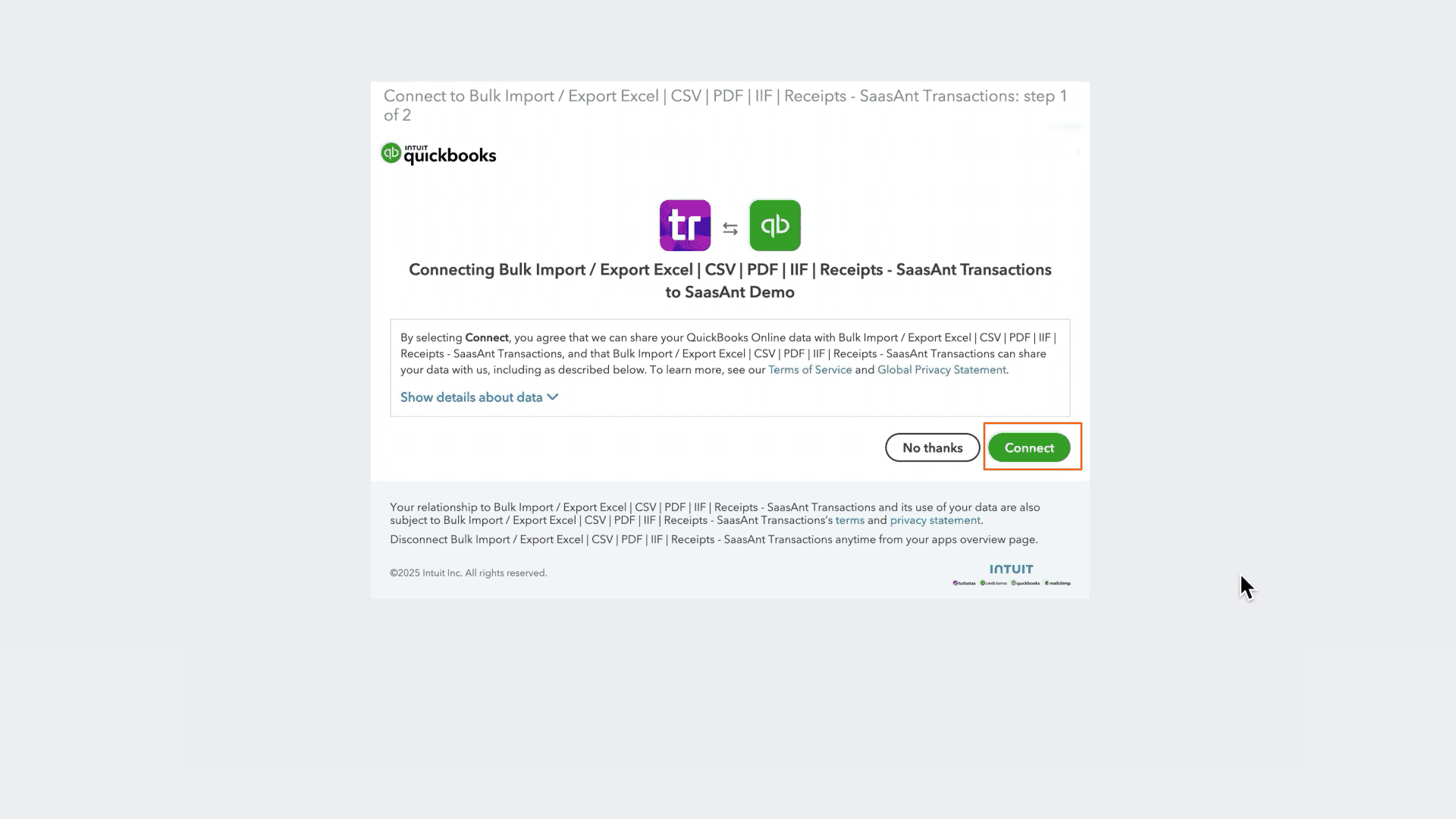
Connect: Securely authorize the connection to your QuickBooks Online company. We do not store your customer data; we simply process the transfer.
How to Export Expenses Step-by-Step
1. Navigate to Download (Export)
From the Quick Access dashboard (your default home screen), simply click the Download (Export) button listed in the main menu.
2. Select Entity
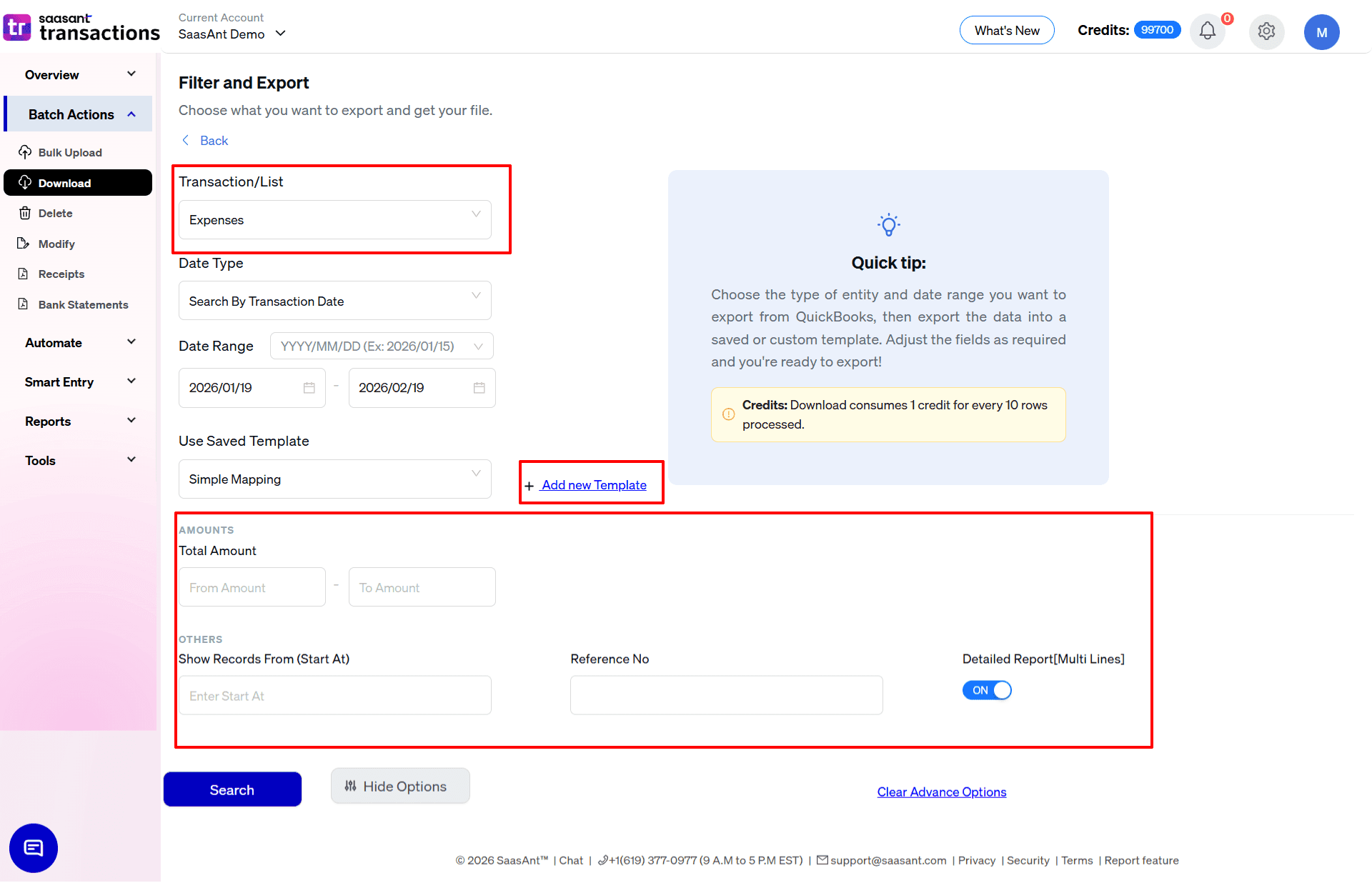
In the Transaction/List dropdown, select Expenses.
3. Select Date Strategy
Choose the date type that matches your goal:
Search By Transaction Date: (Standard) Exports based on the actual date of the expense. Use this for accounting and tax reporting.
Search By Created Date: Exports are based on when the record was entered into QuickBooks. Use this to audit work done by a bookkeeper last week, regardless of the expense date.
Search By Last Updated Date: Exports based on when the record was last modified. Use this to sync changes to an external system.
4. Set Date Range & Format
Range: Enter your start and end dates.
Format: Use the dropdown inside the date box to pick your preferred format (e.g., MM/DD/YYYY).
5. Select Template
In the Use Saved Template dropdown, leave it as Simple Mapping for a standard export.
Tip: If you need specific columns or a different field order, you can create and save a custom mapping template via the ‘add new template’ option.
6. Configure Filters & Search
Use the advanced filters to isolate the specific data you need:
Total Amount: Enter a From Amount and To Amount to export only transactions within a specific value range (e.g., expenses over $500).
Reference No: Input a specific doc number or reference ID to locate a single transaction for auditing.
Show Records From (Start At): Use this to chunk large exports. If you need to export 5,000 records, you can export 1–2,500 first, then run a second search starting at 2,501.
7. Review & Download
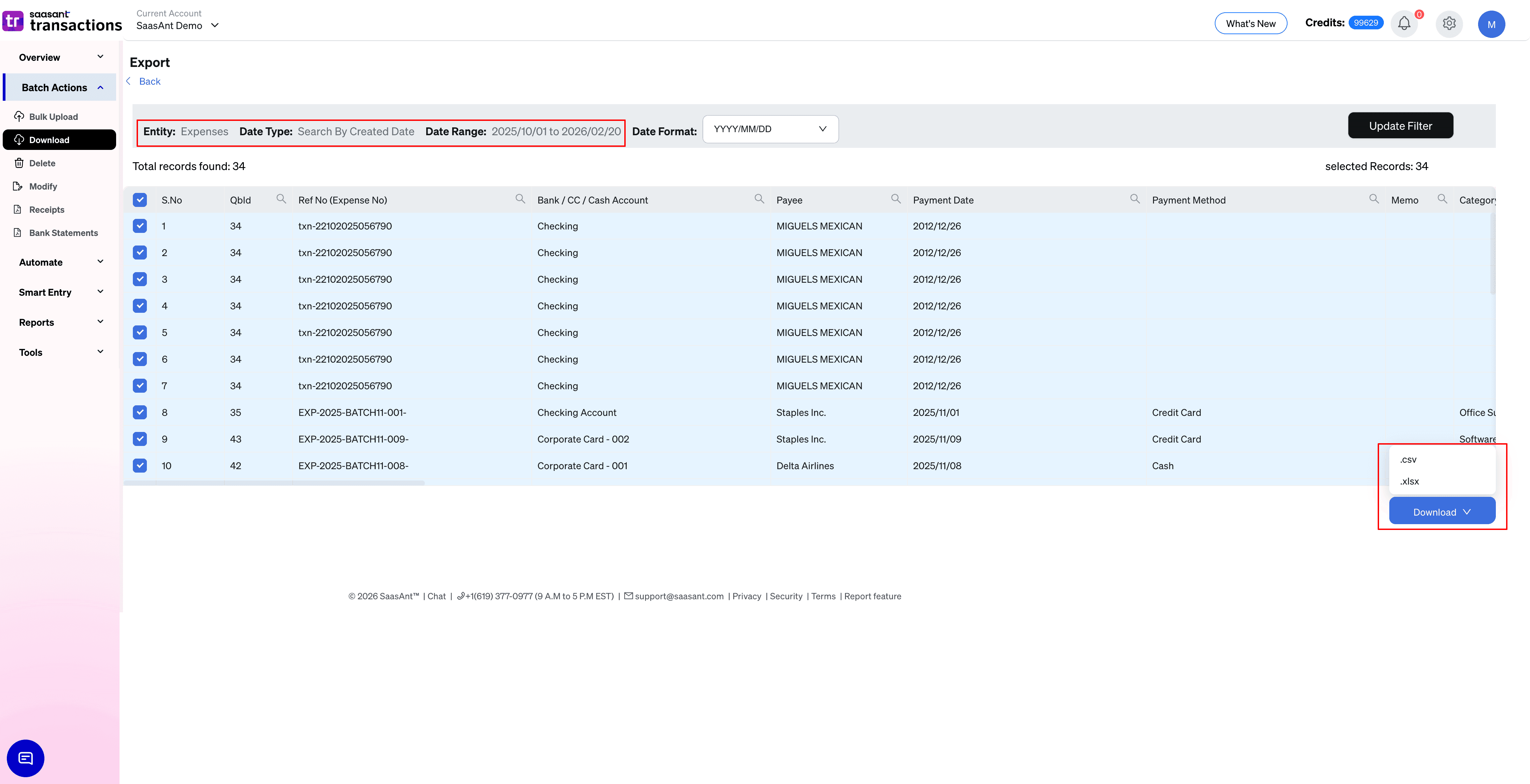
After clicking Search, a data preview grid will appear:
Verify Data: The grid shows a sample of the transactions found (e.g., Date, Payee, Amount, Memo). Review the first few rows to ensure they match your expectations.
Total Records: Check the "Total records found" count at the top left to confirm the volume.
Select File Format: Click the Download button at the bottom right. A dropdown will appear—select .xlsx (Excel) or .csv depending on your needs.
Export: The file will immediately download to your computer.
Automate with Backup
The steps above are for manual exports. If you need this data regularly for data warehousing or offline archives, use the Backup module.
Set it and forget it: Schedule daily, weekly, or monthly exports.
Delivery: Have files automatically sent to email, FTP, or storage integrations without logging in.
Why export expenses with SaasAnt?
Migration: Move expense data cleanly to a new QuickBooks Online company file or other accounting software without data loss.
Bulk Editing: Export expenses to Excel, make mass changes (like reclassifying accounts), and re-import them using SaasAnt to update QBO in bulk.
Audit Trails: Isolate transactions based on when they were created or updated, not just the transaction date, to track user activity.
FAQ
Can I use this file to migrate data to another QBO company?
Yes. The export format is natively compatible with SaasAnt’s Import feature.
Why is my export empty?
Check your Date Type. If you search by "Created Date" for a range where no data entry happened (even if the expenses are dated then), the result will be zero. Switch to "Transaction Date."