How to Export Estimates from QuickBooks Online using SaasAnt Transactions Online
February 20, 2026
At a Glance
The Solution: Use SaasAnt's Download (Export) feature to extract Estimate transactions into a clean Excel/CSV format.
The Key Benefit: Get a flat database file of all your proposals by status (Pending, Accepted, Closed, Rejected)—ready for sales pipeline analysis, win rate tracking, or revenue forecasting.
Quick Steps: Quick Access Dashboard > Download (Export) > Select Estimates > Search > Download.
Video Tutorial for Exporting Estimates from QuickBooks Online using SaasAnt Transactions Online:
Getting Started
Install: Get SaasAnt Transactions Online from the QuickBooks App Store and start a free trial.
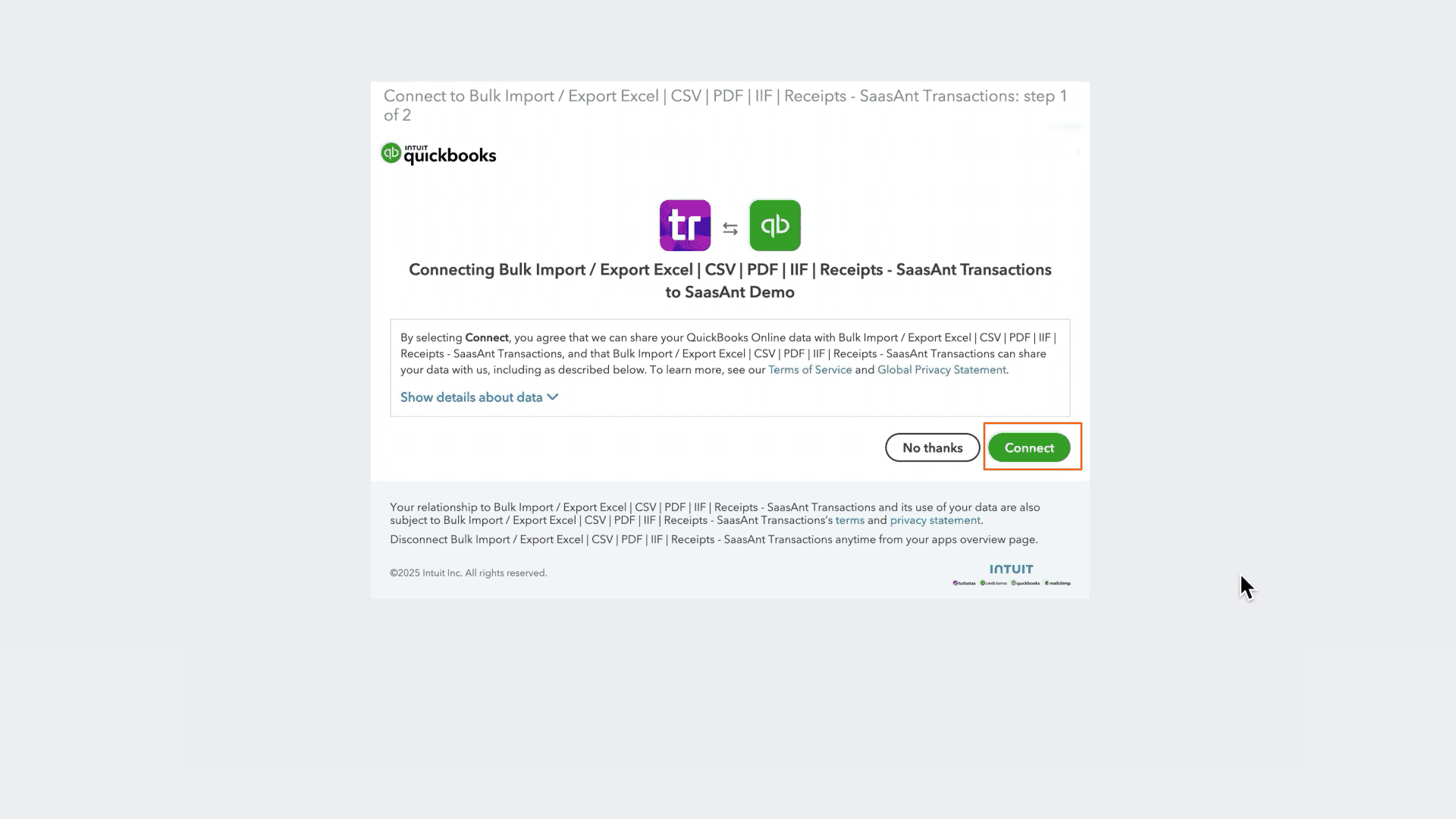
Connect: Securely authorize the connection to your QuickBooks Online company. We do not store your customer data; we simply process the transfer.
How to Export Estimates Step-by-Step
1. Navigate to Download (Export)
From the Quick Access dashboard (your default home screen), click the Download (Export) button listed in the main menu.
2. Select Entity
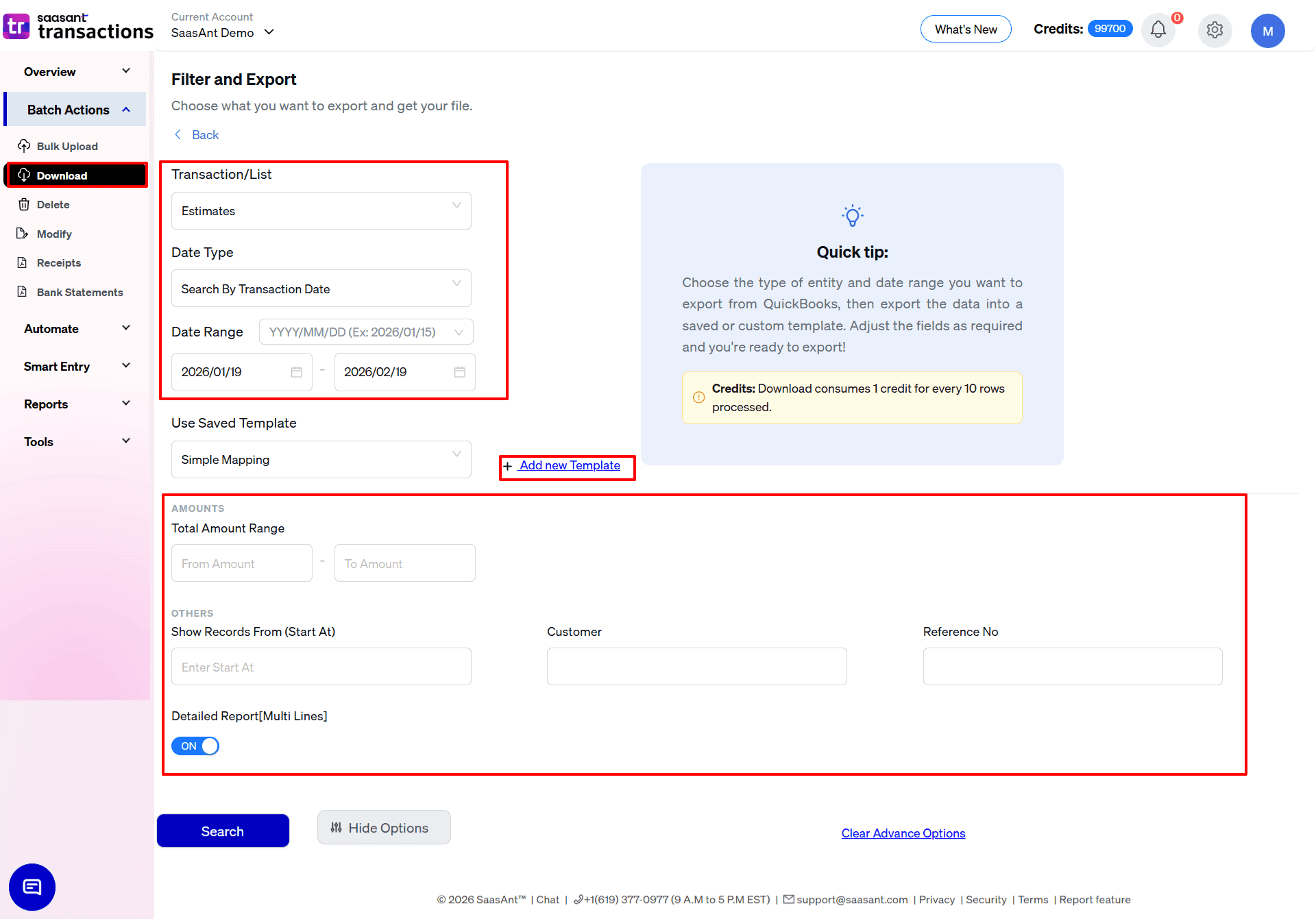
In the Transaction/List dropdown, select Estimates.
3. Select Date Strategy
Choose the Date Type that matches your goal:
Search By Transaction Date: Exports based on the date on the estimate document. Use this for pipeline reporting and comparing forecasted revenue to actual invoiced amounts within a period.
Search By Created Date: Exports based on when the estimate was entered into QuickBooks. Use this to track sales team productivity—how many proposals were written in a given week, regardless of the estimate date.
Search By Last Updated Date: Exports based on when the estimate was last modified. Use this to identify estimates whose status recently changed (e.g., from Pending to Accepted or Rejected).
4. Set Date Range & Format
Range: Enter your Start and End dates.
Format: Use the dropdown inside the date box to pick your preferred format (e.g., MM/DD/YYYY).
5. Select Template
In the Use Saved Template dropdown, leave it as Simple Mapping for a standard export.
Tip: Create a custom template if you need it for your reporting workflow using the Add new template option.
6. Configure Filters & Search
Use the advanced filters to isolate specific estimates:
Total Amount Range: Enter a From Amount and To Amount to find estimates within a specific value range (e.g., proposals over $10,000 for high-value deal tracking).
Customer: Enter a customer name to pull all estimates for a specific account—useful for reviewing a customer's full proposal history.
Reference No: Input a specific estimate number to locate a single record.
Show Records From (Start At): Use this to chunk large exports. If you need to export 5,000 records, run 1–2,500 first, then run a second search starting at 2,501.
Click the Search button to preview results.
7. Review & Download
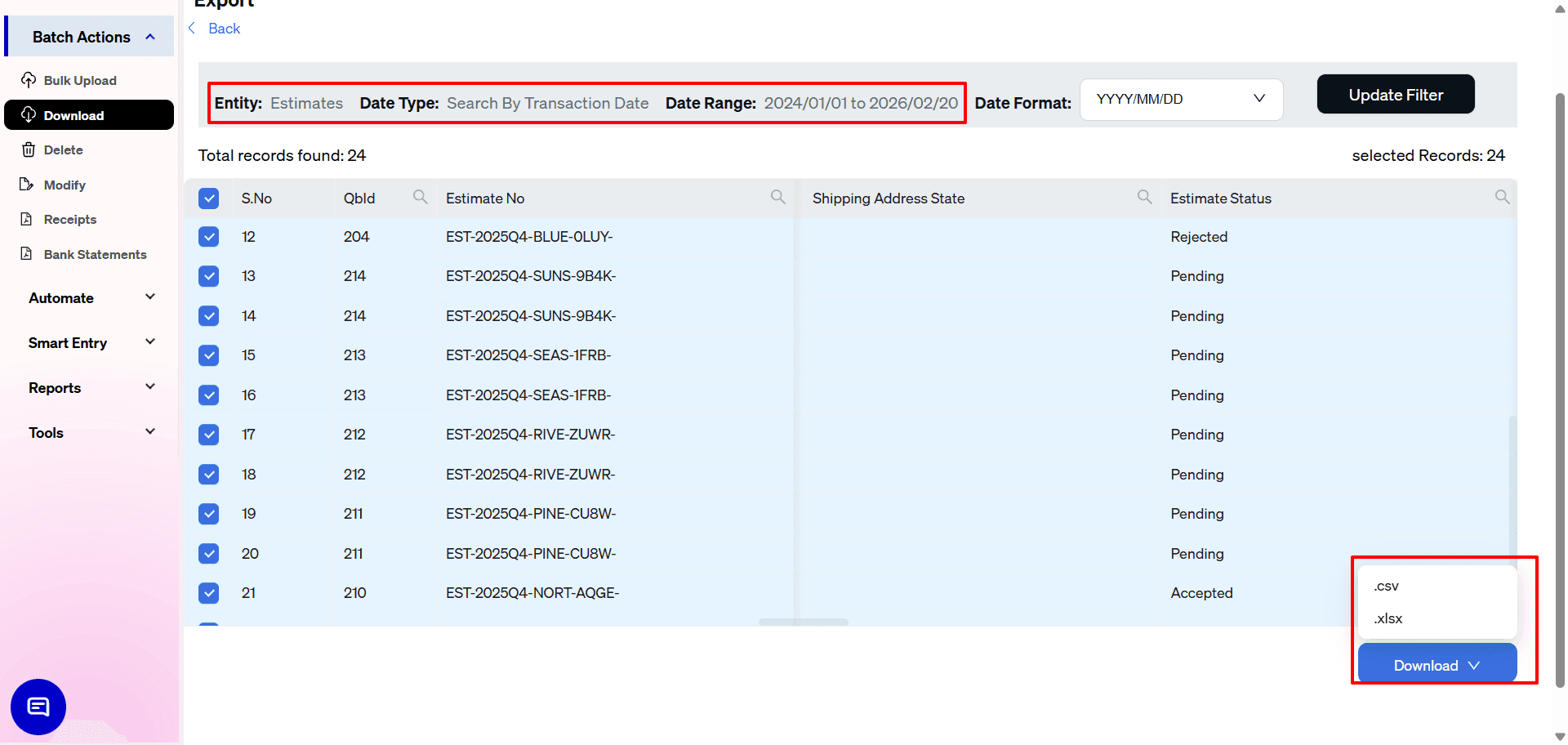
After clicking Search, the data preview grid will load:
Check Status: Verify that the Status column shows the correct mix of Pending, Accepted, or Rejected records you expected.
Verify Customers: Confirm the Customer column matches the accounts you intended to pull.
Total Records: Check the "Total records found" count at the top of the grid to confirm the expected volume.
Select Format: Click the Download button at the bottom right, choose .xlsx (Excel) or .csv, and the file will download.
Automate with Backup
The steps above are for manual exports. If you need a regular snapshot of your pipeline for sales reviews or forecasting, use the Backup module.
Set it and forget it: Schedule daily, weekly, or monthly exports.
Delivery: Have files automatically sent to email, FTP, or storage integrations without logging in.
Why export Estimates with SaasAnt?
Sales Pipeline Analysis: Filter and group Accepted vs Pending vs Rejected estimates in Excel to calculate win rates and average deal sizes outside of QBO's standard reports.
Revenue Forecasting: Compare the total value of Accepted estimates for a period against actual invoices raised in the same period to measure how accurately proposals convert to revenue.
Audit Readiness: Maintain a complete history of all proposals regardless of status, ensuring transparency during compliance reviews or client disputes.
FAQ
Does the export include the Estimate Status (Pending, Accepted, Rejected)?
Yes. The Status field is included as a column in the export, allowing you to filter and group estimates by their stage in Excel.
What is the difference between a Closed and a rejected estimate?
A Closed estimate means all line items have been fully invoiced and the estimate is complete. A rejected estimate means the customer declined the proposal. Both statuses prevent new invoices from being created from the estimate unless the status is manually changed.
Can I use this file to migrate estimates to another QBO company?
Yes. The export format is natively compatible with SaasAnt's Import feature for migration purposes.