How to Export Customers from QuickBooks Online using SaasAnt Transactions Online
February 24, 2026
At a Glance
The Solution: Use SaasAnt's Download (Export) feature to extract your complete Customer List into a clean Excel/CSV format.
The Key Benefit: Native QuickBooks Online customer exports often group contact numbers into single columns, truncate long names, or omit custom fields entirely. SaasAnt bypasses these limits, exporting every available data point (including distinct billing/shipping addresses, tax codes, and open balances) into a flat, import-ready file.
Quick Steps: Quick Access > Download (Export) > Select Customers > Search > Download.
Video Tutorial for Exporting Customers from QuickBooks Online using SaasAnt Transactions Online:
Getting Started
Install: Get SaasAnt Transactions Online from the QuickBooks App Store and start a free trial.
Connect: Securely authorize the connection to your QuickBooks Online company. We do not store your customer data; we simply process the transfer.
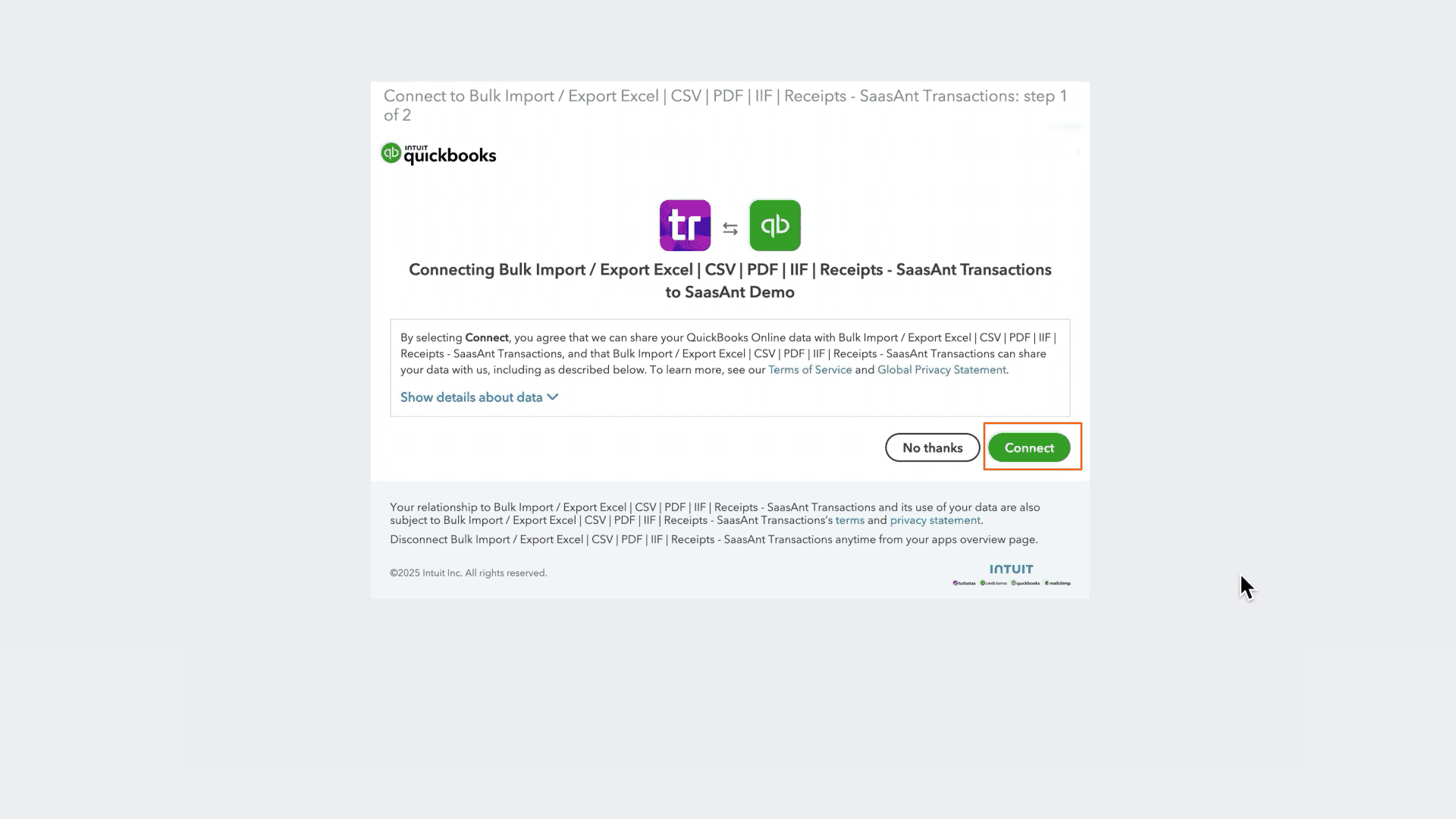
How to Export Customers Step-by-Step
1. Navigate to Download (Export)
In Quick Access, click the Download (Export) button in the main menu.
2. Select Entity
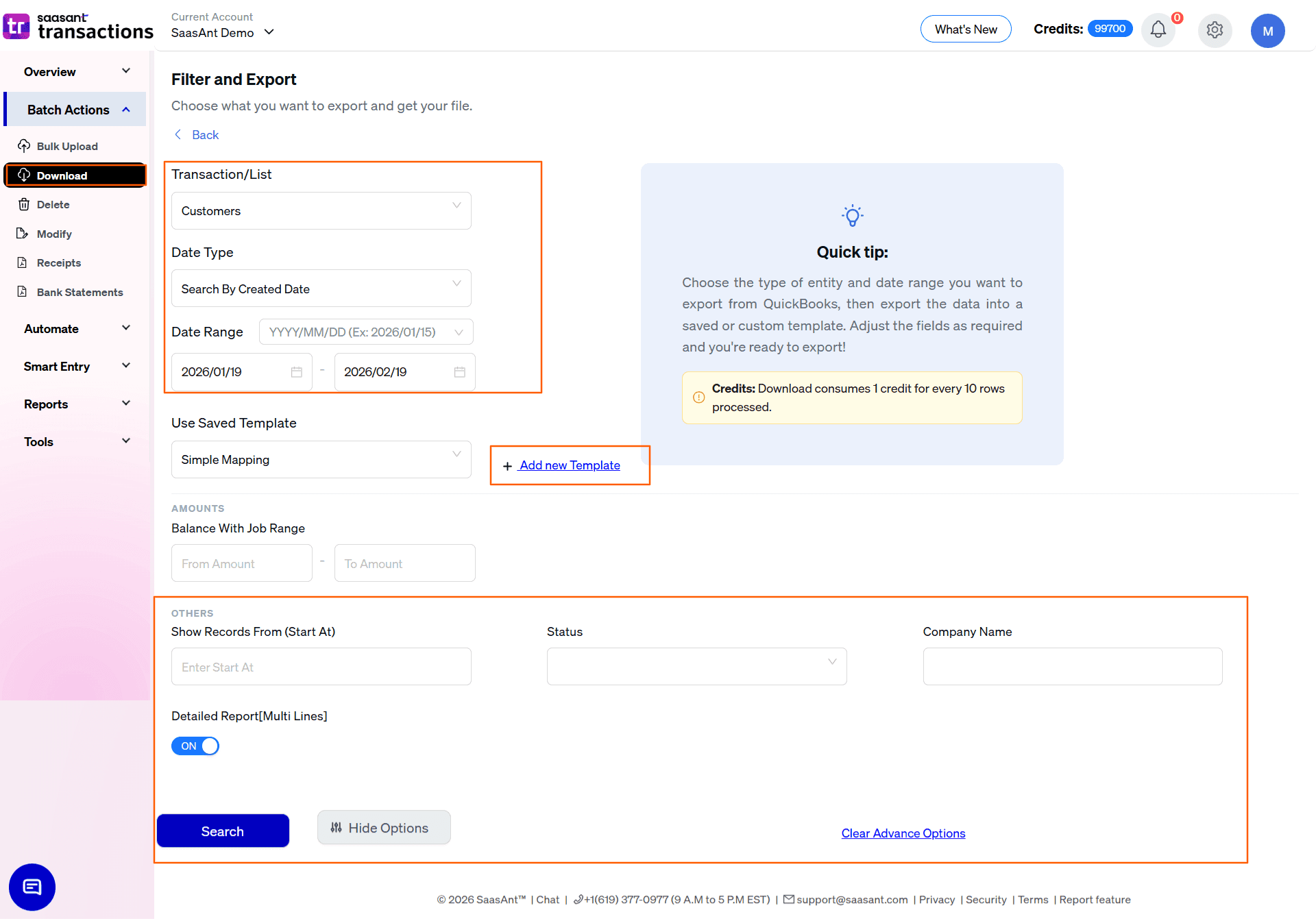
In the Transaction/List dropdown, select Customers.
3. Select Date Strategy
Unlike transactions, Customers are "Lists" in QuickBooks. Choose the date Type that matches your goal:
Search By Created Date: Exports based on when the customer profile was first entered into QuickBooks. Use this to pull a list of all "new customers" acquired within a specific time frame for marketing analysis.
Search By Last Updated Date: Exports based on when the customer record was last modified. Use this to catch recent changes to billing addresses or contact details that need to be synced with your CRM.
4. Set Date Range & Format
Range: Enter your Start and End dates. If you want to export your entire customer database, enter a start date far in the past to the current date.
Format: Use the dropdown inside the date box to pick your preferred format (e.g., MM/DD/YYYY).
5. Select Template
In the Use Saved Template dropdown, leave it as Simple Mapping for a standard export.
Tip: Create a custom template if you need it for your reporting workflow using the Add new template option. This is highly recommended for Customer exports if you need to extract specific custom fields or map columns directly to a CRM's import format.
6. Configure Filters & Search
Use the available filters to isolate specific customers:
Balance With Job Range: Enter a From Amount and To Amount to filter customers based on their open AR balance (including sub-customers/jobs). Set From Amount to 0.01 to export only customers who currently owe you money.
Status: Filter by Active or Inactive to exclude archived customers from your marketing or CRM lists.
Company Name: Input a specific name to locate a single customer profile.
Show Records From (Start At): Use this to chunk large exports. If you need to export 5,000 records, run 1–2,500 first, then run a second search starting at 2,501.
Click the Search button to preview results.
7. Review & Download
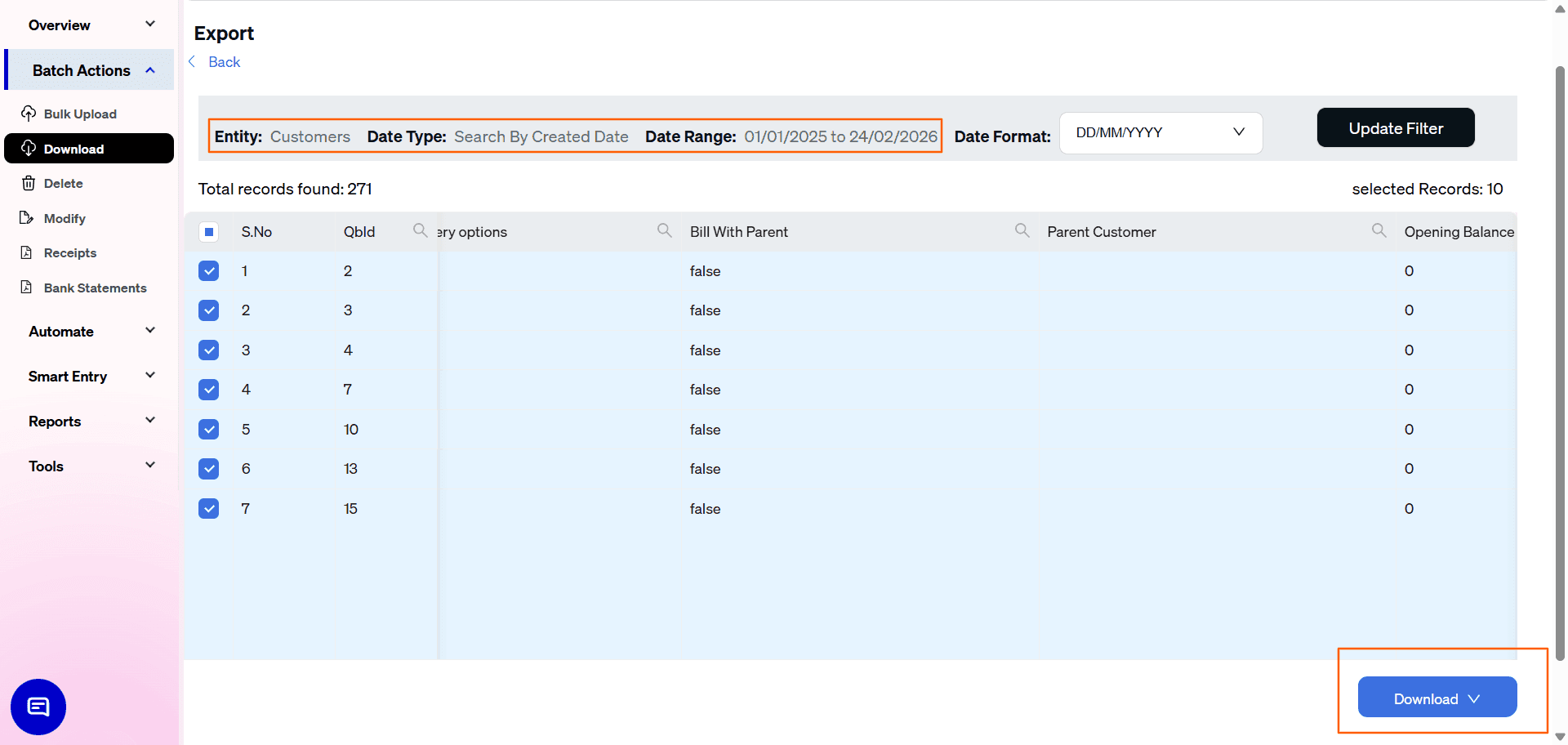
After clicking Search, the data preview grid will load:
Verify Contacts: Ensure the grid displays the expected names, emails, and balances.
Total Records: Check "Total records found" to confirm the expected volume of your customer base.
Select Format: Click the Download button at the bottom right, choose .xlsx (Excel) or .csv, and the file will download.
Automate with Backup
The steps above are for manual exports. If you need a regular sync of your customer list to feed a marketing platform or data warehouse, use the Backup module.
Set it and forget it: Schedule daily, weekly, or monthly exports.
Delivery: Have files automatically sent to email, FTP, or storage integrations without logging in.
Video Tutorial for Exporting Customers from QuickBooks Online using SaasAnt Transactions Online:
Why export Customers with SaasAnt?
CRM & Marketing Sync: Native QBO exports group phone, mobile, and fax numbers into a single column, making it impossible to import directly into Mailchimp, Salesforce, or Hubspot without manual cleanup. SaasAnt exports these as distinct, separated columns.
Bulk Updating: Export your customer list, make mass changes in Excel (like updating payment terms, tax codes, or salesperson assignments), and re-import the file using SaasAnt to update QBO in bulk.
Migration & Backup: Move your entire customer hierarchy—including Jobs/Sub-customers and custom fields—to a new QuickBooks company file. QBO natively restricts some fields to 31 characters during Desktop exports; SaasAnt extracts the raw data.
FAQ
Does the export include the customer's open balance?
Yes. The export file includes an "Open Balance" column. You can also filter the export beforehand using the Balance With Job Range filter to pull only customers with outstanding balances.
Are sub-customers and jobs included in the export?
Yes. Sub-customers (often used as Jobs in QBO) are exported alongside parent customers. The relationship is maintained in the data so you can see which jobs belong to which parent accounts.
Can I export custom fields attached to customer profiles?
Yes. While native QBO reports often drop custom fields, SaasAnt can extract them. You will need to create a Custom Template (Step 5) and map your specific custom fields to ensure they are included in the downloaded file.