How to Edit Journal Entries in QuickBooks Online Using SaasAnt
March 2, 2026
Editing journal entries individually in QuickBooks Online is time-consuming, especially when fixing multi-line adjustments or reclassifying an entire month of incorrect entries. Use SaasAnt to change journal entries in QuickBooks Online by exporting them, modifying the details in a spreadsheet, and re-importing them in bulk.
Ensure mappings are correct, preview changes to verify that debits and credits balance, and update records securely. For small tweaks, use Live Edit. This workflow accelerates bulk changes, avoids manual data entry errors, and provides an Undo option to roll back mistakes.
Before you begin, remember that QuickBooks Online does not offer a native backup button on all plans. Always rely on SaasAnt’s Preview Mapping, Dry Run validation, and Undo/Rollback tools to ensure your changes are safe and reversible.
Video Tutorial For Editing Journal Entries in QuickBooks Online using SaasAnt Transactions Online:
Method 1: Edit Journal Entries Using Modify (Export → Spreadsheet → Re-Upload)
This method is ideal when you need to make structural updates across dozens of journal entries—such as reassigning Chart of Accounts categories, adjusting historical depreciation balances, or correcting bulk payroll journal imports.
Step 1: Open SaasAnt from QuickBooks Online
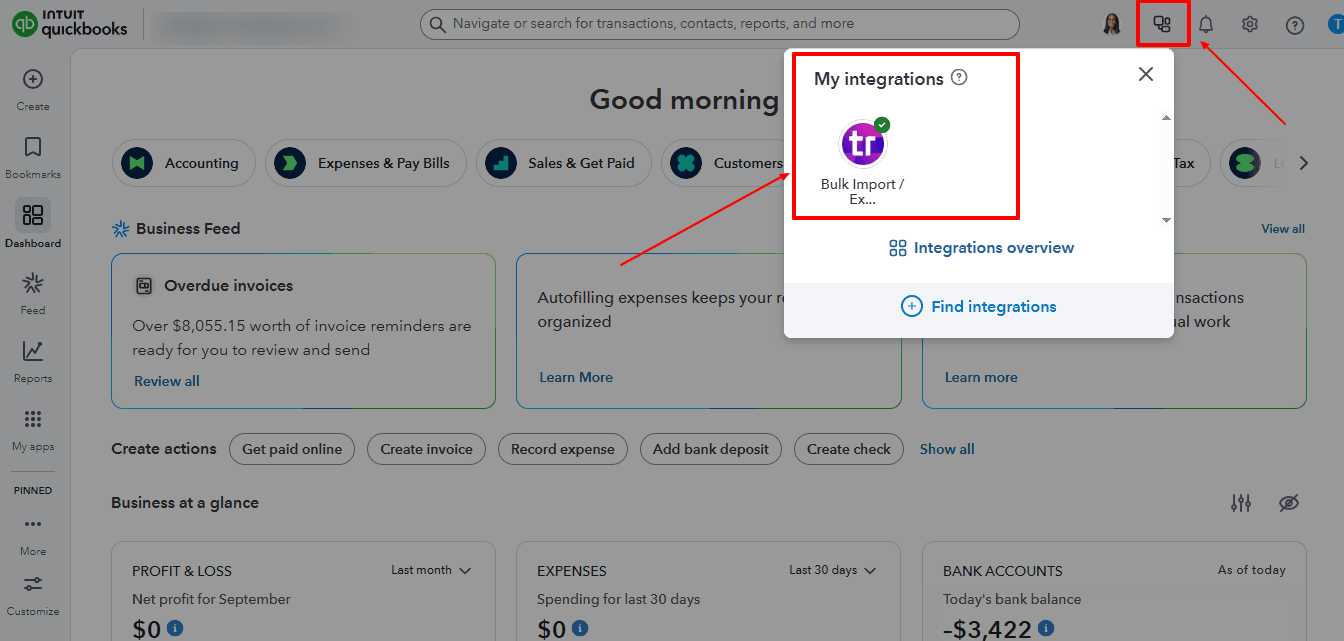
Sign in to your QuickBooks Online company file.
From the left menu bar, go to Apps.
Under Find apps, search for SaasAnt Transactions Online and authorize access if you haven't already.
Open the app from your My Apps tab to launch the SaasAnt dashboard.
Step 2: Export Existing Journal Entries
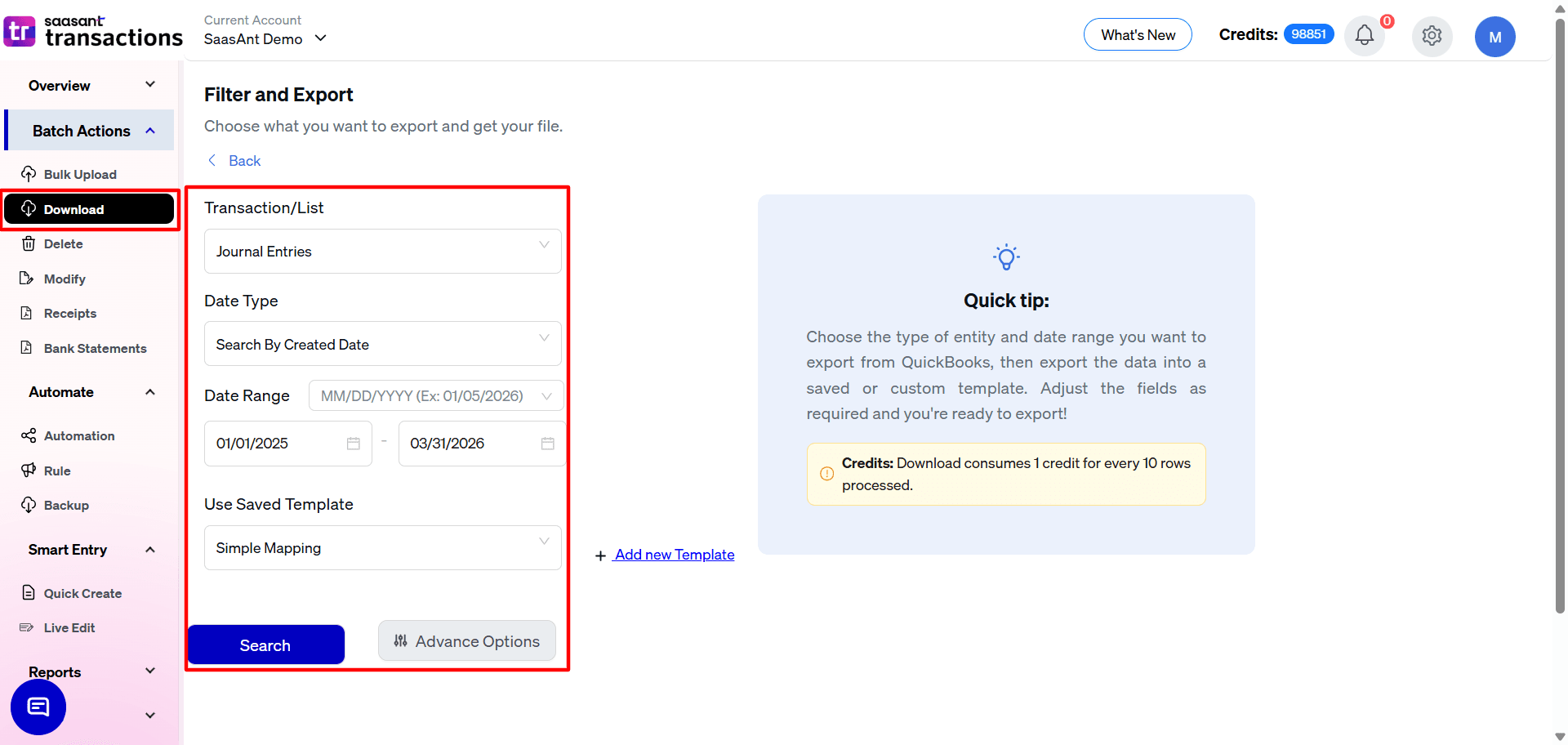
In SaasAnt, navigate to Batch Actions → Download.
On the Download transactions screen, select:
Transaction/List: choose Journal Entries
Date Type: e.g., Search by Transaction Date
Date Range: set the period for the journal entries you want to modify
Optional filters: Journal No. or Start At records.
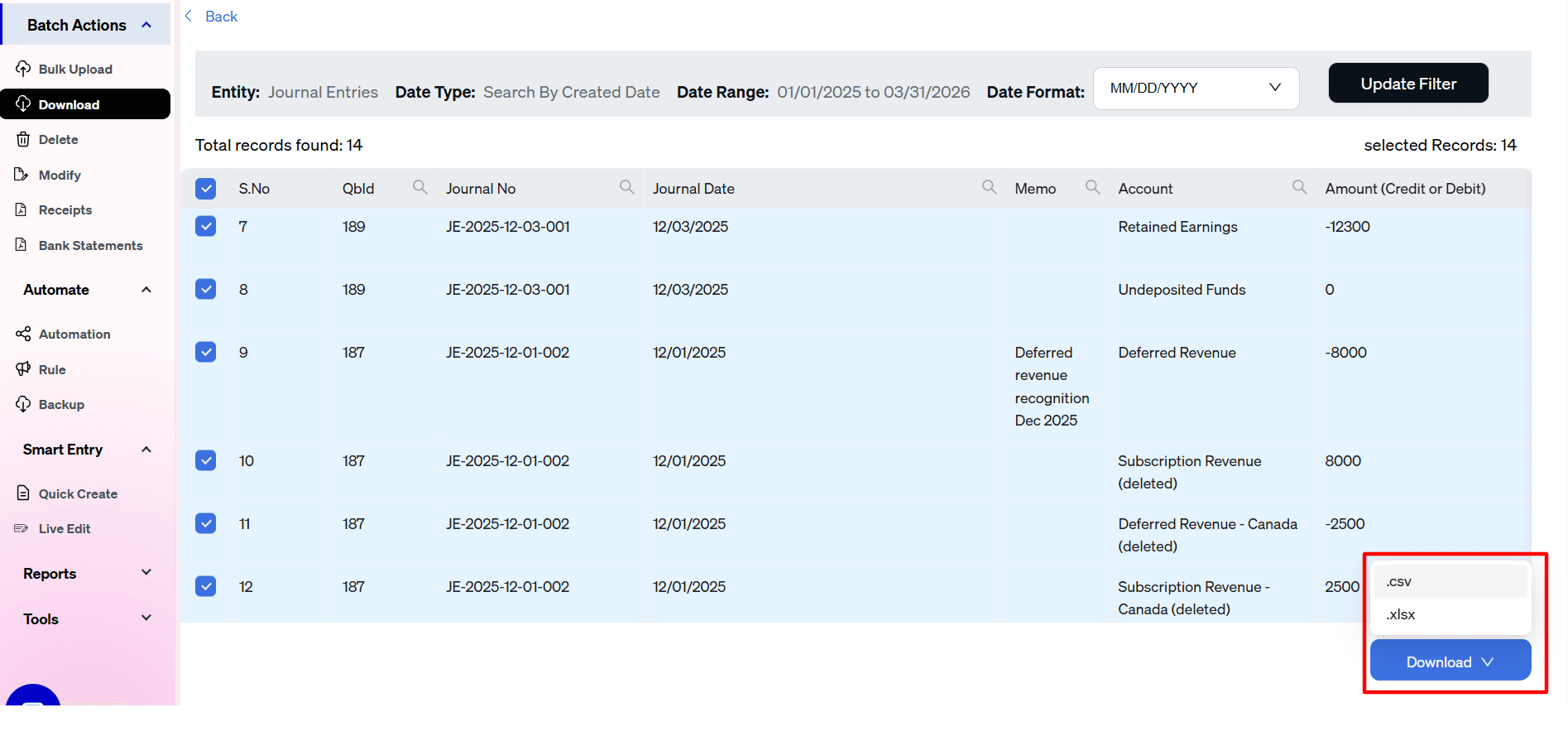
Click Search to fetch the matching journal entries into the grid.
At the bottom-right, click Download ▼ and choose .csv or .xlsx to export the file.
Step 3: Edit the Spreadsheet
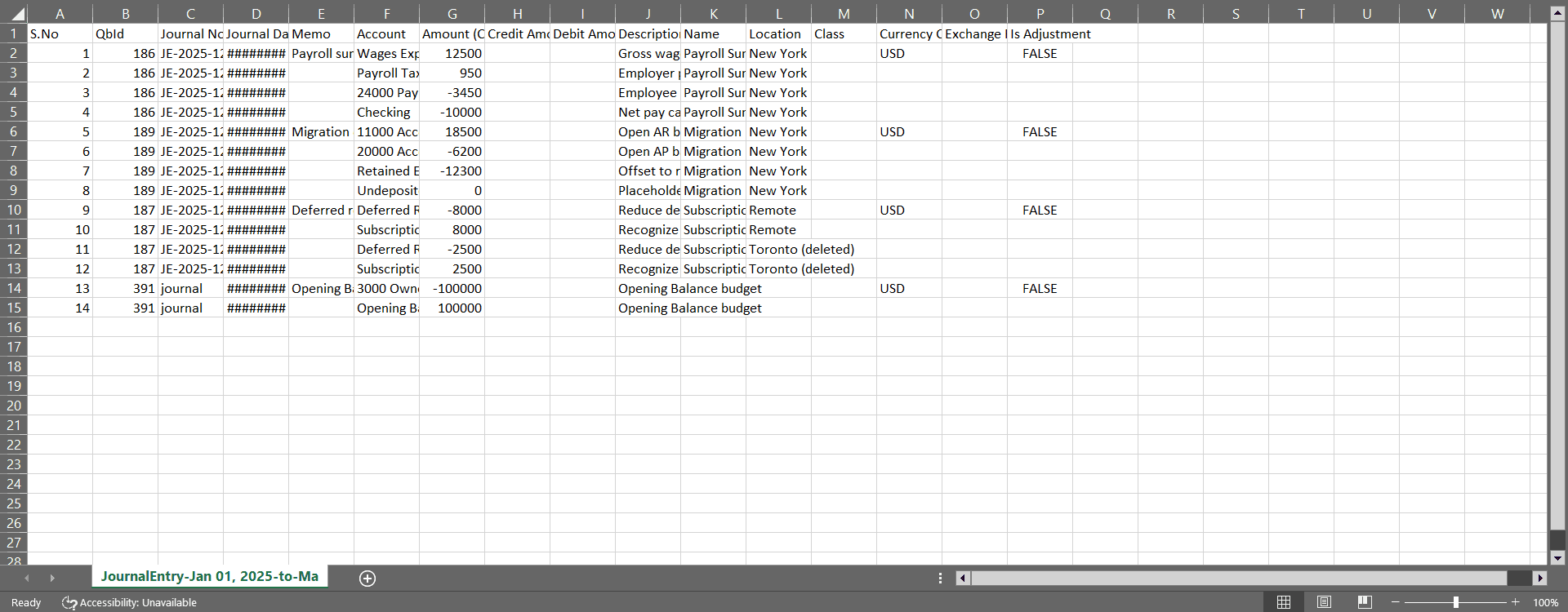
Open the downloaded file using Excel or Google Sheets.
Locate the journal entries you need to alter using the date or journal number.
Update only the necessary fields. Common journal entry edits include:
Account (Chart of Accounts)
Debit Amount & Credit Amount
Transaction Date
Name (Customer/Vendor) & Location/Class
Description or Memo
Keep the original Journal No column intact so SaasAnt knows exactly which transactions to overwrite in QuickBooks. Ensure your total Debits equal your total Credits for each Journal Number.
Save your completed file as a CSV or XLSX.
Step 4: Upload the Modified File
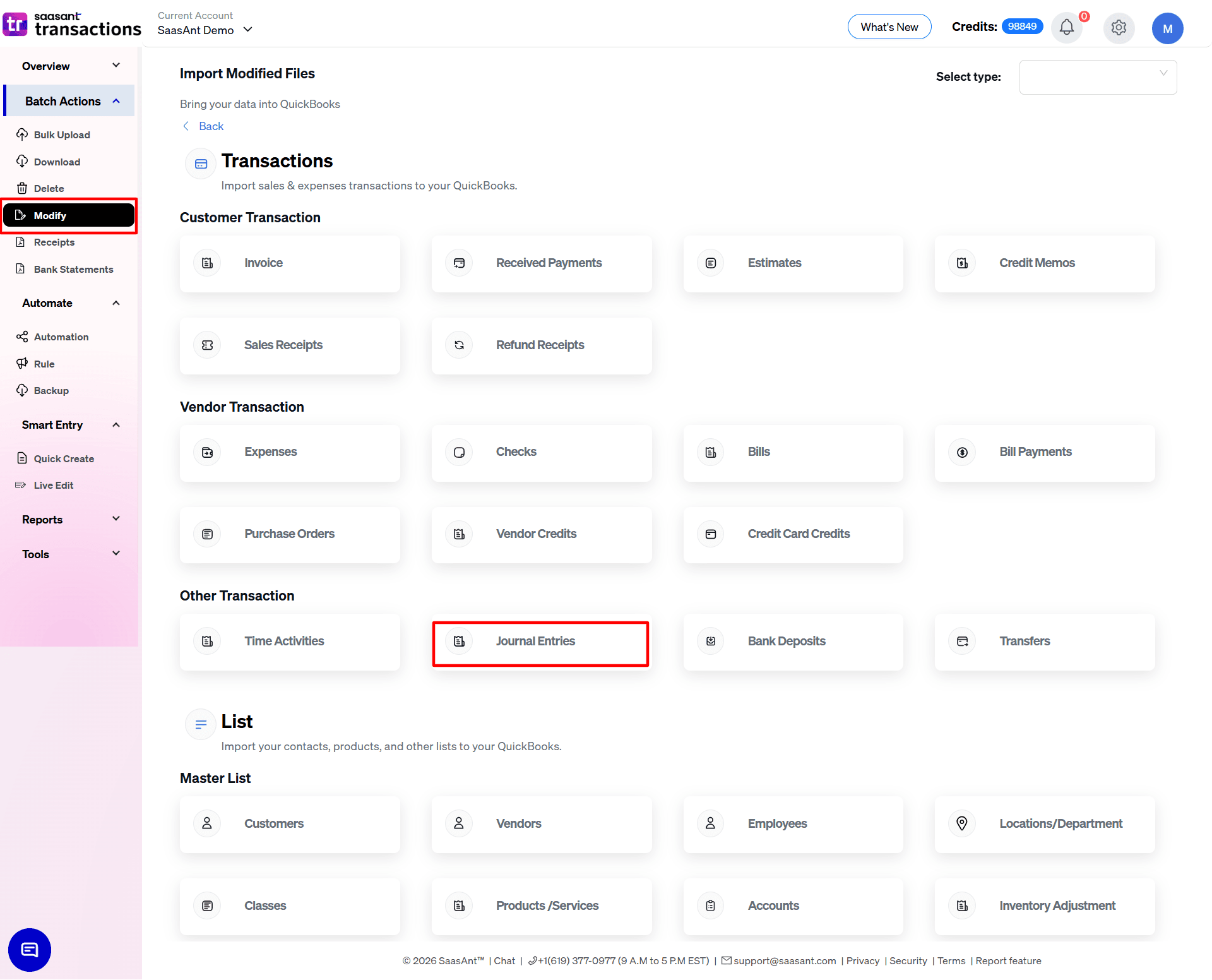
Return to SaasAnt.
Go to Batch Actions → Modify.
Select Journal Entries under the Other Transactions category if prompted, then click Continue.
On the Upload files screen, drag and drop your edited file or click Browse your files.
Step 5: Map QBO Fields Correctly
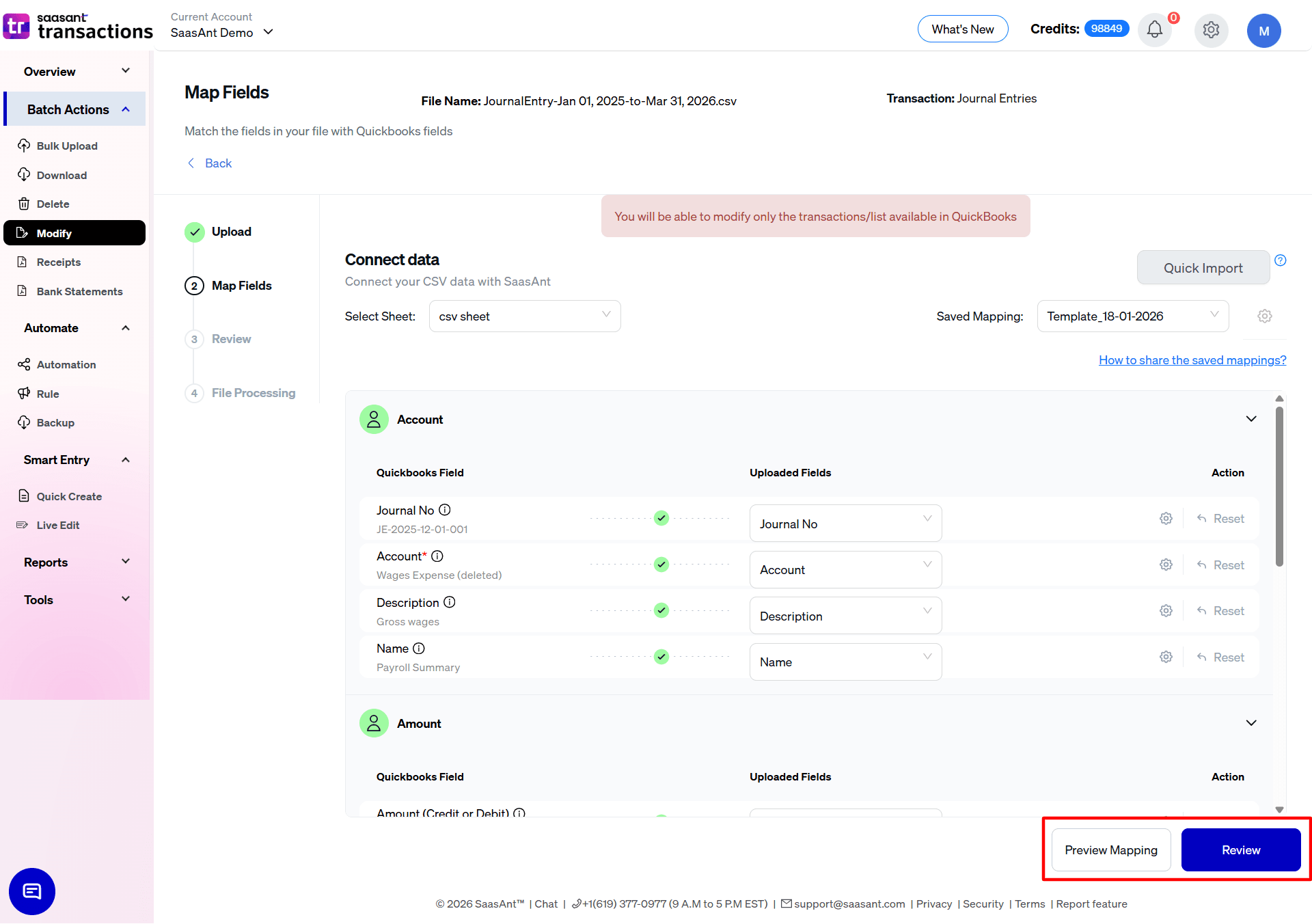
On the Map Fields screen, align your spreadsheet columns with the corresponding QuickBooks fields.
Ensure critical fields are mapped properly:
Journal Number
Journal Date
Account
Debit Amount & Credit Amount
Description / Name
Click Preview Mapping to verify that your spreadsheet data aligns correctly with QBO fields.
Once confirmed, click Review.
Step 6: Review and Fine-Tune in the Grid
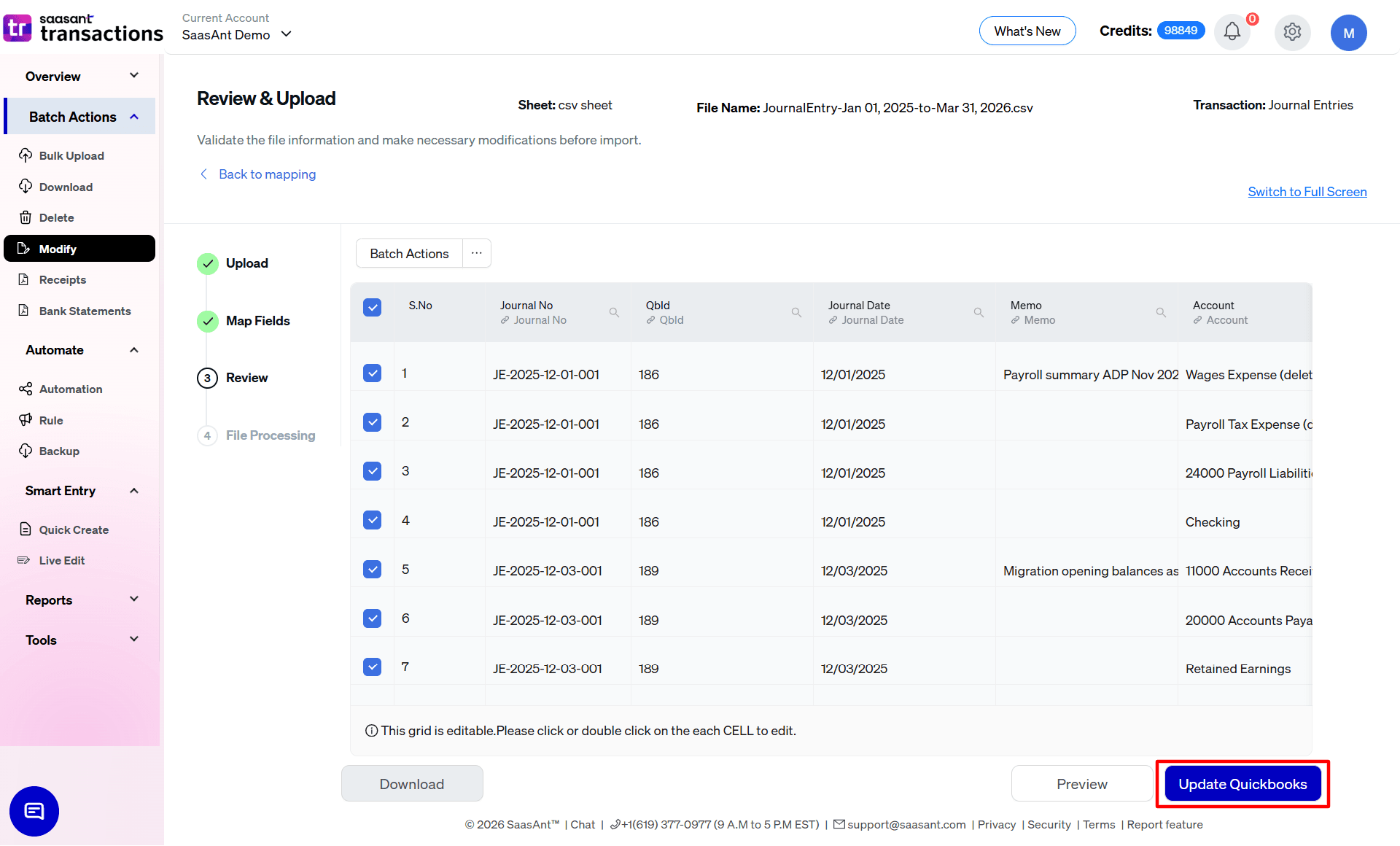
You will now see an editable grid displaying all the journal entry rows from your file.
Scan the data to ensure accuracy. You can double-click any cell to make last-minute typo corrections directly in the grid.
Optional: Use Preview (Dry Run) Mode to let SaasAnt validate the data (checking for balanced debits/credits) without actively changing anything in your QuickBooks file yet.
Once satisfied, click Update QuickBooks.
Step 7: Check Results, Download Logs, and Undo if Needed
After processing, SaasAnt displays a summary of the import.
Click Show Results to view the Modify results screen.
On the Success tab, click the QuickBooks ID to view the live, updated journal entry in QBO. Use the Download ▼ button to save a permanent audit log of the changes.
Check the Error tab for any failed rows. You can often click an inline Fix button to correct an invalid account name and re-submit it immediately.
If you realize you made a mistake, click the Undo button to roll back the successful changes, restoring the original journal entry data in QuickBooks.
Method 2: Edit Journal Entries Using Live Edit (On-Screen Bulk Edits)
The Live Edit feature allows you to change transaction data directly inside SaasAnt’s grid interface without creating, exporting, or importing a spreadsheet. It’s perfect for fast fixes, such as updating a date or adjusting a description on a handful of entries.
Step 1: Open Live Edit
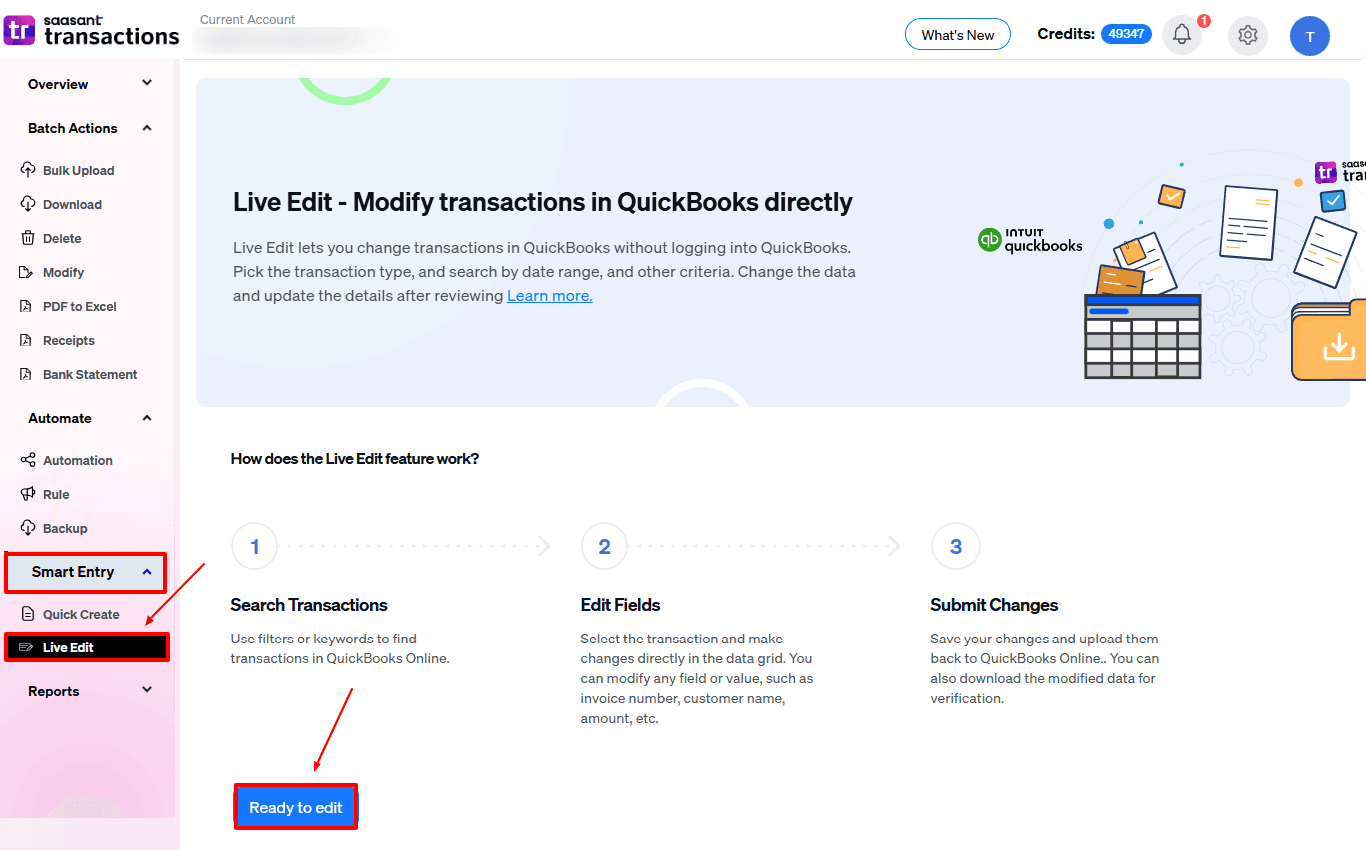
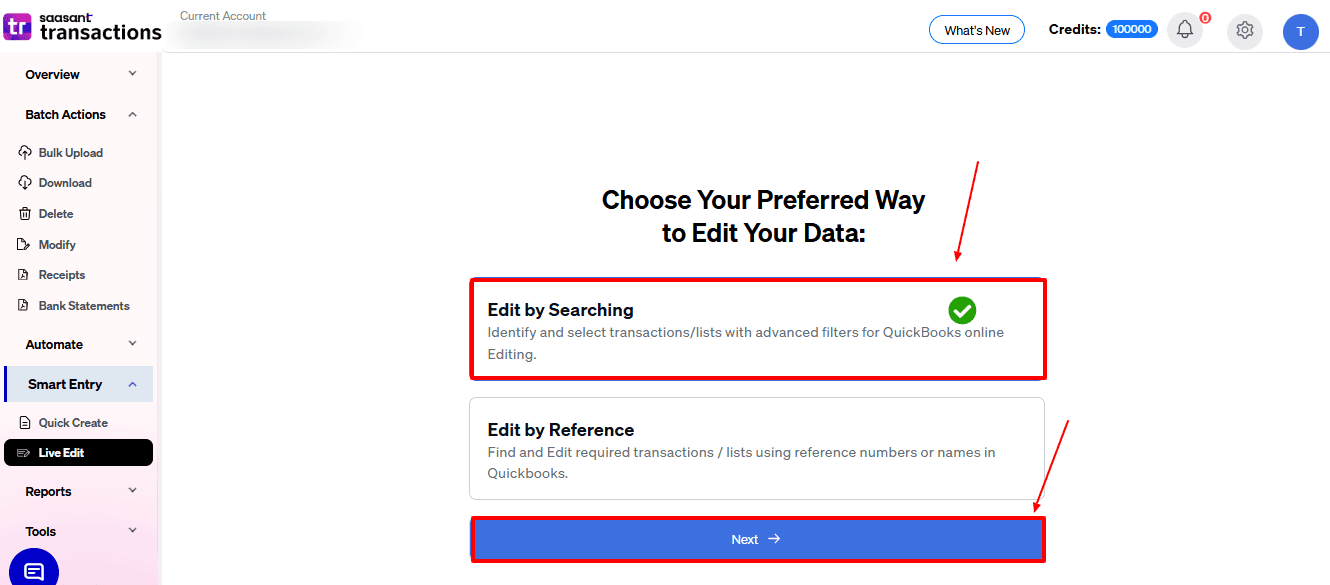
In SaasAnt, go to Smart Entry → Live Edit.
Choose preferred way to edit the Journal Entries.
Step 2: Filter the Journal Entries You Want to Edit
At the top of the Live Edit screen, set:
Transaction/List: choose Journal Entries
Date Type: such as Search by Last Updated Date or Transaction Date
Date Range: the period for the journal entries you want to adjust
Date Format: ensure this matches your QBO settings (e.g., MM/DD/YYYY)
Click Search to pull the matching journal entries into the live grid.
Step 3: Edit Journal Entry Fields in the Grid
Locate the specific journal entries you want to adjust.
Click directly into the grid cells to type in your revised values (such as changing an Account, Date, or Description).
You can edit multiple rows at once across the screen.
Step 4: Submit Changes Back to QBO
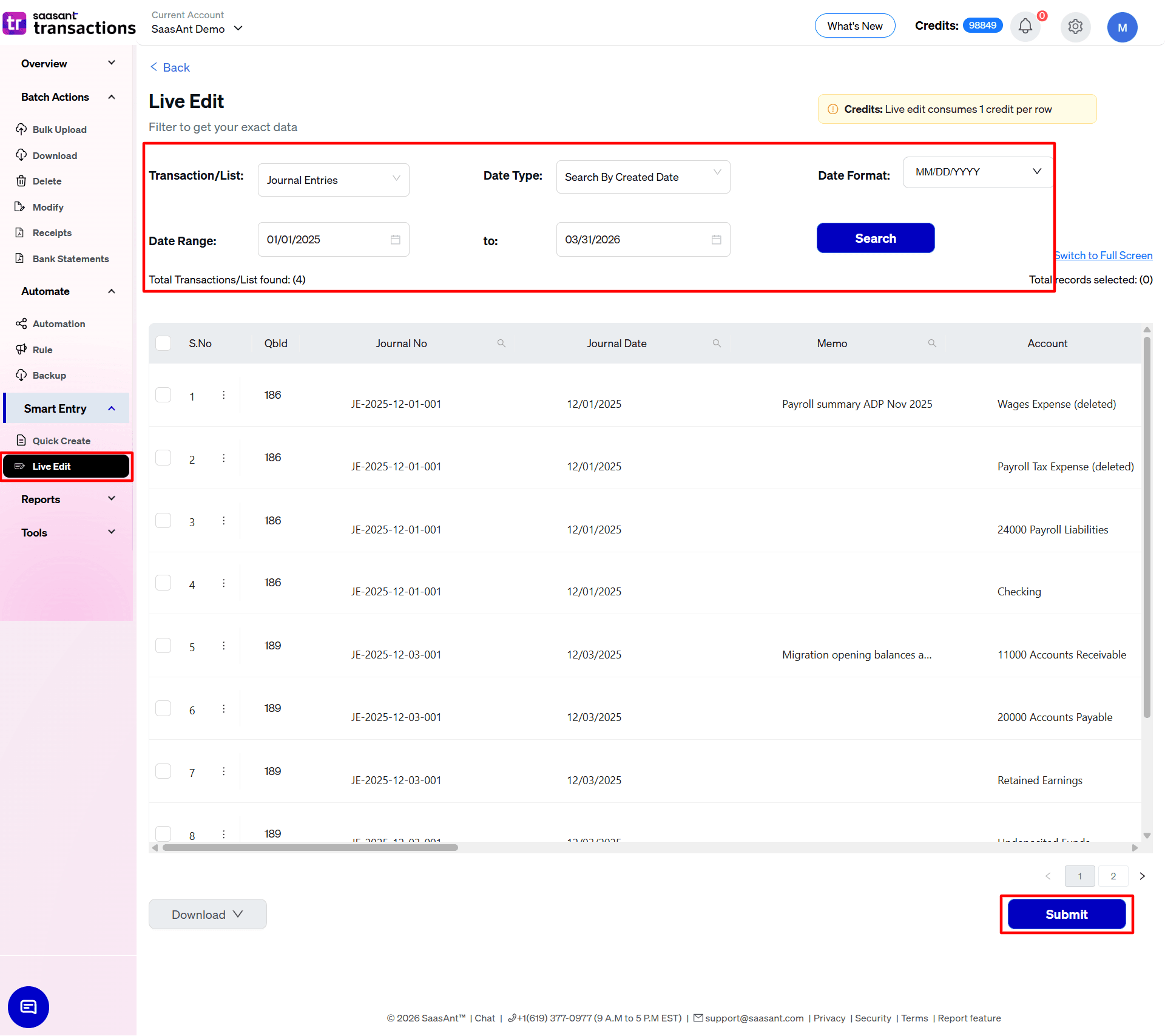
Review the updated grid to ensure everything is correct and balanced.
Click Submit to sync the updates directly with QuickBooks Online.