How To Delete Time Tracking In QuickBooks Desktop
March 9, 2026
Prerequisites
QuickBooks Desktop is set up, and the company file is accessible.
Admin permissions for the company file are required.
SaasAnt Transactions Desktop is installed.
The company file must be opened in QuickBooks before you can connect.
Video Tutorial for How to Delete Data in QuickBooks Desktop using SaasAnt Transactions Desktop:
How to Delete Time Tracking in QuickBooks Desktop: Step-by-Step Guide
Step 1: Open the SaasAnt Transactions Desktop
Download the latest SaasAnt Transactions Desktop version.
Launch the SaasAnt Transactions Desktop, and connect to your QuickBooks company file.
Step 2: Connect to QuickBooks Desktop
Go to the File menu
Click Connect to QuickBooks, and allow access permission in QuickBooks when prompted.
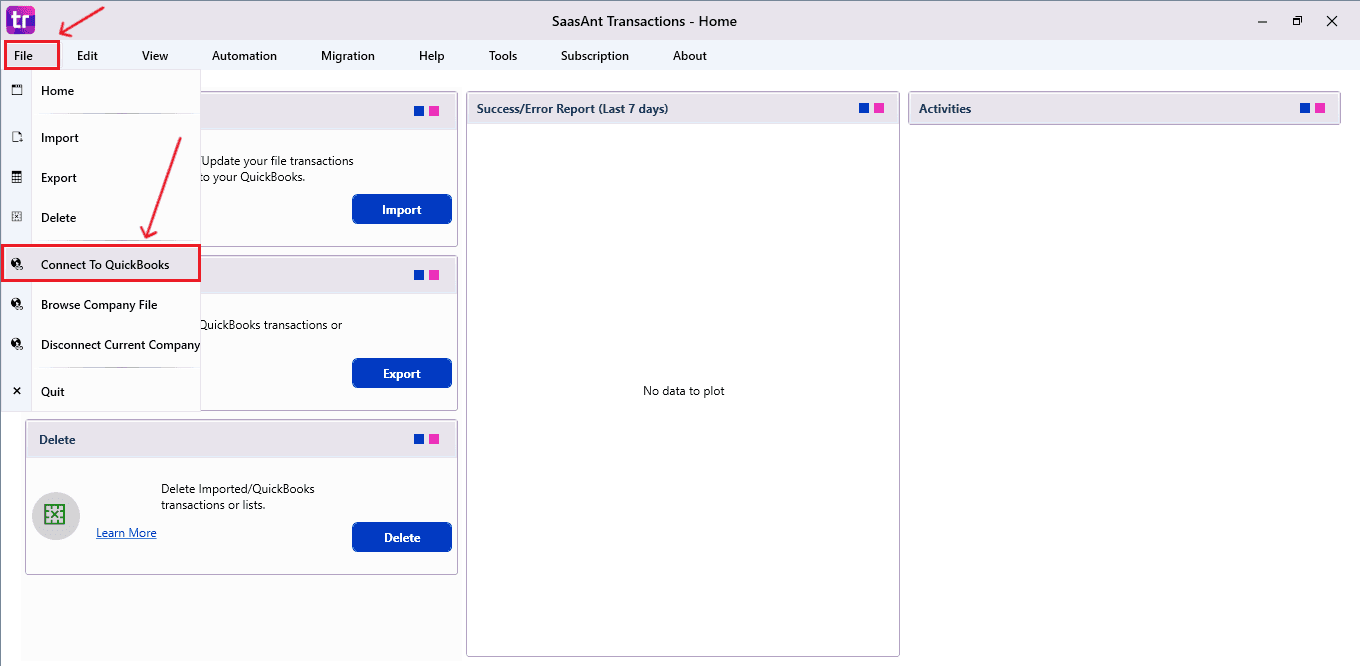
This secure link allows SaasAnt to read and adjust time tracking transactions in the selected company file environment.
Step 3: Open Delete Module
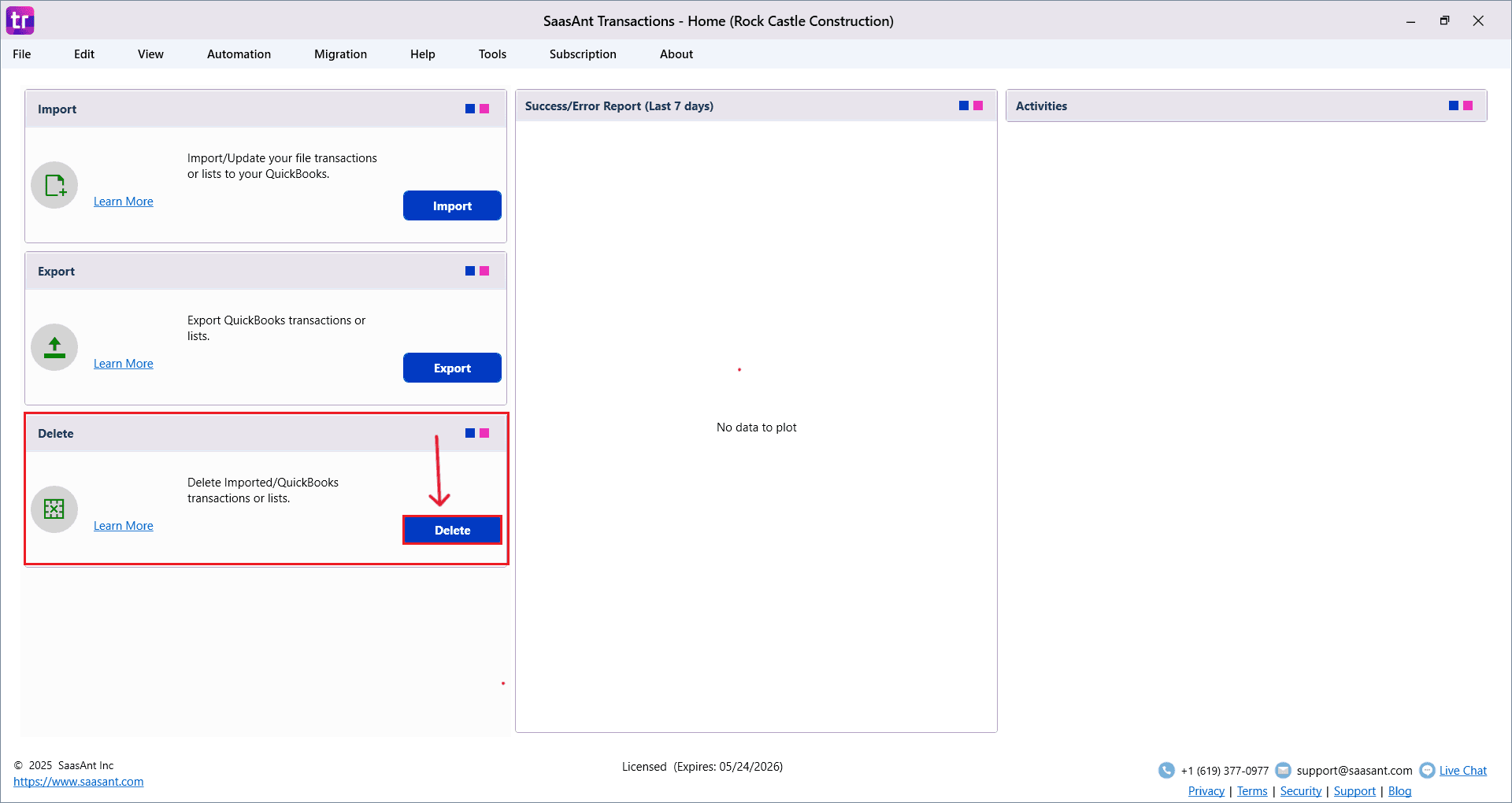
On the left panel dashboard, select Delete.
This section is meant for deleting transactions in bulk.
Step 4: Search Time Tracking
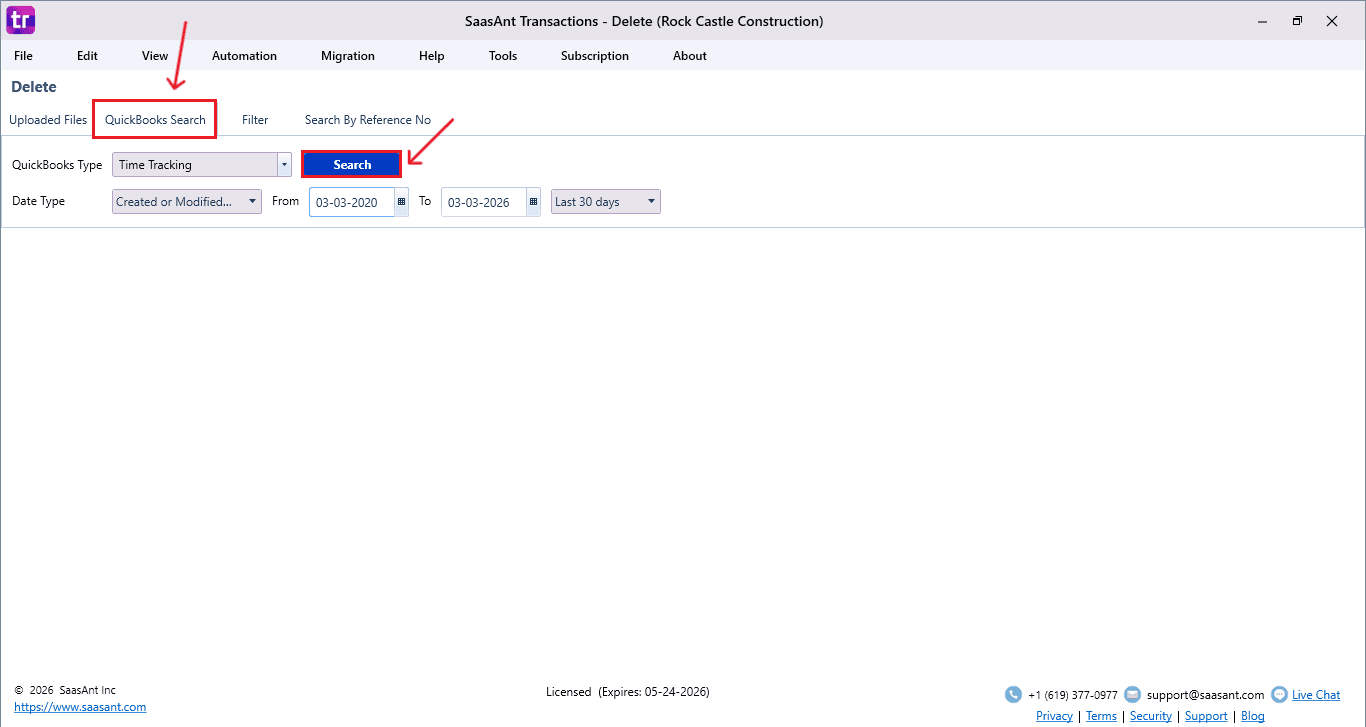
Choose QuickBooks Search
Set QuickBooks Type → Time Tracking
Apply filters, including date range or transaction criteria, to refine results.
Click Search to get all time tracking records that match for review and deletion.
Step 5: Select the Time Tracking to Delete
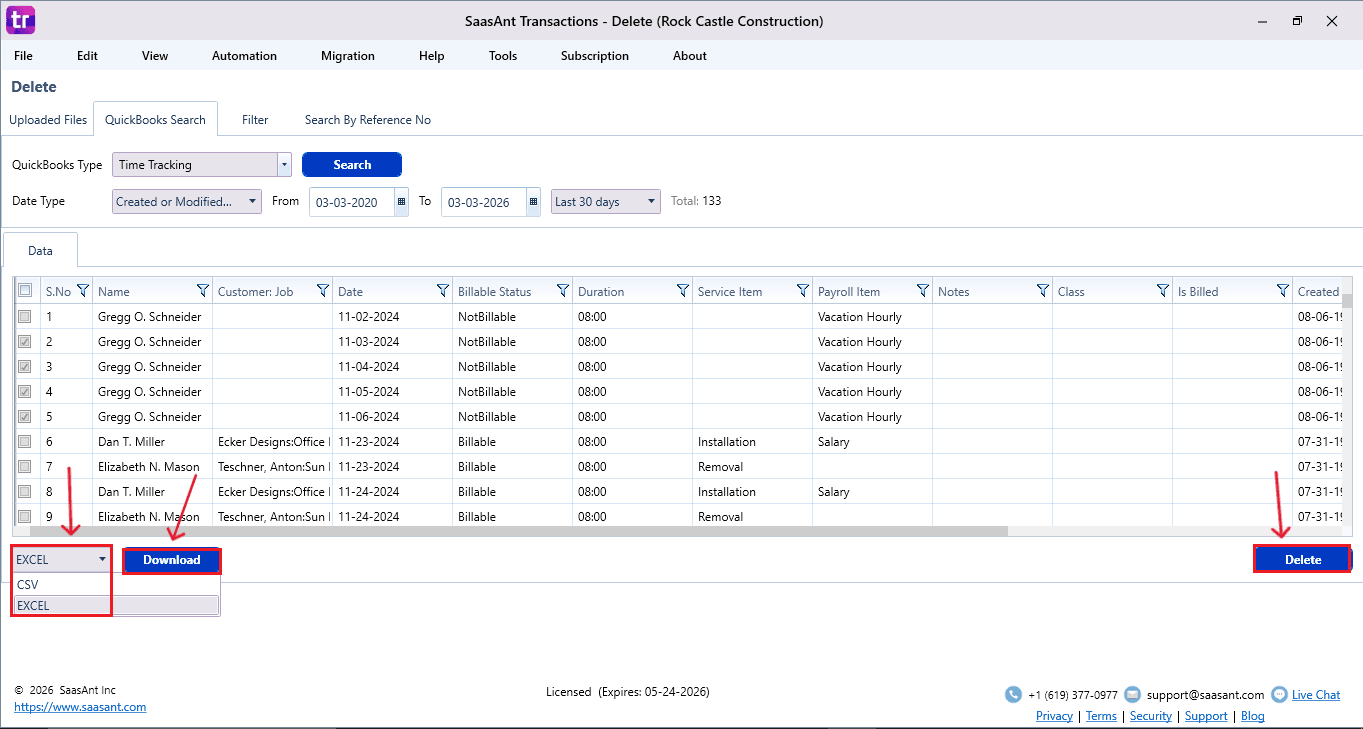
The matching Time Tracking will show up in the results list
Review and select the required Time Tracking with checkboxes
Click Download (at the bottom-left) to save a backup in Excel or CSV format.
Click Delete at the bottom right.
Step 6: Confirm Deletion
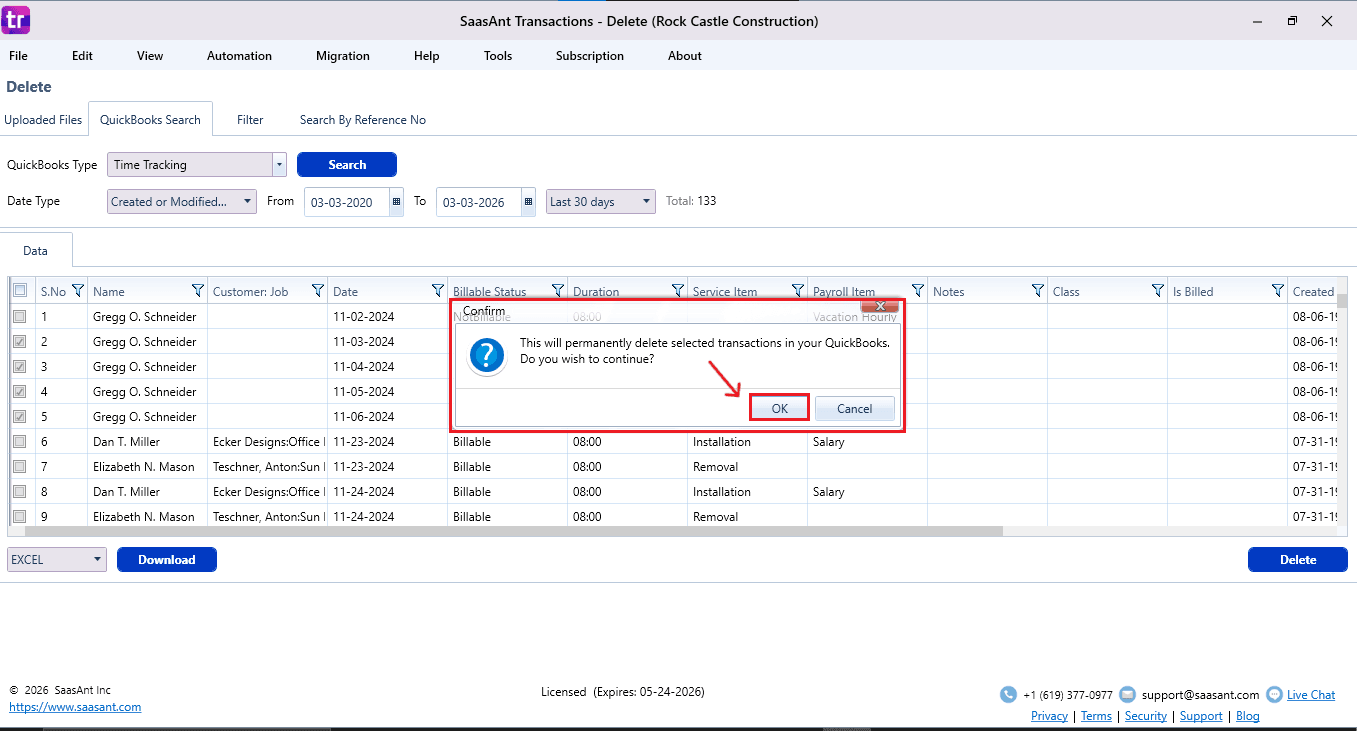
A confirmation pop-up appears; carefully review the count and details.
Click OK to proceed.
SaasAnt will permanently delete the selected time tracking from the QuickBooks Desktop company file.
Step 7: View Deleted Time Tracking
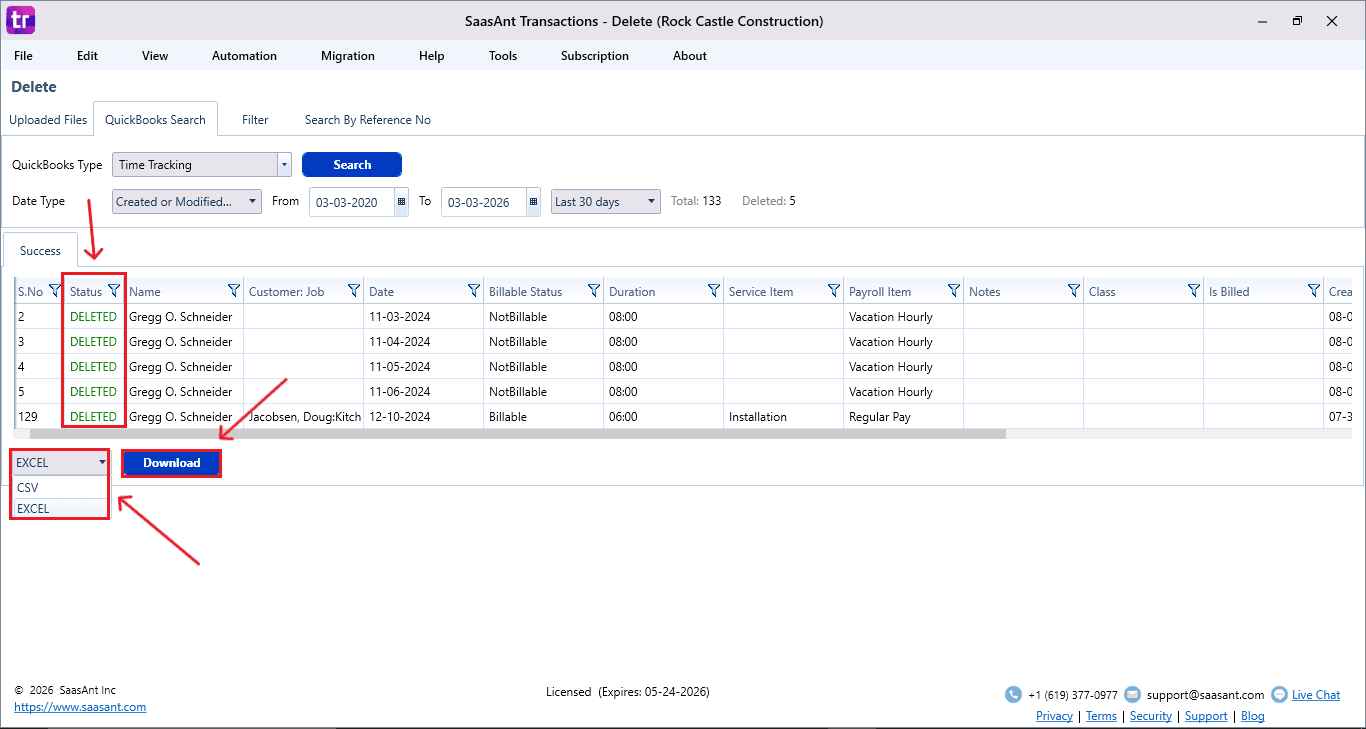
Deleted Time Tracking appears in the SaasAnt dashboard
You can download the deleted records using the Download option in Excel or CSV format.
To verify:
Open QuickBooks Desktop → Reports → Accountant & Taxes → Audit Trail → Filter “Type” for Time Tracking → Check Action column for “Deleted” entries.
FAQ
1) Should QuickBooks Desktop remain open during the process?
Yes, the company file needs to remain open to keep a secure connection session with SaasAnt.
2) How do I connect SaasAnt to QuickBooks Desktop?
Go to the File menu, choose Connect to QuickBooks, and authorize access permissions in the QuickBooks authorization window.
3) Why is connection authorization necessary?
Authorization guarantees a safe data exchange, enabling SaasAnt to securely read and remove chosen time tracking transactions.
4) Are deleted time tracking entries recoverable automatically?
No, to recover, you need to re-import the backup file that was downloaded earlier using SaasAnt.
5) Where can I view deleted time entries?
Deleted entries can be found in the history section of the SaasAnt dashboard for review and download.