How to Delete Journal Entries in QuickBooks Online using SaasAnt Transactions Online
February 26, 2026
This article details how to delete journal entries in QuickBooks Online through SaasAnt Transactions Online. It focuses on identifying specific entries, safely deleting them, and ensuring that balances are updated correctly so that financial statements remain precise after corrections.
Video Tutorial on How to Delete Journal Entries in QuickBooks Online using SaasAnt Transactions Online:
Why use SaasAnt for deleting journal entries?
SaasAnt Transactions Online lets you search with filters, review matching journal entries, take a backup, and delete multiple entries in just a few clicks.
What should you have before you start?
You need:
SaasAnt Transactions Online installed from the QuickBooks App Store (30-day trial available).
A QuickBooks Online company connected to SaasAnt Transactions Online.
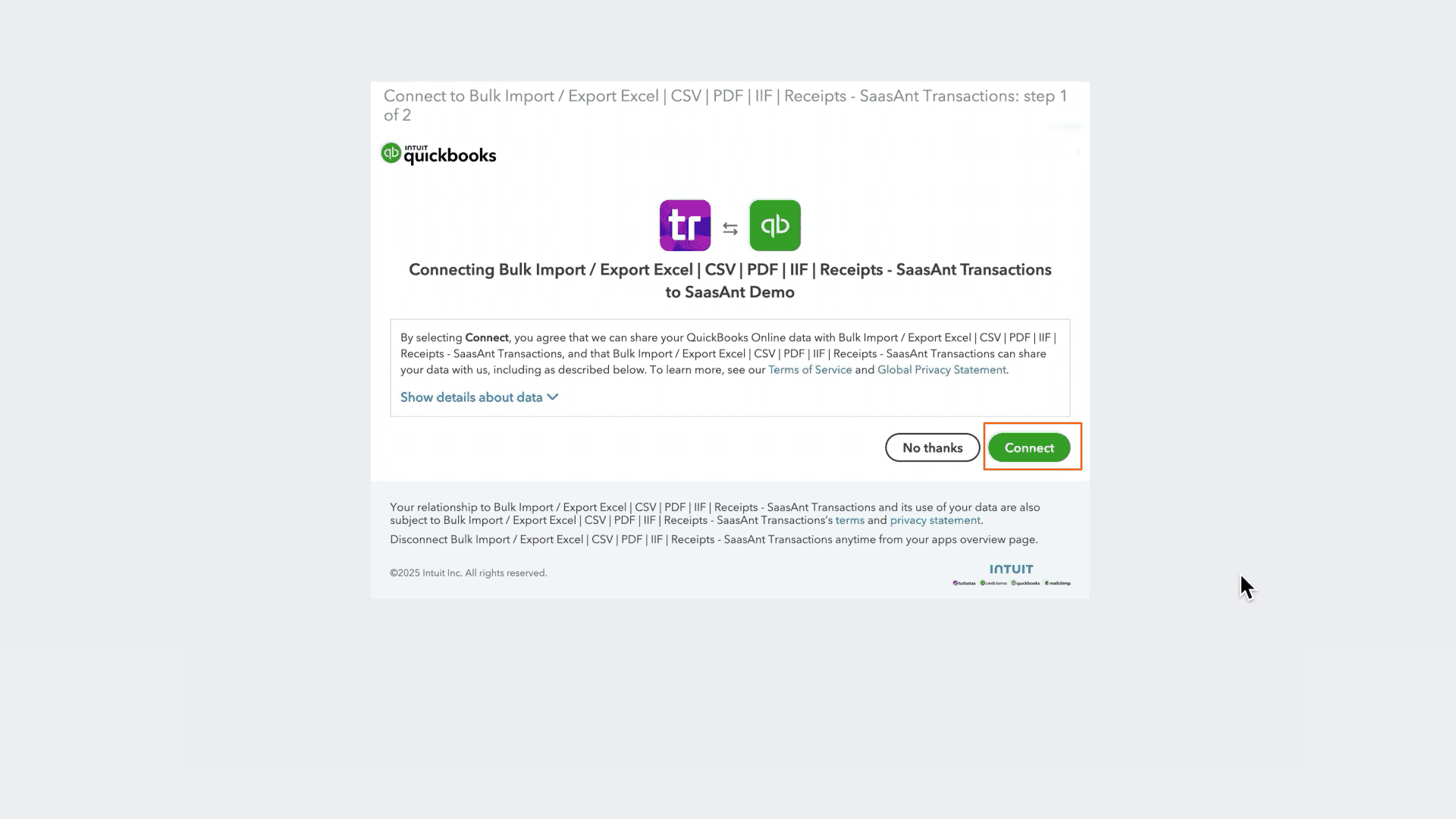
How do you bulk delete the journal entries using SaasAnt?
Step 1: How do you open SaasAnt Transactions Online?
Open the QuickBooks App Store.
Install SaasAnt Transactions Online and connect your QuickBooks Online company.
Launch SaasAnt Transactions Online.
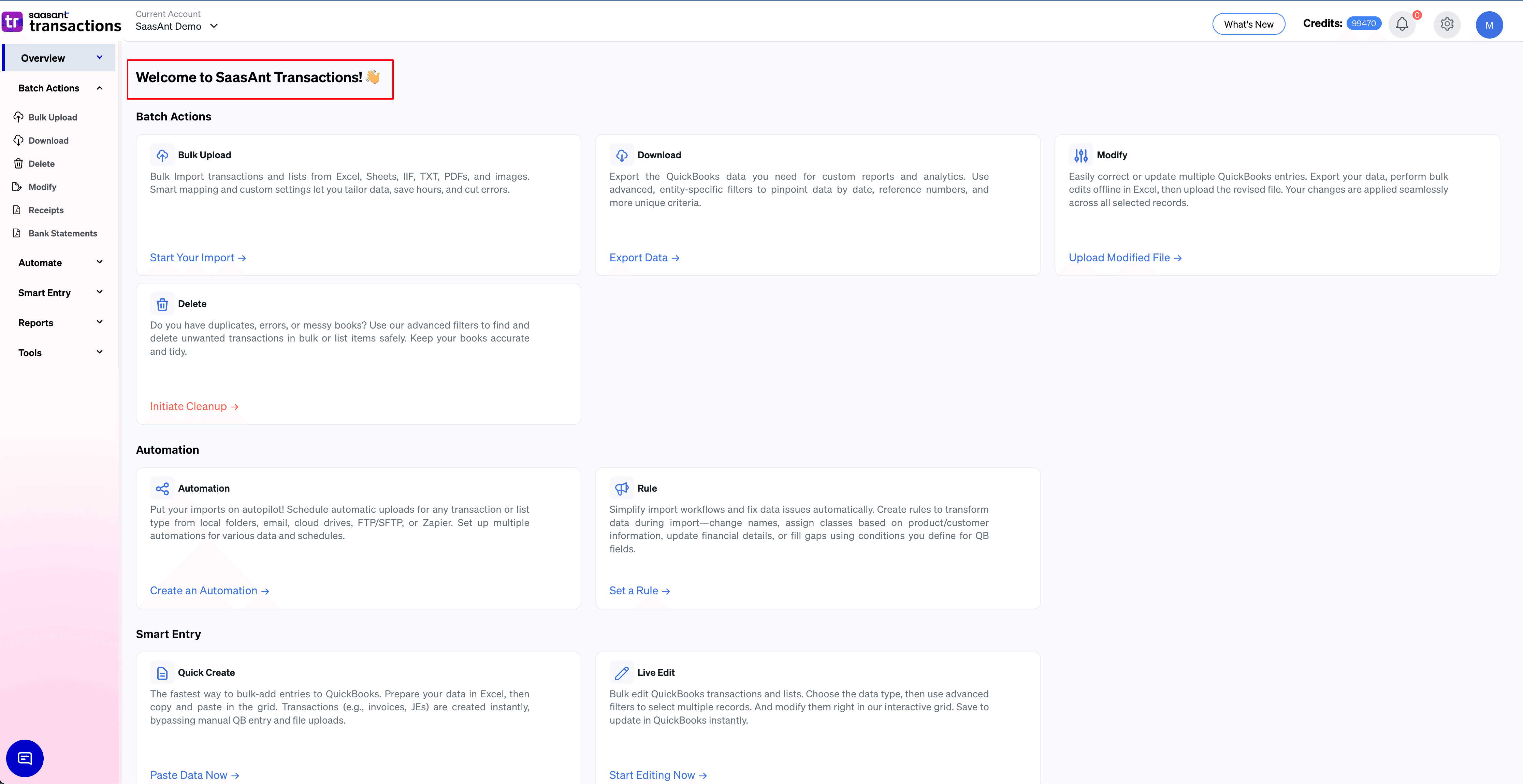
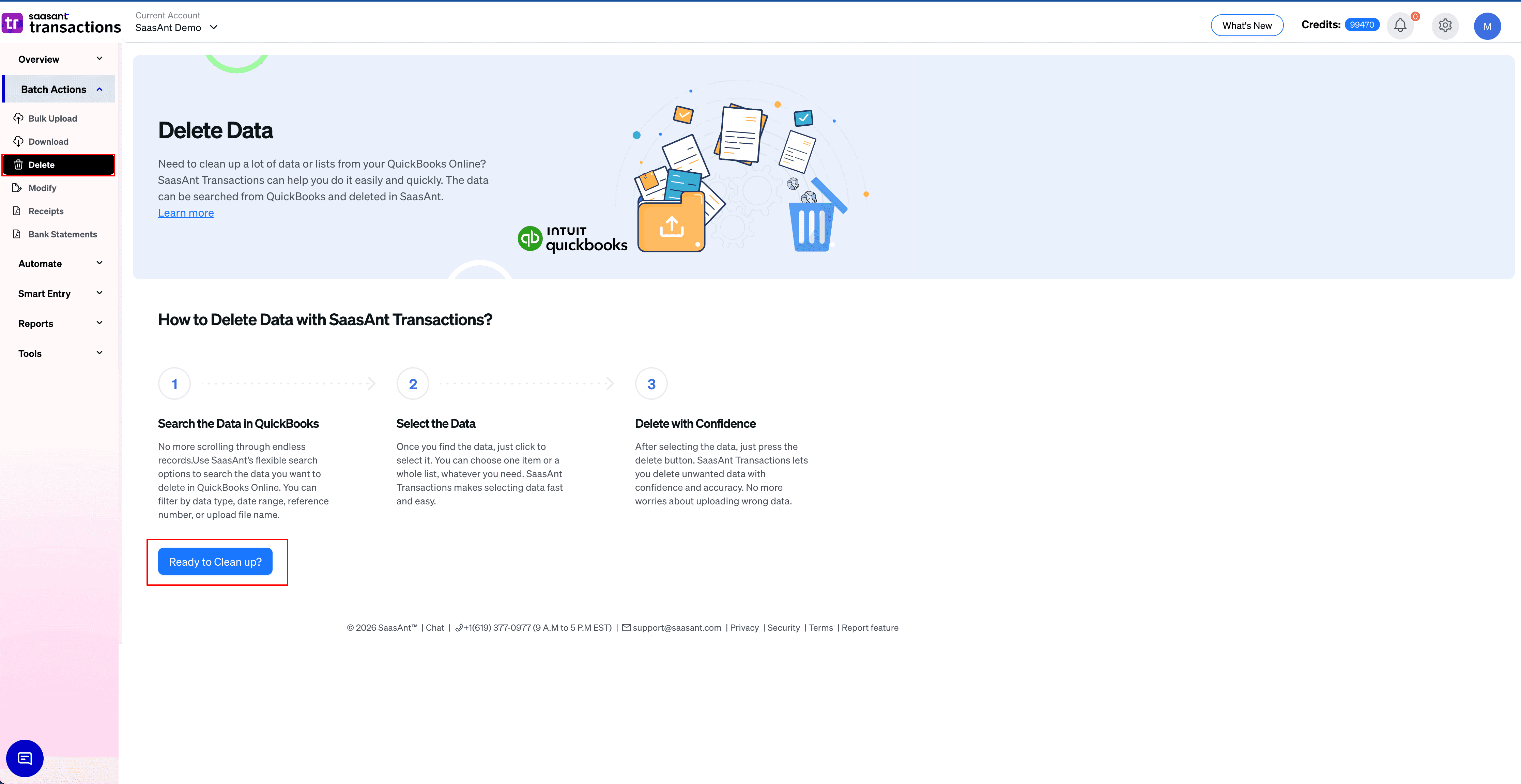
Step 2: Where do you start the delete flow?
From the SaasAnt dashboard, select Delete.
On the setup screen, select Ready to clean up.
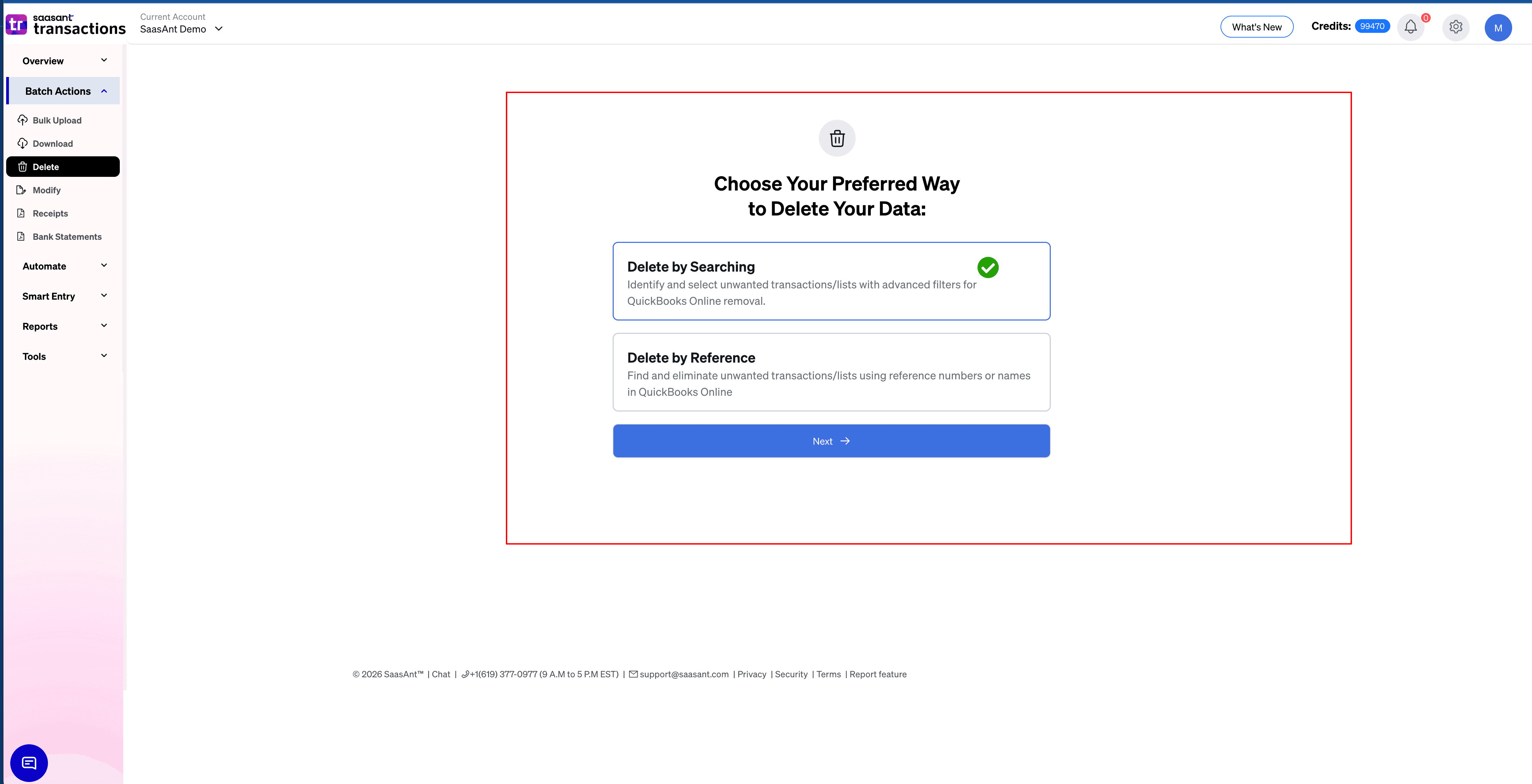
Step 3: Which delete method should you choose?
Choose one:
Delete by Reference: Use this when you already know the exact Reference Numbers (Ref No) of the journal entries you want to delete.
Delete by Searching: Use this when you want to find journal entries using filters (date type, date range).
Select your method, then select Next.
Step 4: How do you set journal entries type and date filters?
Set the Transaction Type to Journal Entry.
Choose the Date Type you want to filter by:
Created Date: When the journal entry was first created in QuickBooks.
Transaction Date: The date shown on the transaction itself.
Last Updated Date: When the journal entry was last edited in QuickBooks.
Enter the Date Range.
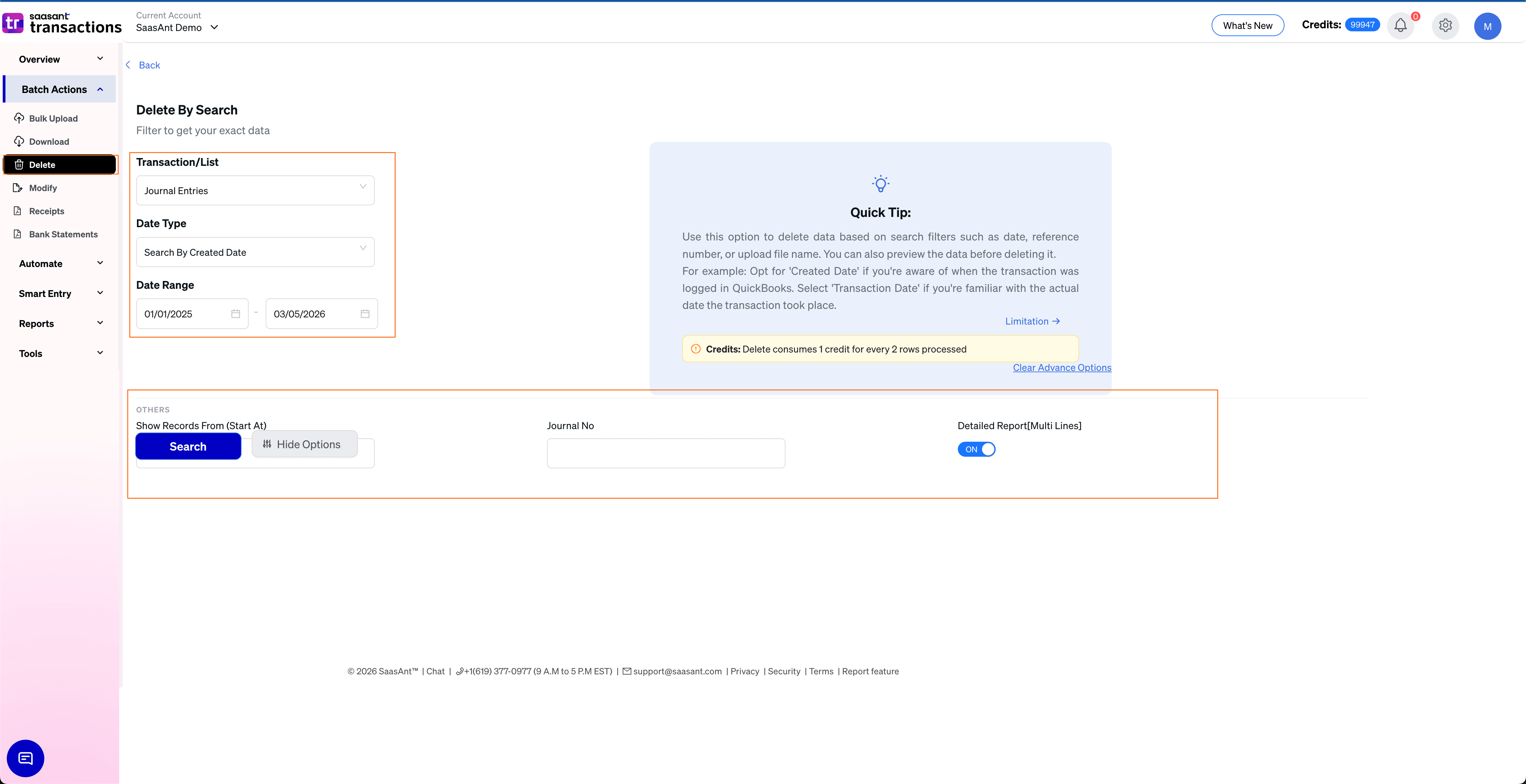
Step 5: How do you narrow results using filters?
Select Customize.
Apply the filters you need, such as:
Total Amount (From amount - To amount): Use this to target journal entries within a specific total range (example: amounts between 100 and 500).
Show Records From (Start At): To skip a specific number of records.
Select Search to load the matching journal entries.
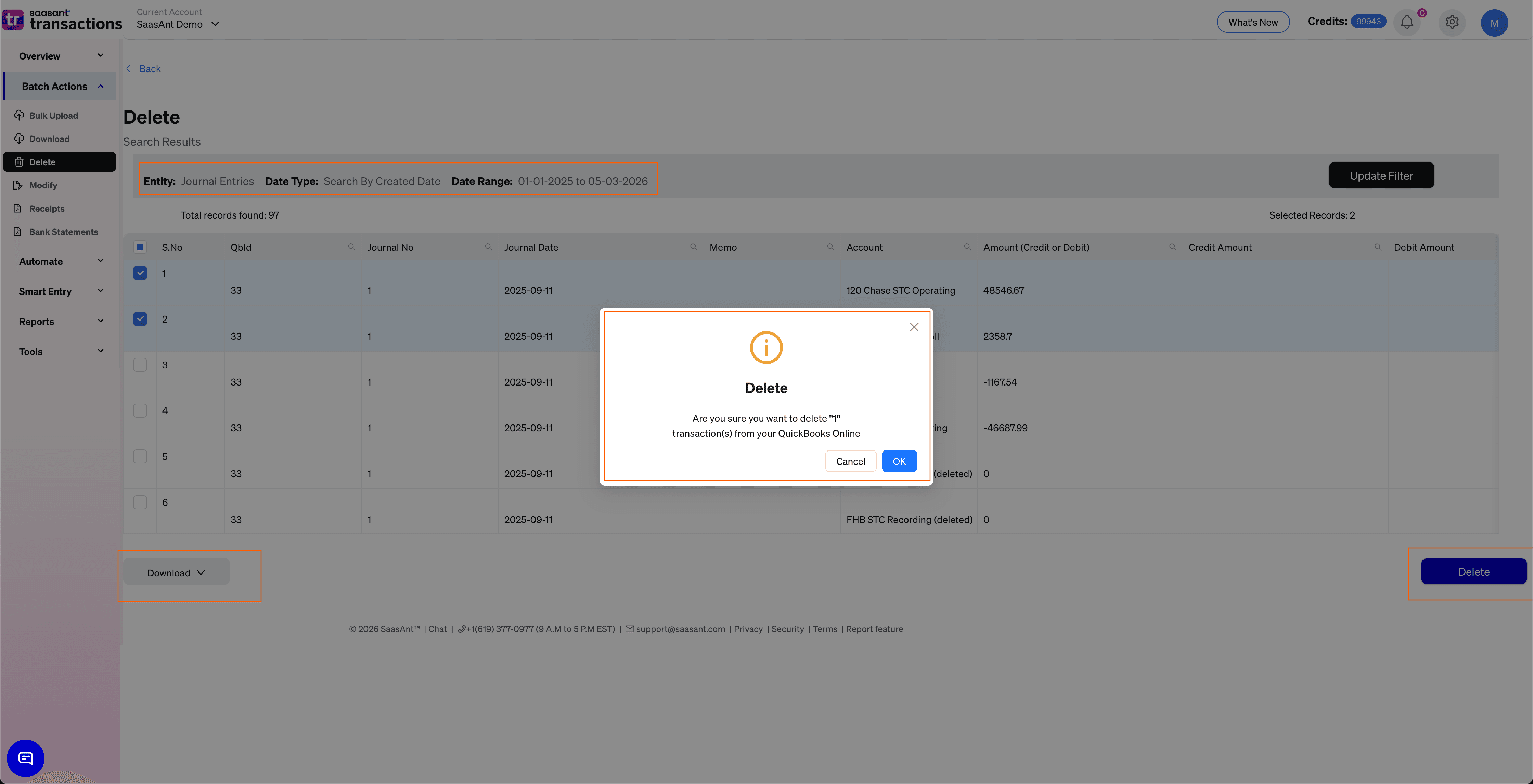
Step 6: How do you review, backup, and delete?
Review the search results carefully.
Select the journal entries you want to delete.
Download a backup (CSV or Excel) before deleting.
Select Delete.
Confirm the deletion in the pop-up.
Important: Deleting is not reversible. Always take the backup first, and delete in smaller batches if you are removing a large volume.
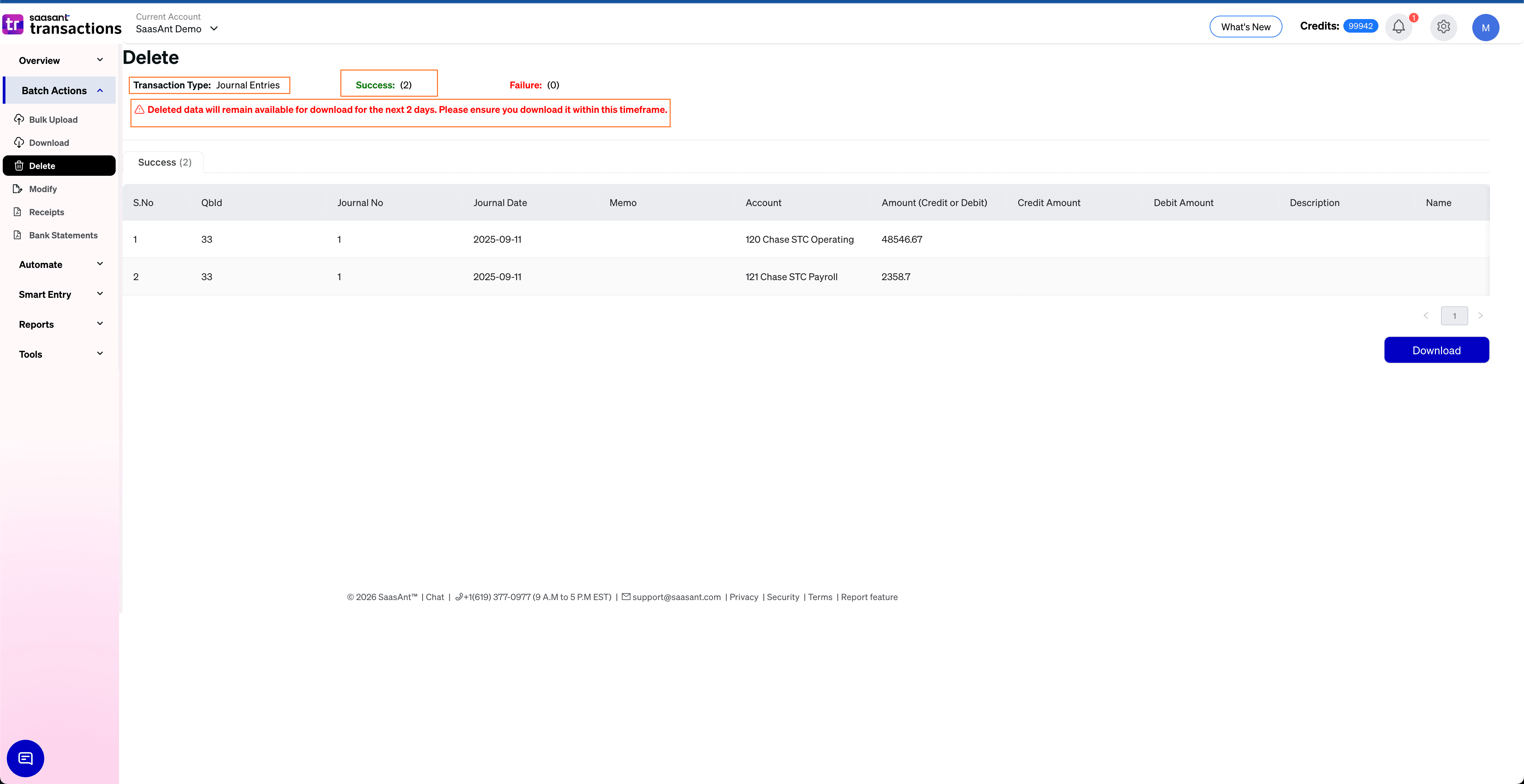
Step 7: Where do you see the deletion summary?
After deletion, SaasAnt shows a Deletion Summary. This summary is available to download for up to 2 days and can be used for records and audit tracking.
Troubleshooting
What if no journal entries show up after the search?
Check these:
Confirm the Date Type and Date Range match when the journal entry was created or edited.
Remove filters one by one (such as specific amounts) to broaden the search.
What if the delete fails for some journal entries?
Common reasons:
The journal entry is restricted by QuickBooks due to how it is linked or recorded (e.g., linked to a closed accounting period).
Try deleting a smaller selection to identify which specific records are failing, then review those journal entries inside QuickBooks Online.
What if you deleted the wrong journal entries?
You cannot undo a delete in QuickBooks Online. Use your SaasAnt backup file to re-create the journal entries if needed, or restore using your own backup process if available.