How to Delete Bank Deposits in QuickBooks Online using SaasAnt Transactions Online
May 5, 2026
What does this article help you do?
This guide shows how to bulk delete bank deposits in QuickBooks Online using SaasAnt Transactions Online. You can use this process to remove duplicate deposits, deposits created by mistake, deposits recorded with incorrect amounts or dates, or deposits that were entered into the wrong account without deleting them one by one.
Why use SaasAnt for deleting Bank Deposits?
SaasAnt Transactions Online lets you search for bank deposits using filters, review the matching transactions, download a backup, and delete multiple deposits in a few clicks.
Video Tutorial on How to Delete Bulk Data in QuickBooks Online using SaasAnt Transactions Online:
What should you have before you start?
You need:
SaasAnt Transactions Online installed from the QuickBooks App Store (30-day trial available)
A QuickBooks Online company connected to SaasAnt Transactions Online
How do you bulk-delete Bank Deposits in SaasAnt?
Step 1: How do you open SaasAnt Transactions Online?
Open the QuickBooks App Store.
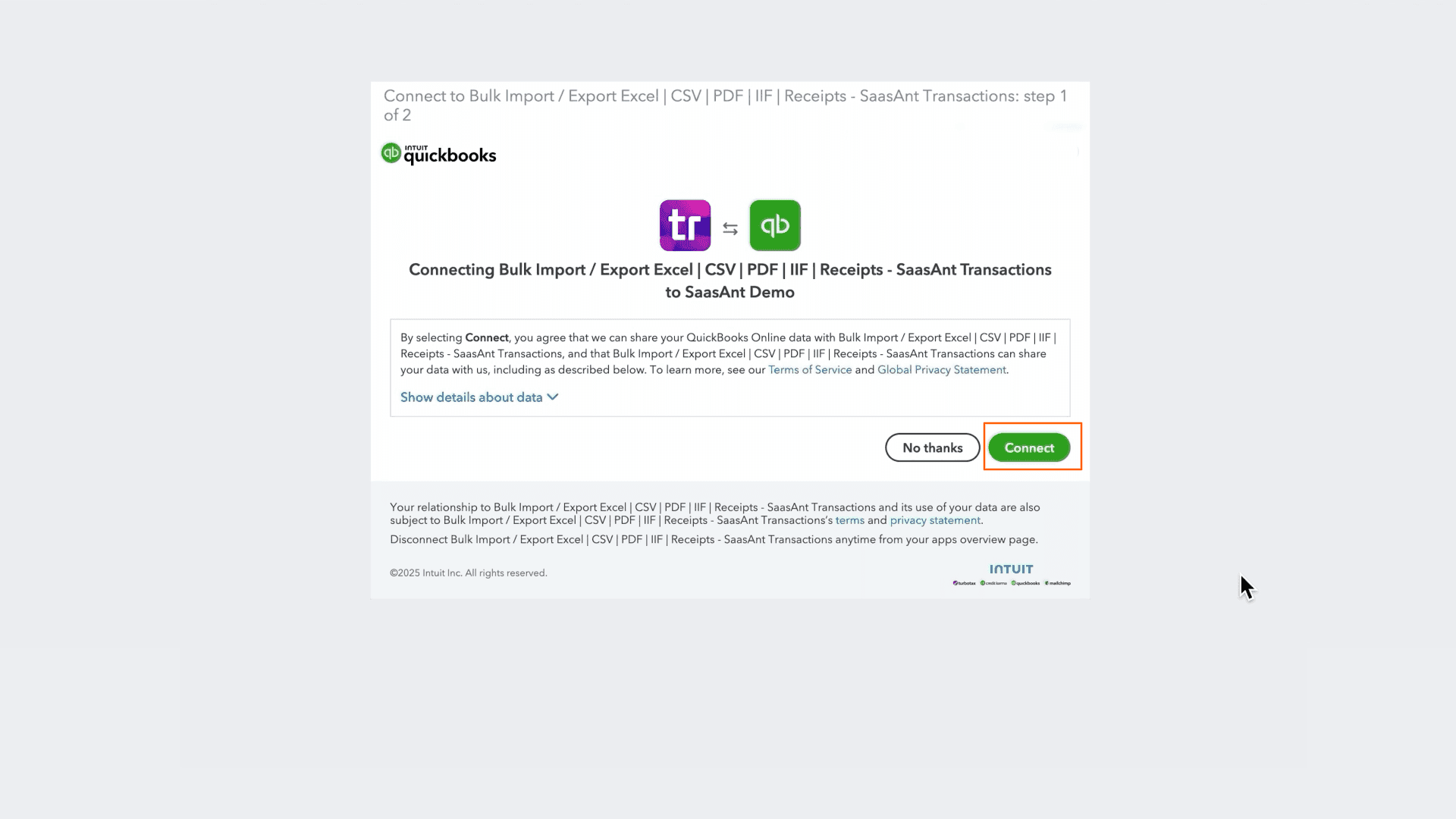
Install SaasAnt Transactions Online and connect your QuickBooks Online company.
Launch SaasAnt Transactions Online.
Step 2: Where do you start the delete flow?
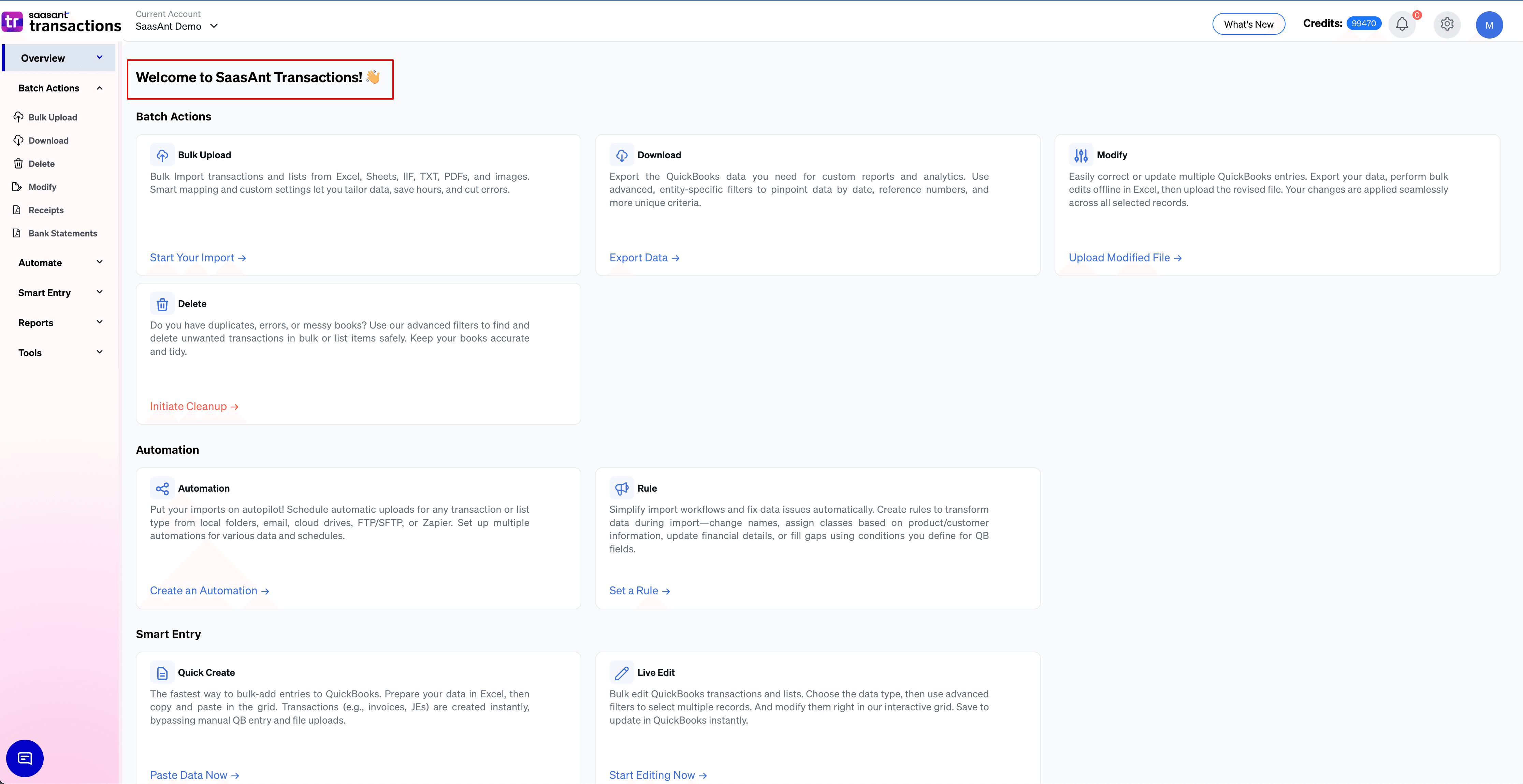
From the SaasAnt dashboard, select Delete.
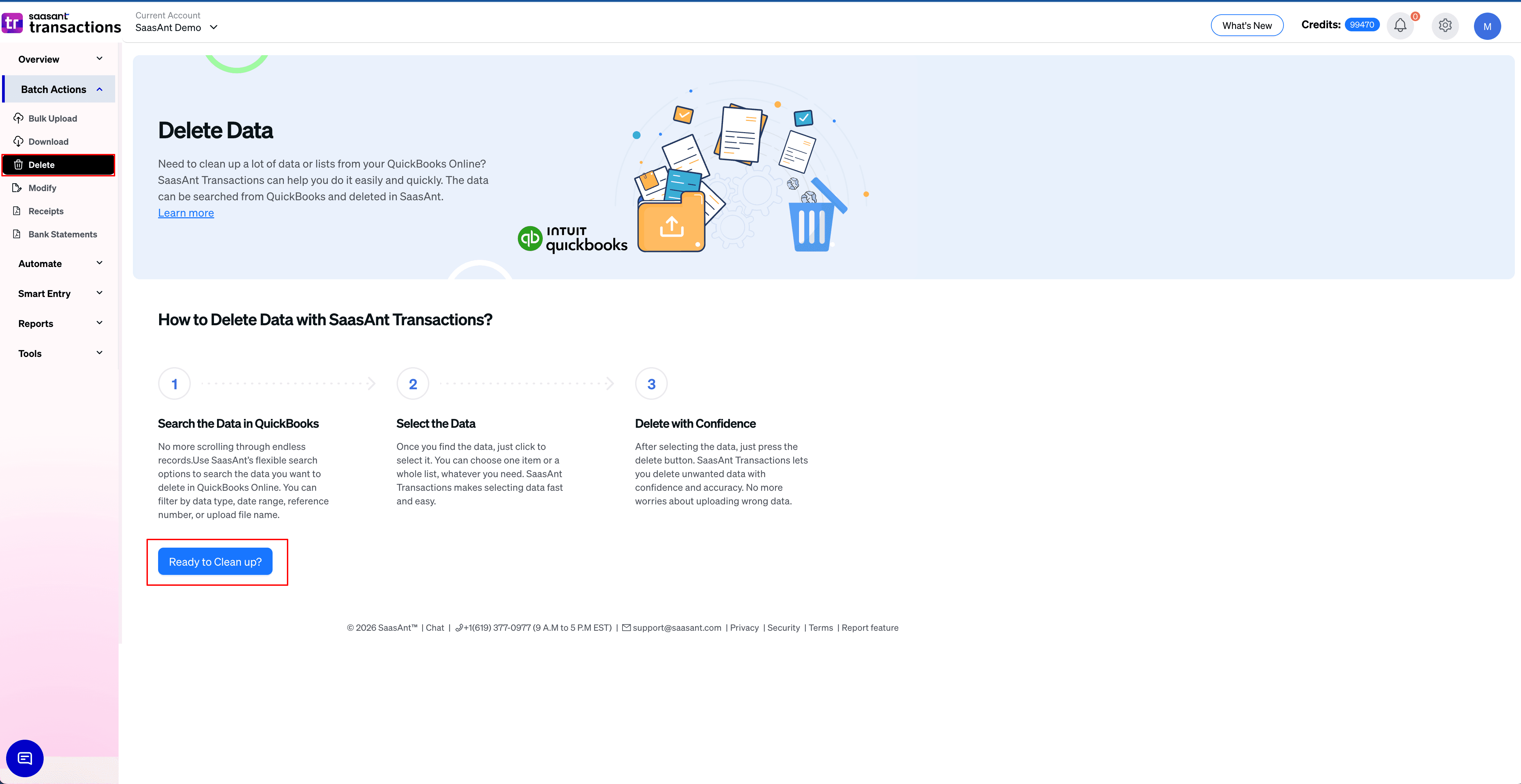
On the setup screen, select Ready to clean up.
Step 3: Which delete method should you choose?
Choose one:
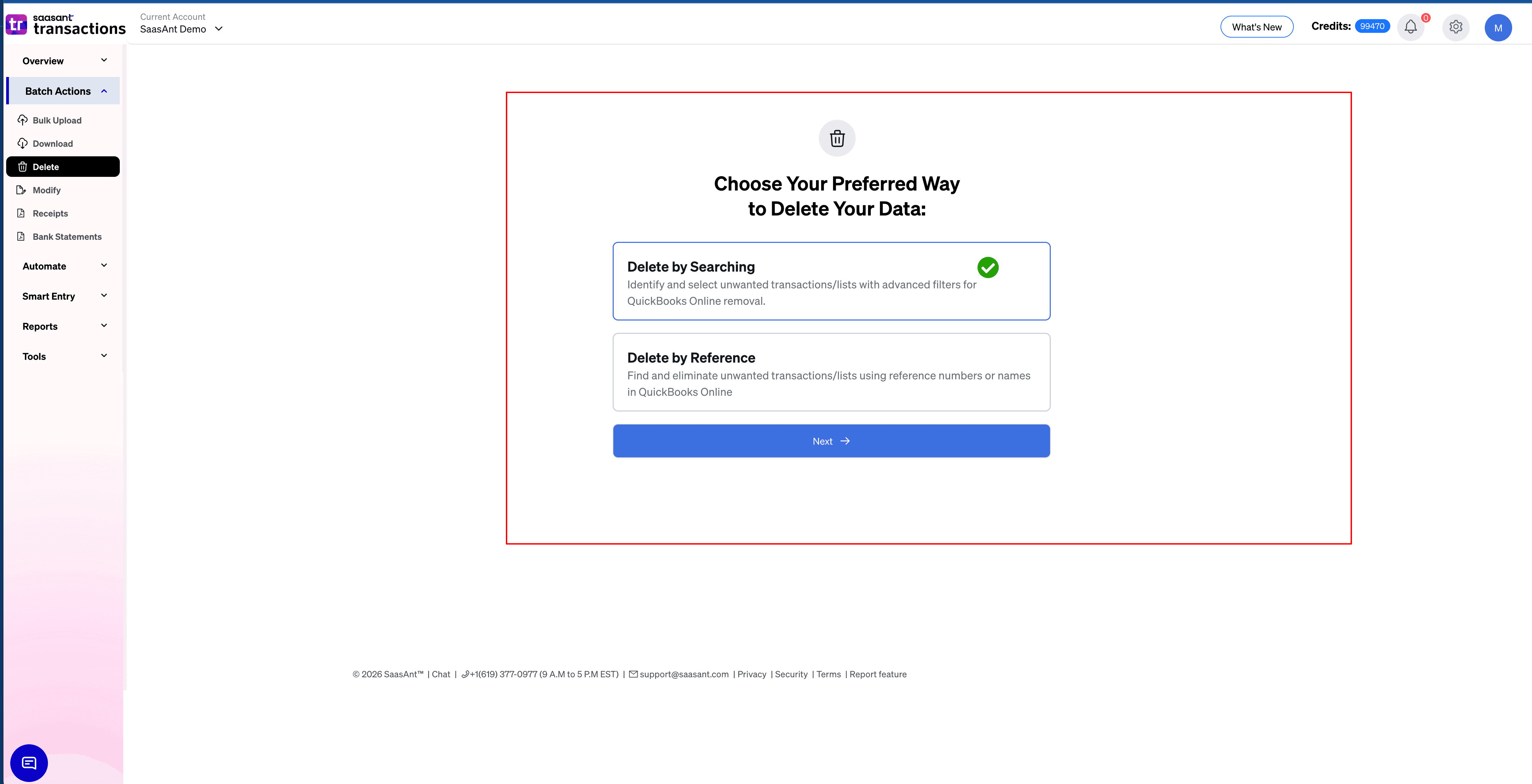
Delete by Reference: Use this when you already know the deposit number or reference value of the bank deposits you want to delete.
Delete by Searching: Use this when you want to find bank deposits using filters such as date, bank account, customer, or amount.
Select your preferred method. Now, choose the option “Delete by Searching,” then select Next.
Step 4: How do you set the Bank Deposit type and date filters?
Set Transaction Type to Bank Deposits.
Choose the date type you want to search by:
Created Date: When the bank deposit was first created in QuickBooks.
Transaction Date: The deposit date recorded on the transaction.
Last Updated Date: When the bank deposit was last changed in QuickBooks.
Enter the required date range.
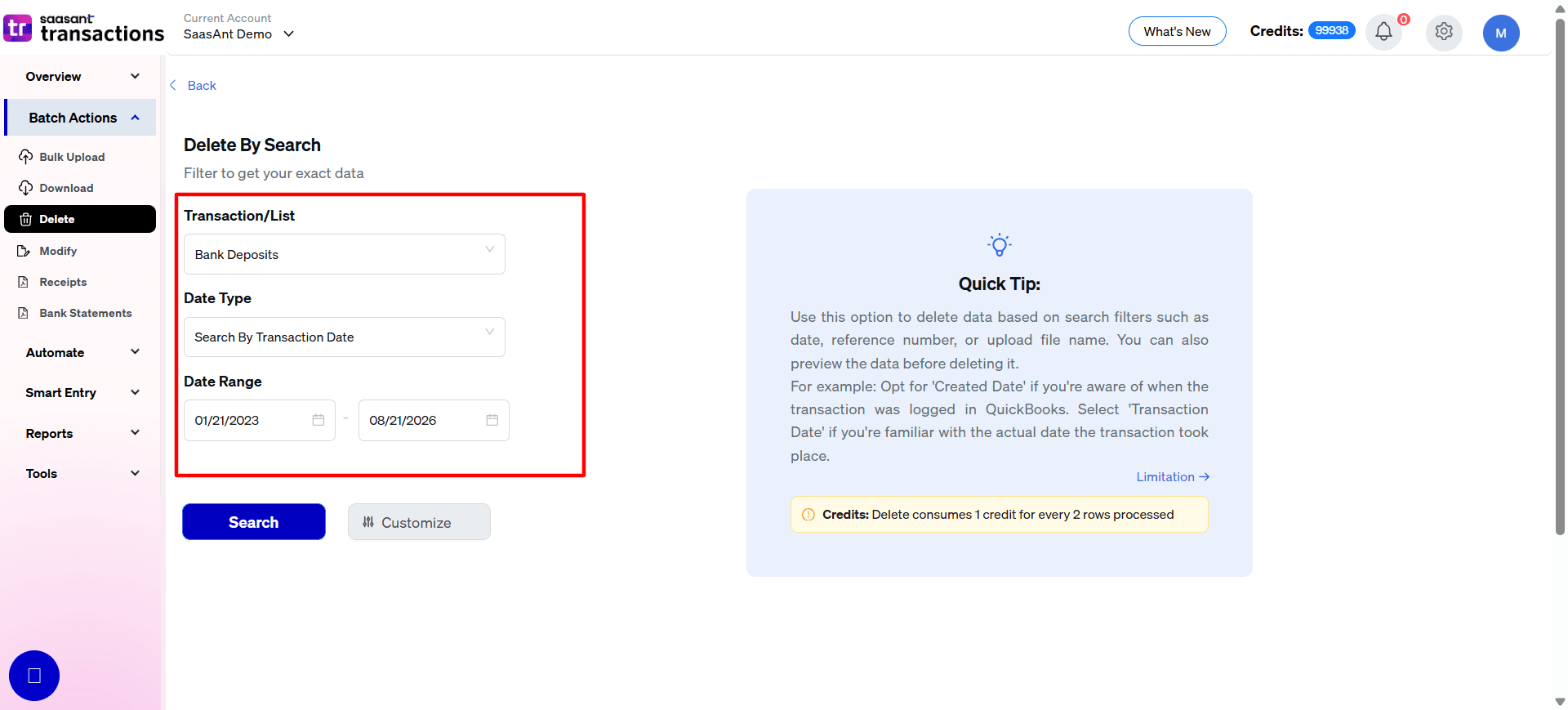
Choose the date type based on what you know about the deposits you are trying to remove. For example, use Transaction Date when you know the accounting period in which the incorrect deposits were recorded.
Step 5: How do you narrow the Bank Deposit results using filters?
Select Customize.
Apply the available filters you need, such as:
Show records from(Start At)
Select Search to load the matching bank deposits.
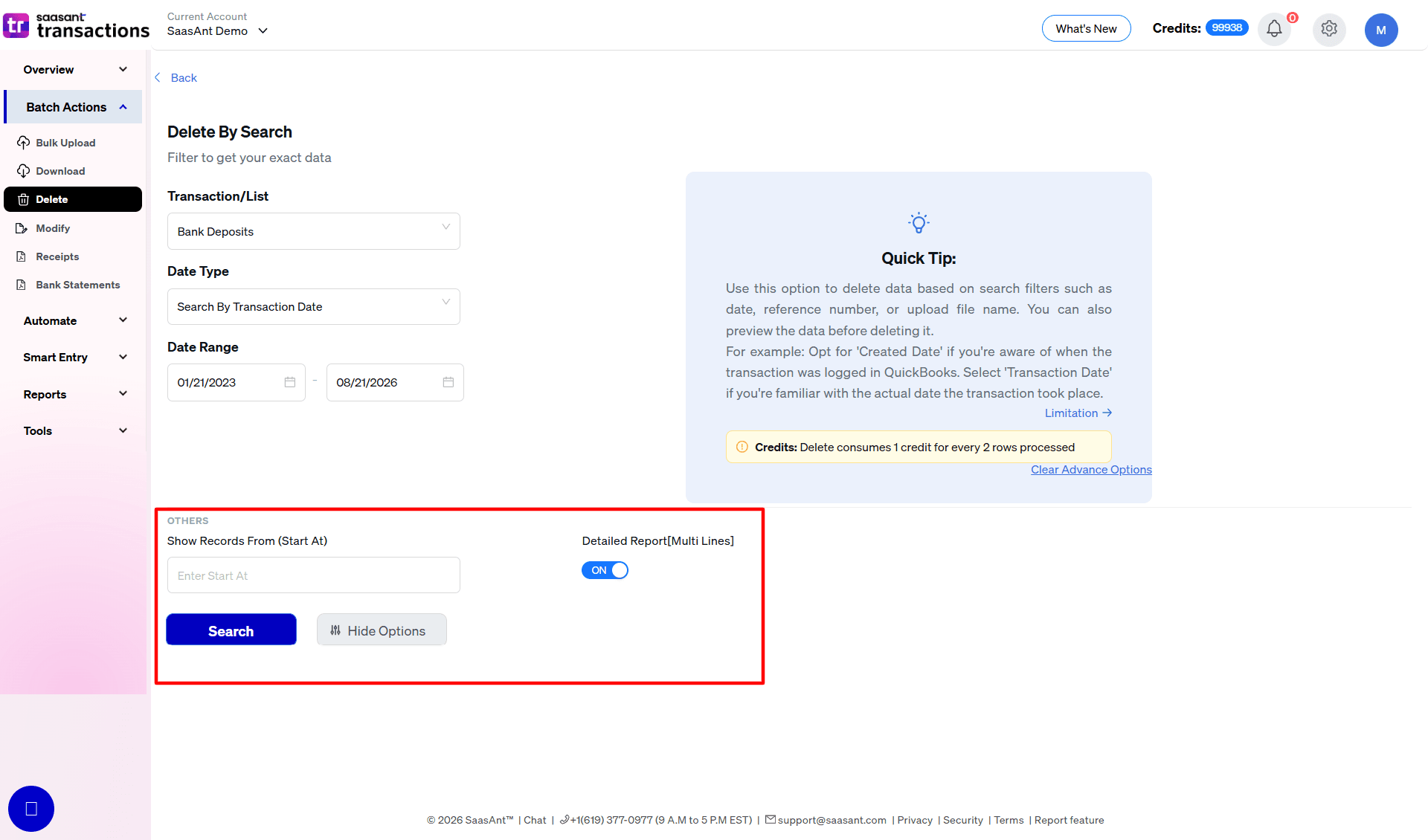
The available Customize options can vary depending on the selected transaction type. Start with a wider search if you are unsure which filter contains the value you need.
Step 6: How do you review, back up, and delete Bank Deposits?
Review the search results carefully.
Confirm that the deposit date, bank account, amount, and other details match the deposits you want to remove.
Select the bank deposits you want to delete.
Download a backup in CSV or Excel format.
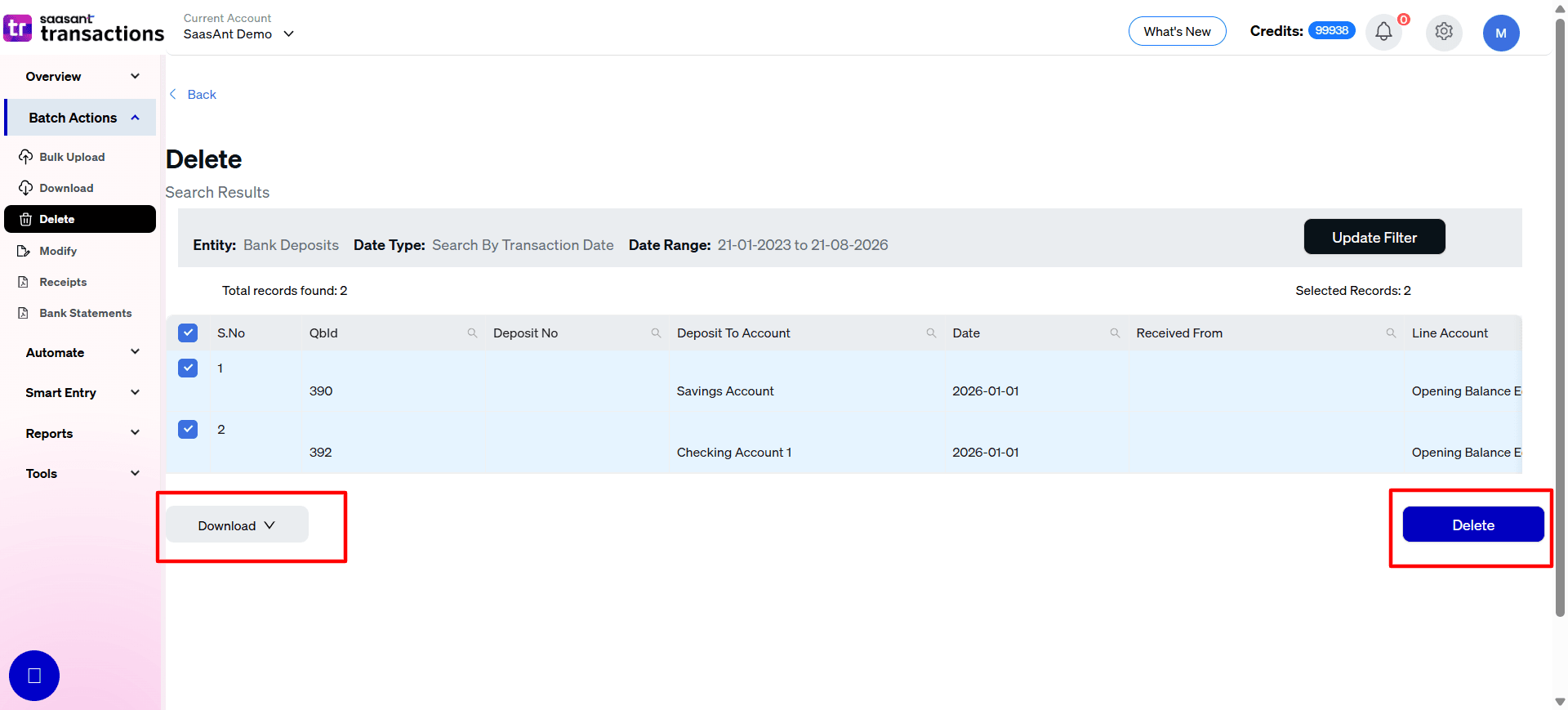
Select Delete.
Confirm the deletion in the pop-up.
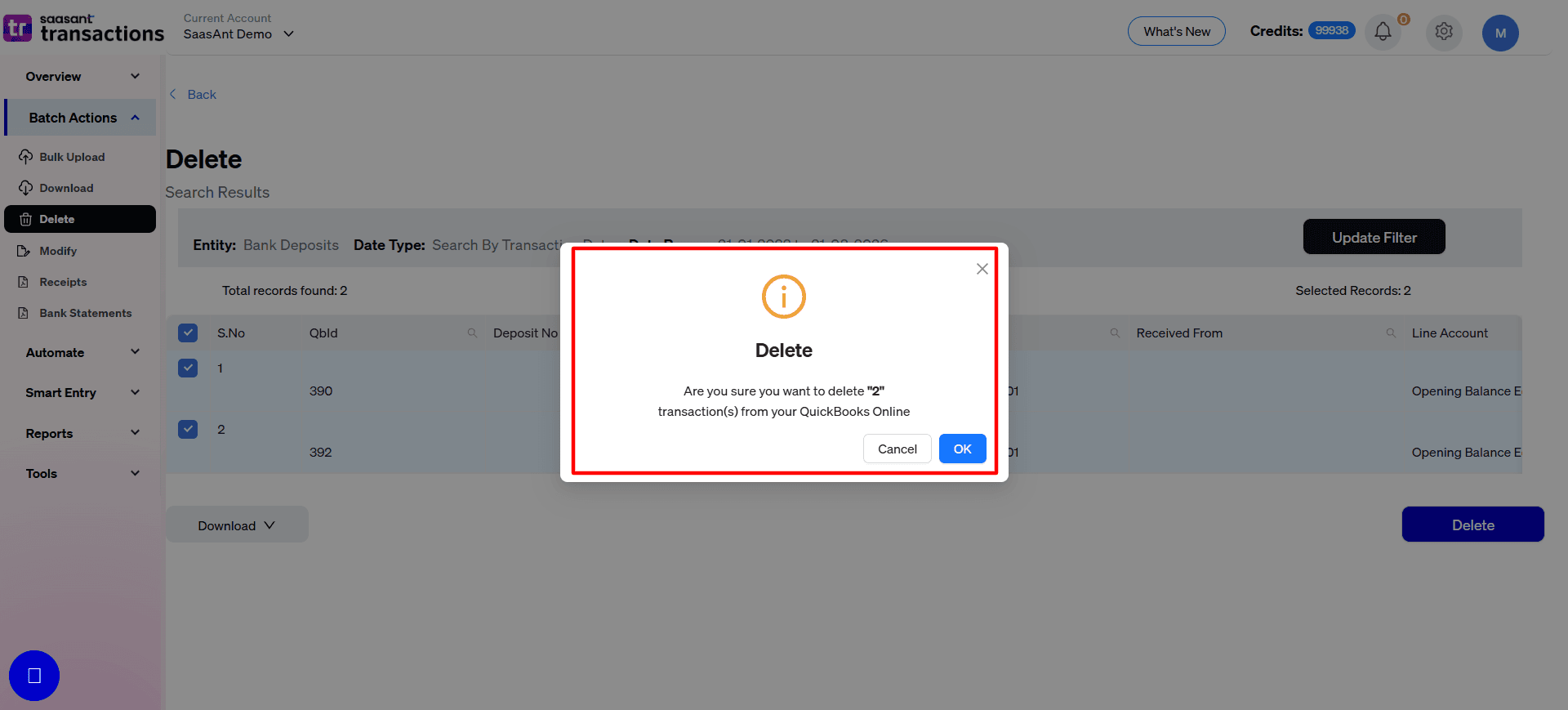
Important: Deleting a bank deposit is not reversible through the Delete workflow. Always download a backup before deleting. If you need to remove a large number of deposits, process them in smaller batches so the results are easier to review.
Deleting a bank deposit can also affect account balances and transactions connected to that deposit. Review the accounting impact before removing it.
Step 7: Where do you see the deletion summary?
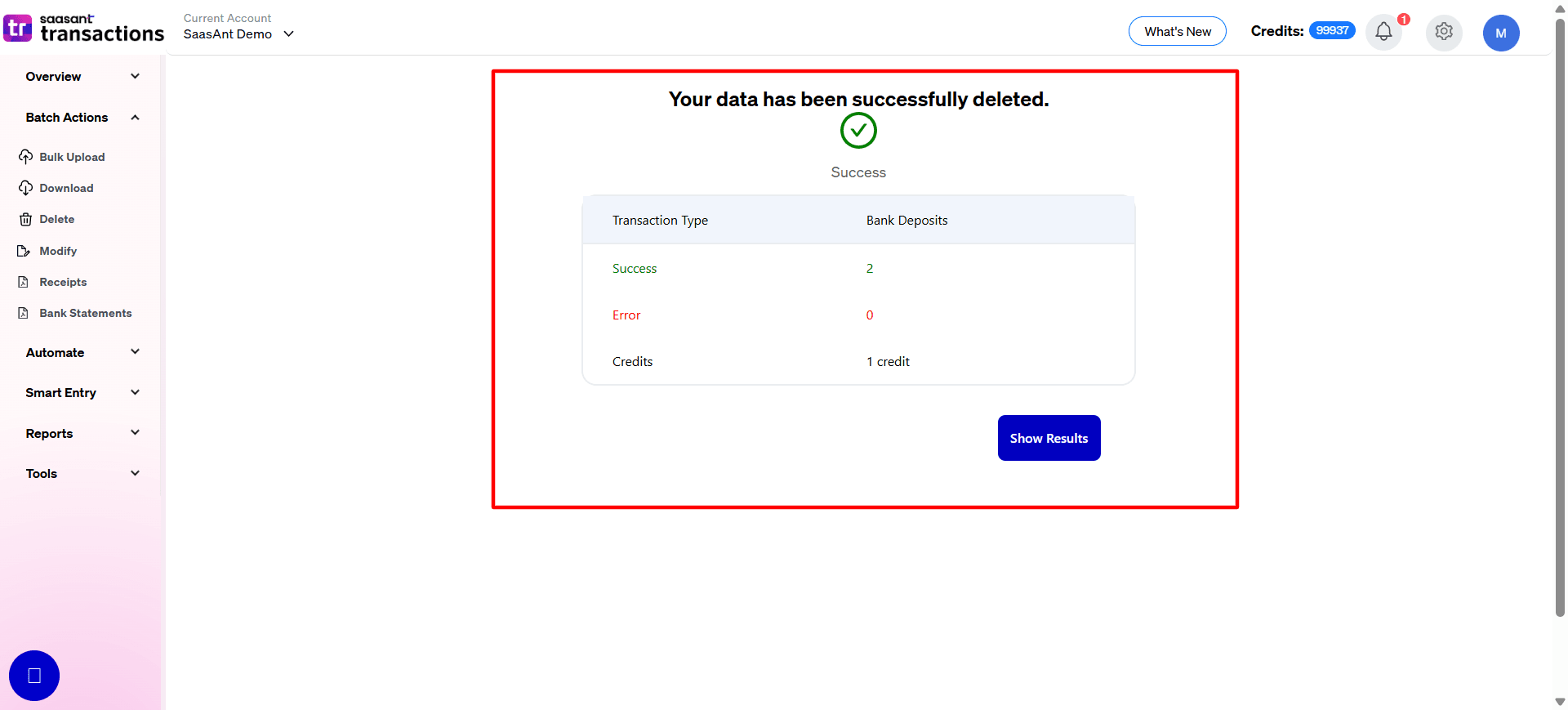
After the deletion is completed, SaasAnt displays a Deletion Summary showing the results.
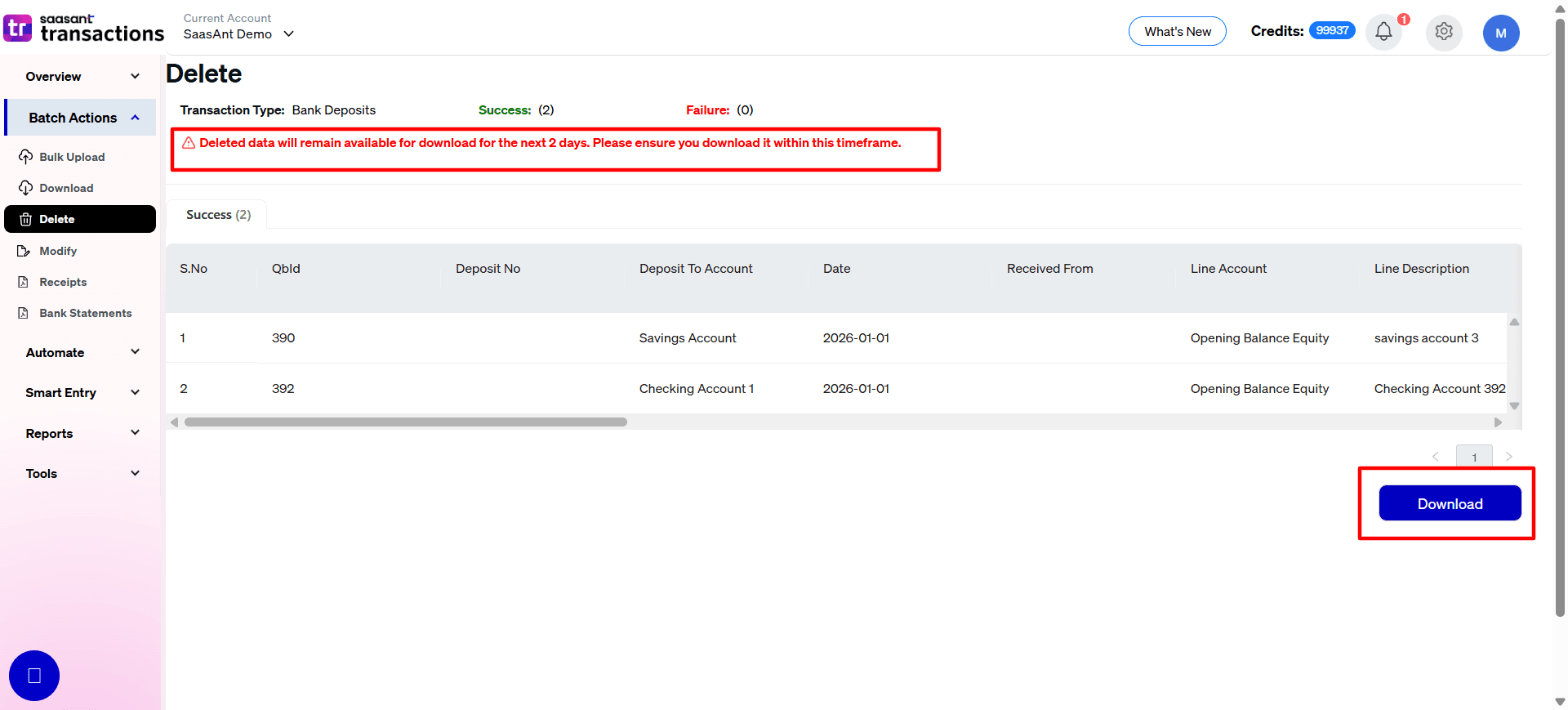
Note: Deleted data will remain available for download for the next 2 days. Please ensure you download it within this timeframe.
Troubleshooting
What if no bank deposits appear after the search?
Check the following:
Confirm that Bank Deposits is selected as the transaction type.
Check whether the selected date type matches the date information you know.
Increase the date range.
Remove filters such as bank account, customer, amount, or reference number one at a time.
Confirm that the deposits exist in the QuickBooks Online company currently connected to SaasAnt.
What if SaasAnt cannot delete a Bank Deposit?
Check whether the transaction is reconciled, matched, or associated with QuickBooks Bank Transactions.
Transactions imported through certain QuickBooks Bank or PayPal integration workflows may not be deletable through SaasAnt because of QuickBooks limitations. If the transaction is matched or reconciled, review its status in QuickBooks before attempting to delete it.
What if you deleted the wrong Bank Deposits?
The deletion cannot be undone directly through the Delete workflow.
Use the CSV or Excel backup downloaded before deletion to review the original bank deposit information. If required, you can use that data to recreate the bank deposits in QuickBooks Online, including through a supported SaasAnt import workflow.
Always verify the recreated deposits against the original records and related account balances.