Sync Square Transactions into QuickBooks Online
January 1, 2025
To download and sync Square transactions into QuickBooks Online, you must link your Square account with PayTraQer. This article explains how to integrate your Square account with PayTraQer.
Video Tutorial for How to Connect and Sync Square Transactions to QuickBooks Online using PayTraQer:
Step 1: Open the Square connector in PayTraQer
Log in to PayTraQer with the QuickBooks Online company you wish to sync with Square.
In the left menu, select Connectors.
Choose Payment Connectors to see the payment platforms linked to your PayTraQer account.
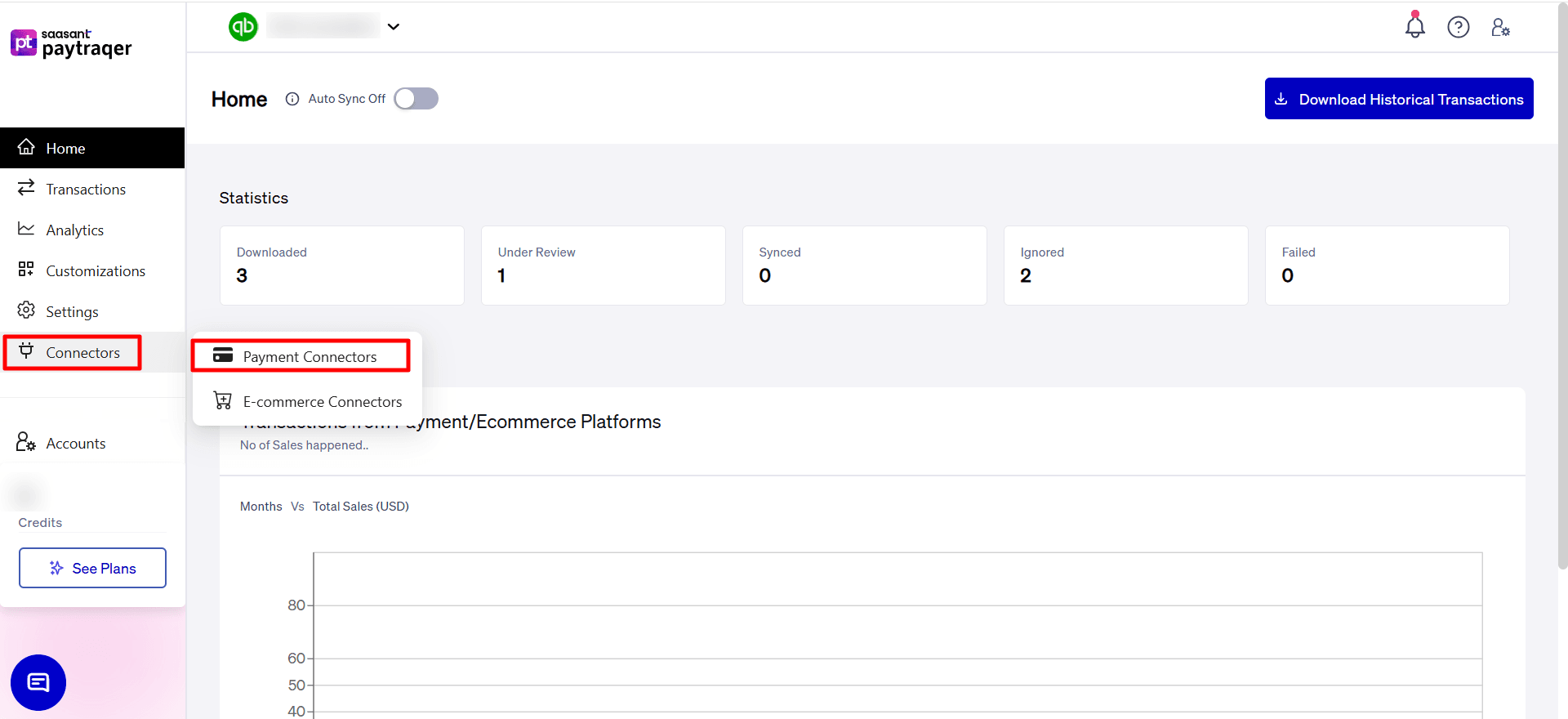
Find your Square connection in the list before proceeding to the next step.
Step 2: Review how Square transactions will be recorded in QuickBooks
In the Square connector row, click on See How It Works.
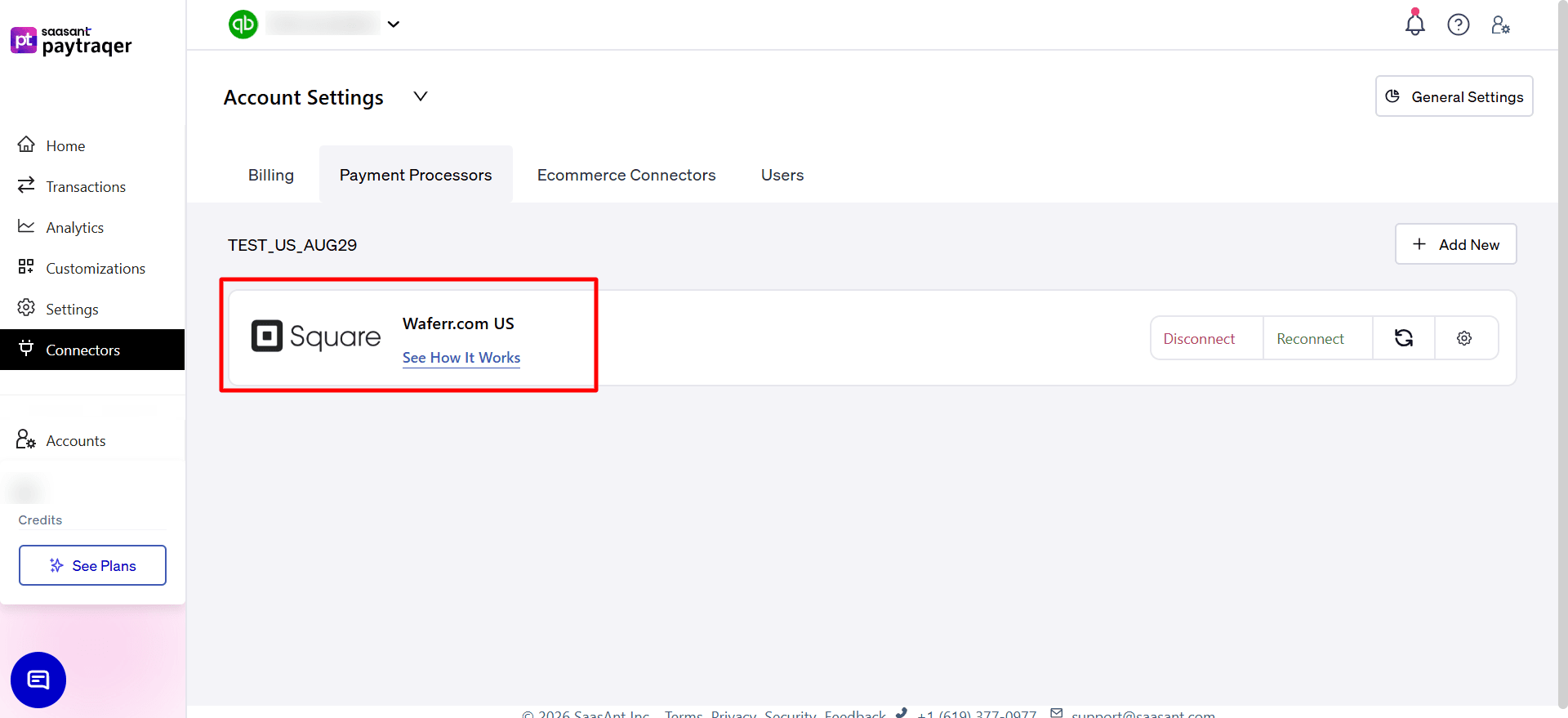
A User Guide window will open, showing how PayTraQer syncs Square transactions into QuickBooks entries.
Under Transaction Recording, check the mapping displayed for your Square sync.
Make sure that the payment is recorded as Invoice Payment, and Fees as Expense in QuickBooks.
Confirm that Customer Refund is listed as Refund in QuickBooks.
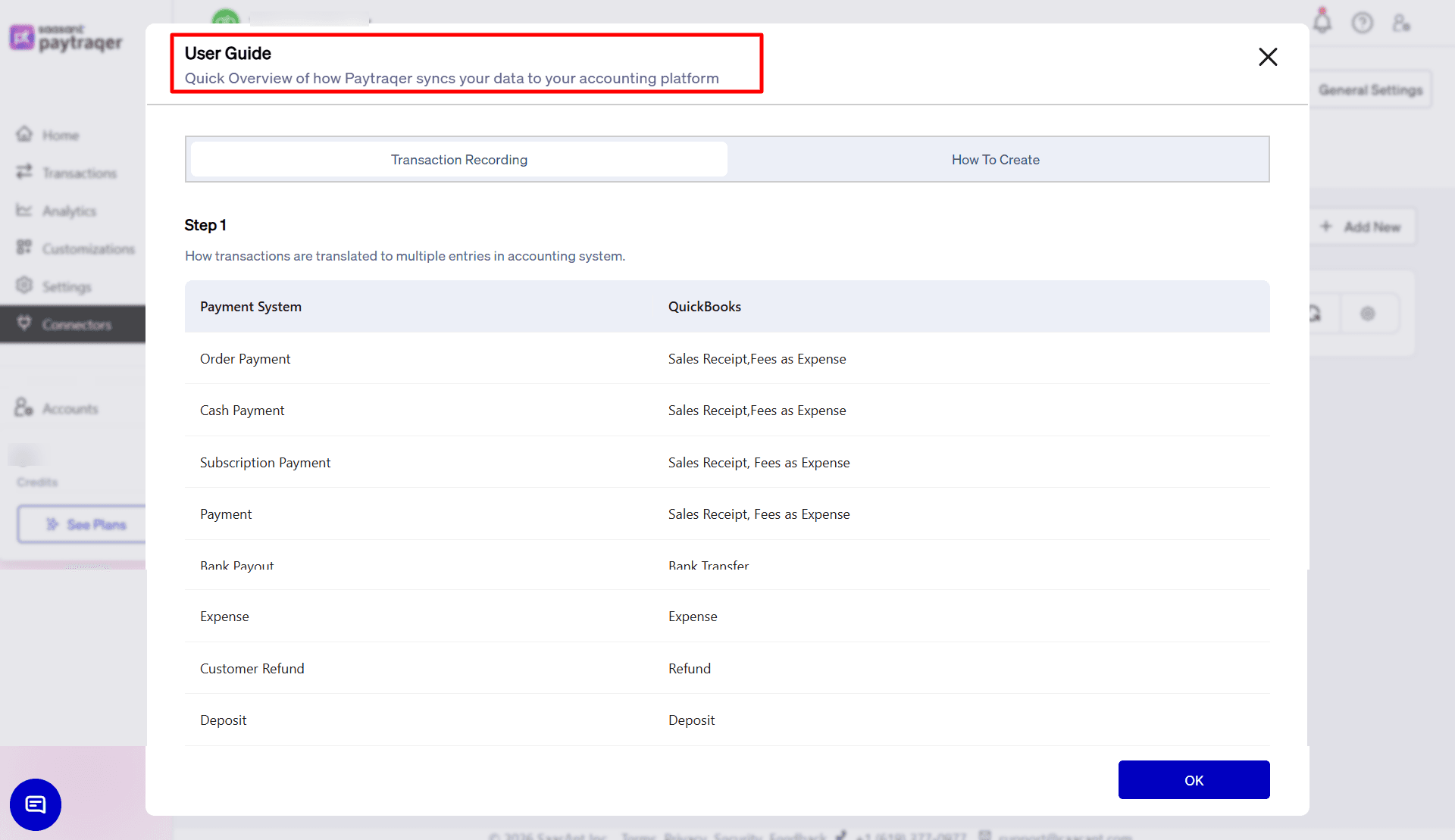
Payment System | QuickBooks |
Order Payment | Sales Receipt, Fees as Expense |
Cash Payment | Sales Receipt, Fees as Expense |
Subscription Payment | Sales Receipt, Fees as Expense |
Payment | Sales Receipt, Fees as Expense |
Bank Payout | Bank Transfer |
Expense | Expense |
Customer Refund | Refund |
Deposit | Deposit |
Click “OK” once you have reviewed the transaction flow.
Step 3: Open the Transactions page in PayTraQer
On the left menu, select Transactions.
The Transactions dashboard has various organizational views that assist in managing and checking your data flow:
Section | Purpose |
Review | Lists transactions that are ready for syncing. |
Synced | Includes transactions that have already been sent to QuickBooks. |
Error | List transactions that failed and require correction. |
Ignore | Keeps track of transactions you deliberately avoided. |
Sync History | Provides a full timeline log of previous syncs. |
Stay in the Review tab to view Square transactions that are prepared to sync with QuickBooks Online.
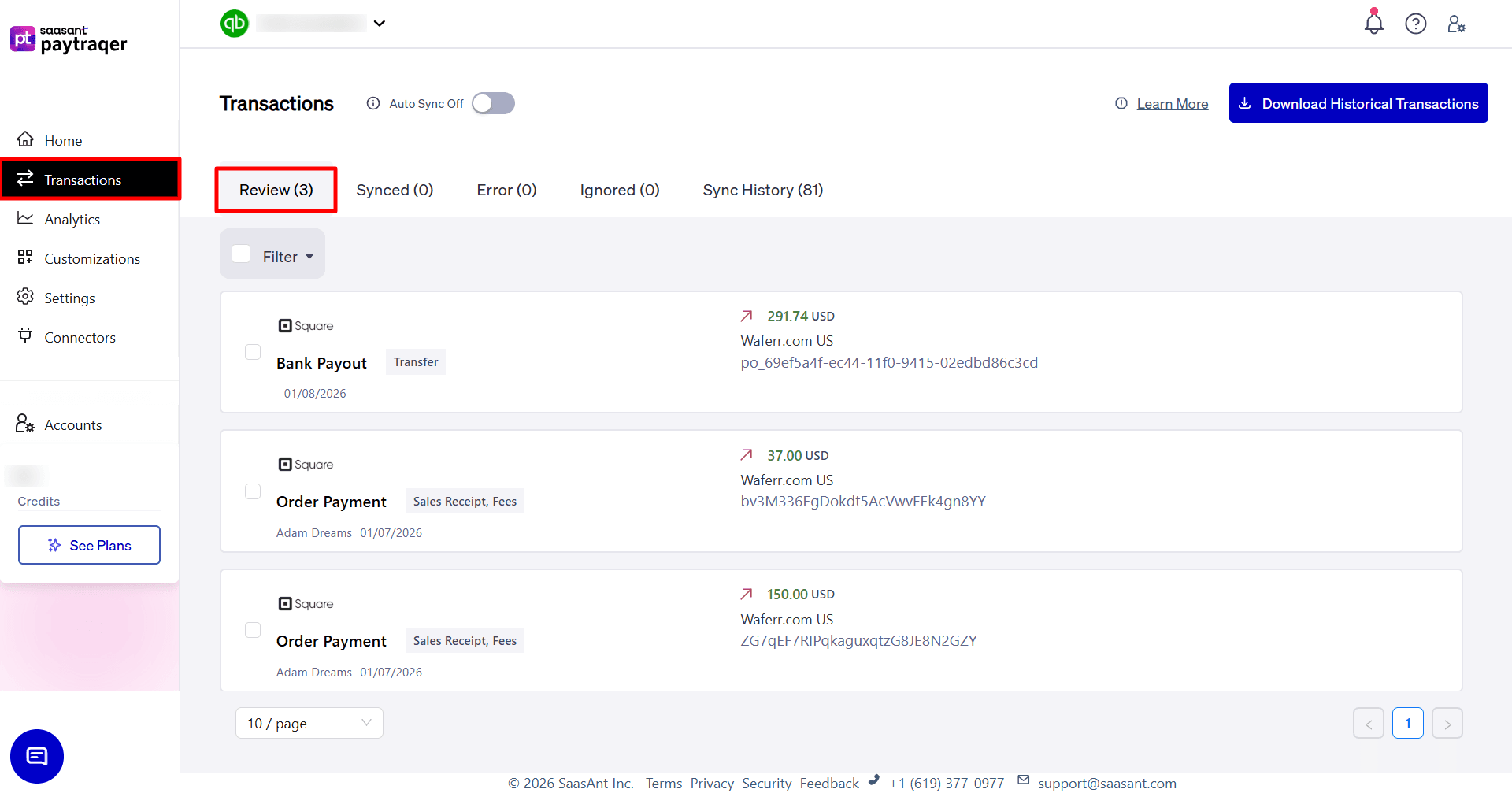
In the Review tab, click on Filter.
You can use options such as Date, Amount, Payment System, Transaction Type, Transaction ID, and Contact to filter the records.
Select Current Page if you want to choose all transactions that are currently displayed.
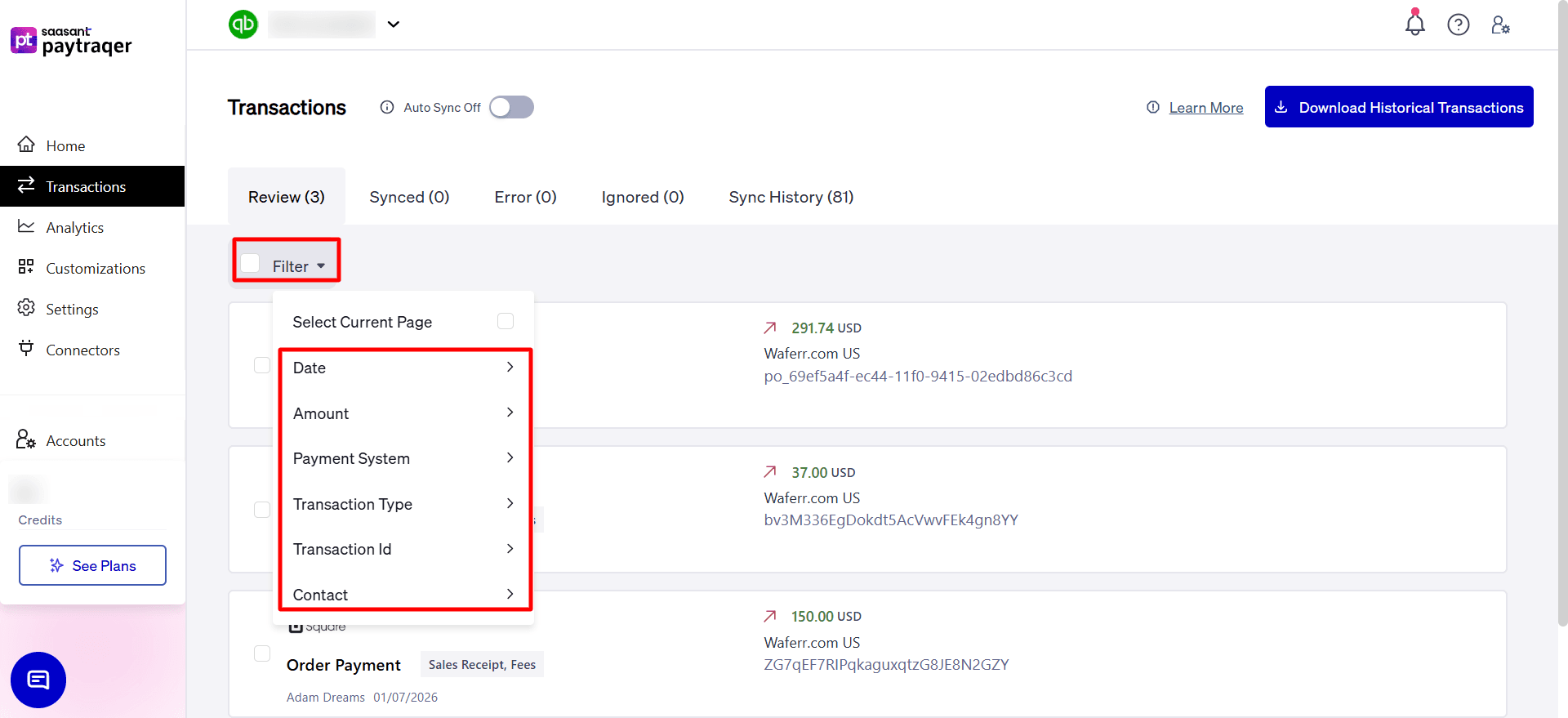
By applying the required filters, you can quickly find the Square transactions you need to review or sync.
This makes it easier to work with only the relevant transactions instead of going through each record manually.
Once you have applied the necessary filters, choose the Square transactions you want to process.
The selected records will be highlighted, and the total number of selected transactions will be visible at the bottom.
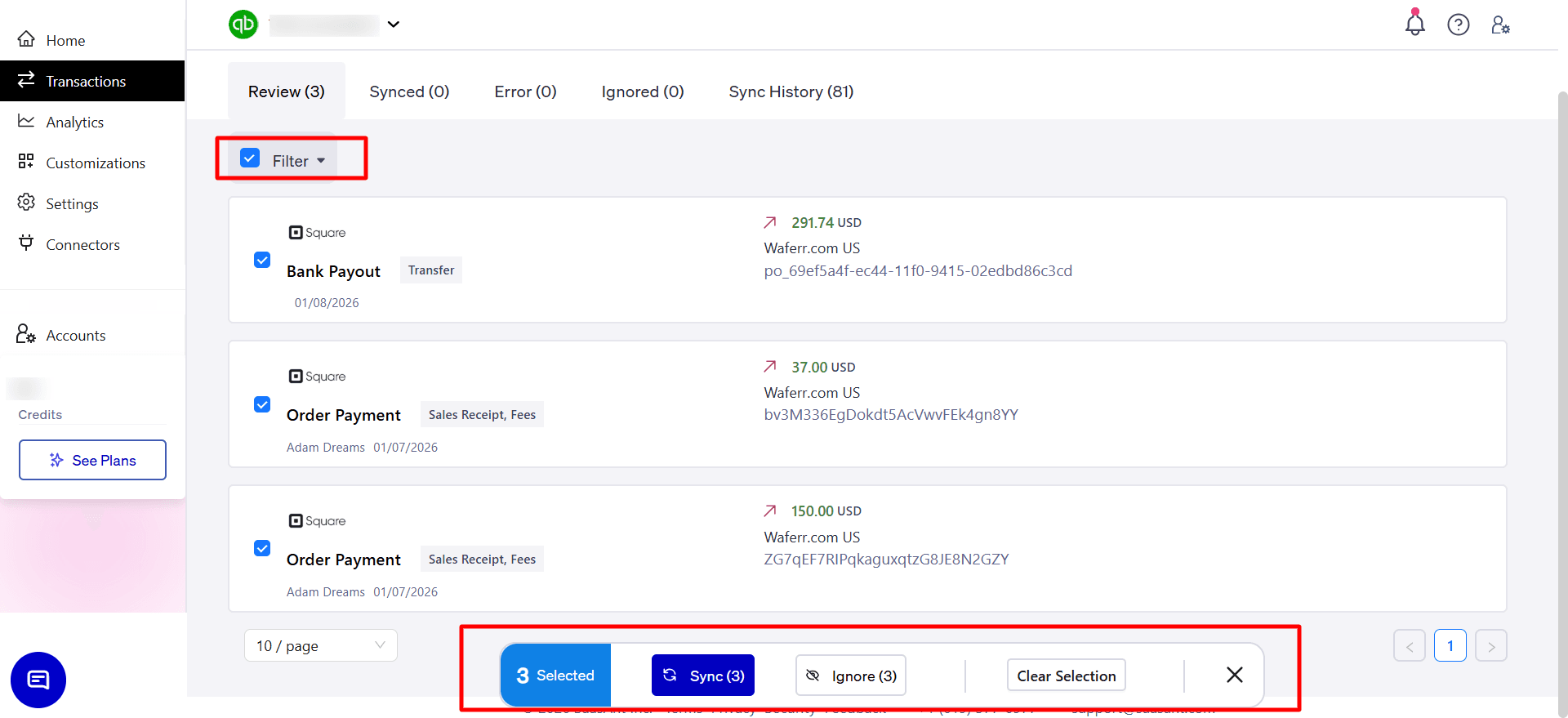
Use Sync to upload all selected Square transactions to QuickBooks Online at once.
Choose Ignore if you do not wish to sync the selected transactions.
Click Clear Selection to discard the selected records and restart if necessary.
This option enables you to manage multiple Square transactions in one go instead of syncing them one at a time.
Step 4: Start the sync review for a Square transaction
To sync the transaction, click on Review & Sync.
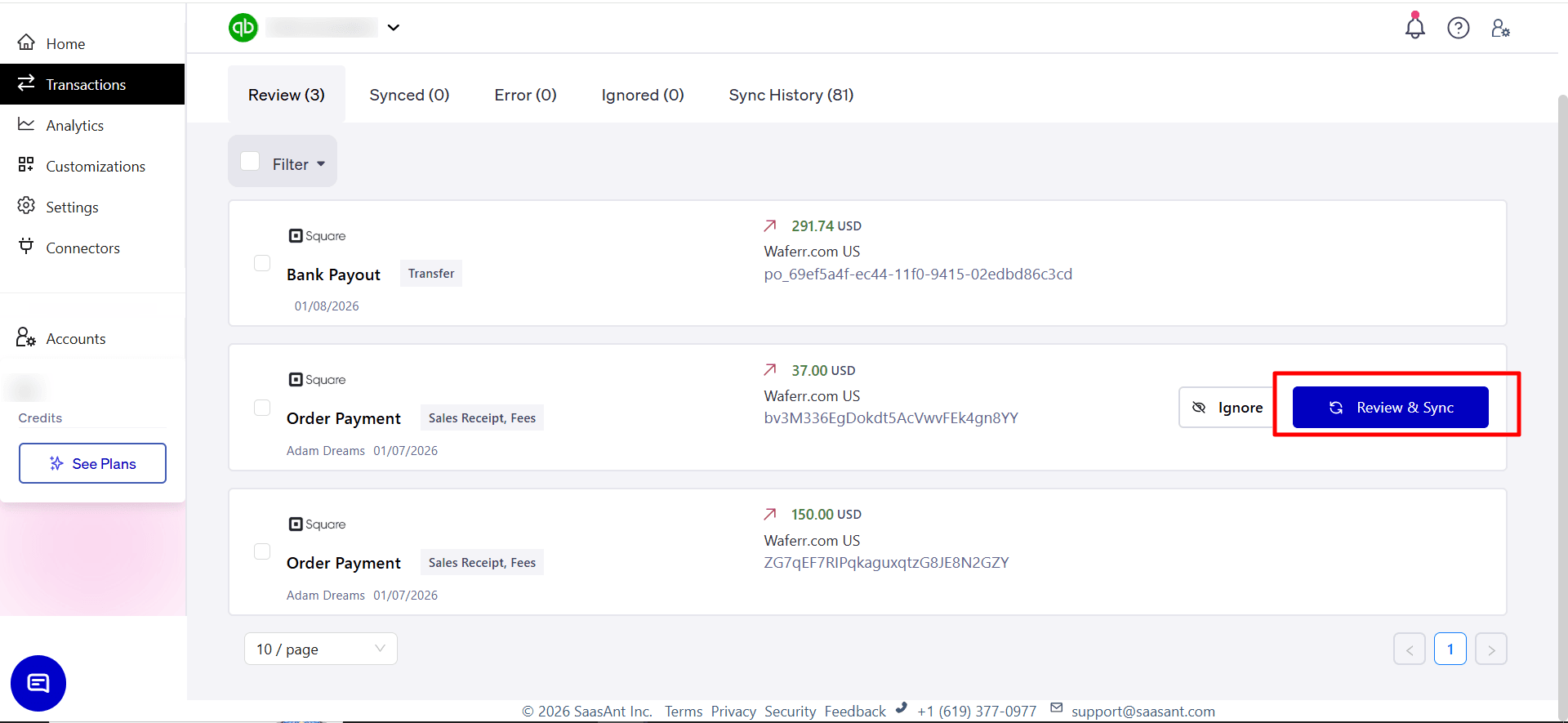
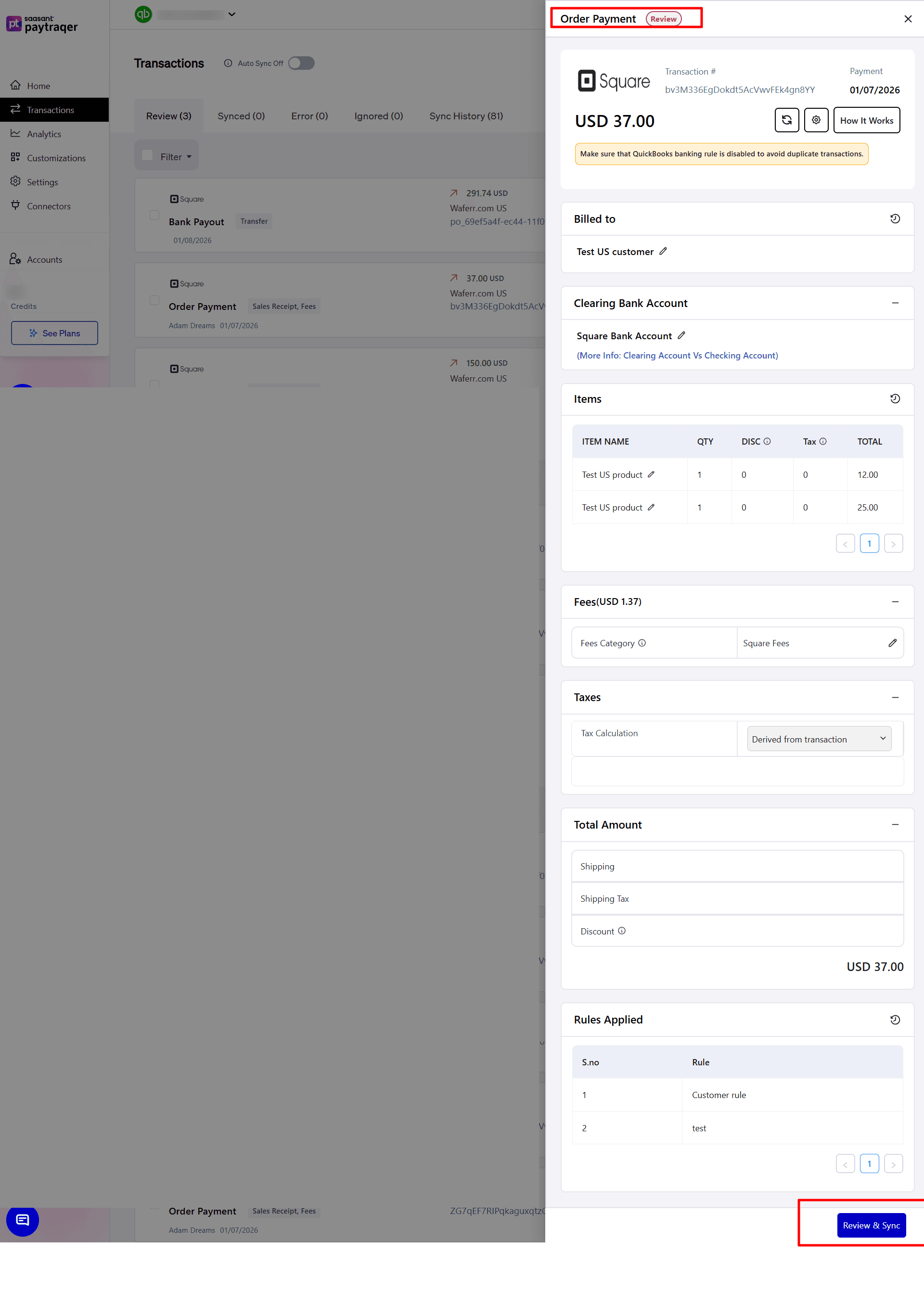
PayTraQer will display the transaction details on the right side of the screen.
In this section, confirm the Square transaction number, date, and amount.
Also, check the QuickBooks transaction type that is mapped for this record.
Ensure you are looking at the right Square payment before proceeding.
Step 5: Confirm the synchronization result
After the sync, check the Synchronization Details window.
Make sure the status shows Successful.
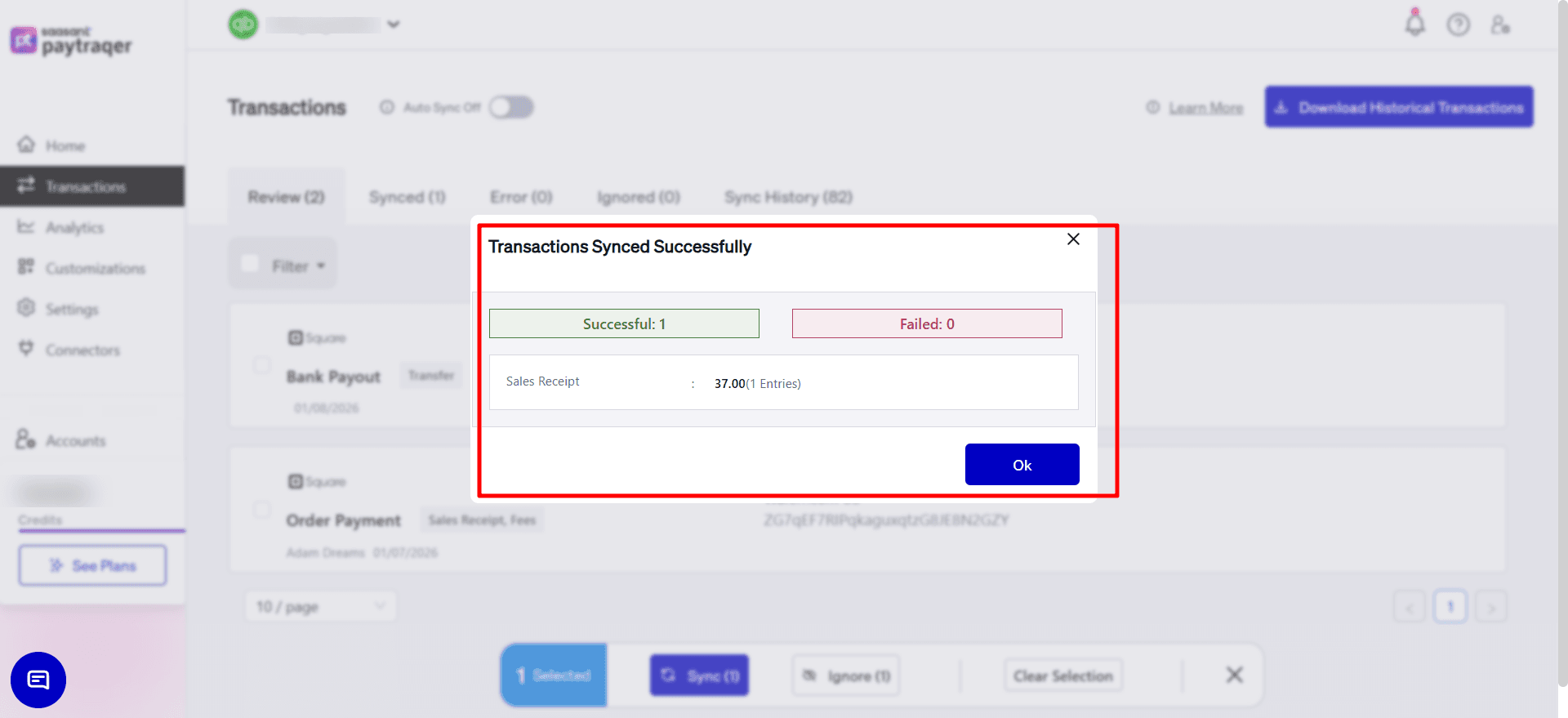
Verify the QuickBooks entries that were created for the transaction.
Step 6: Verify the synced transaction in PayTraQer
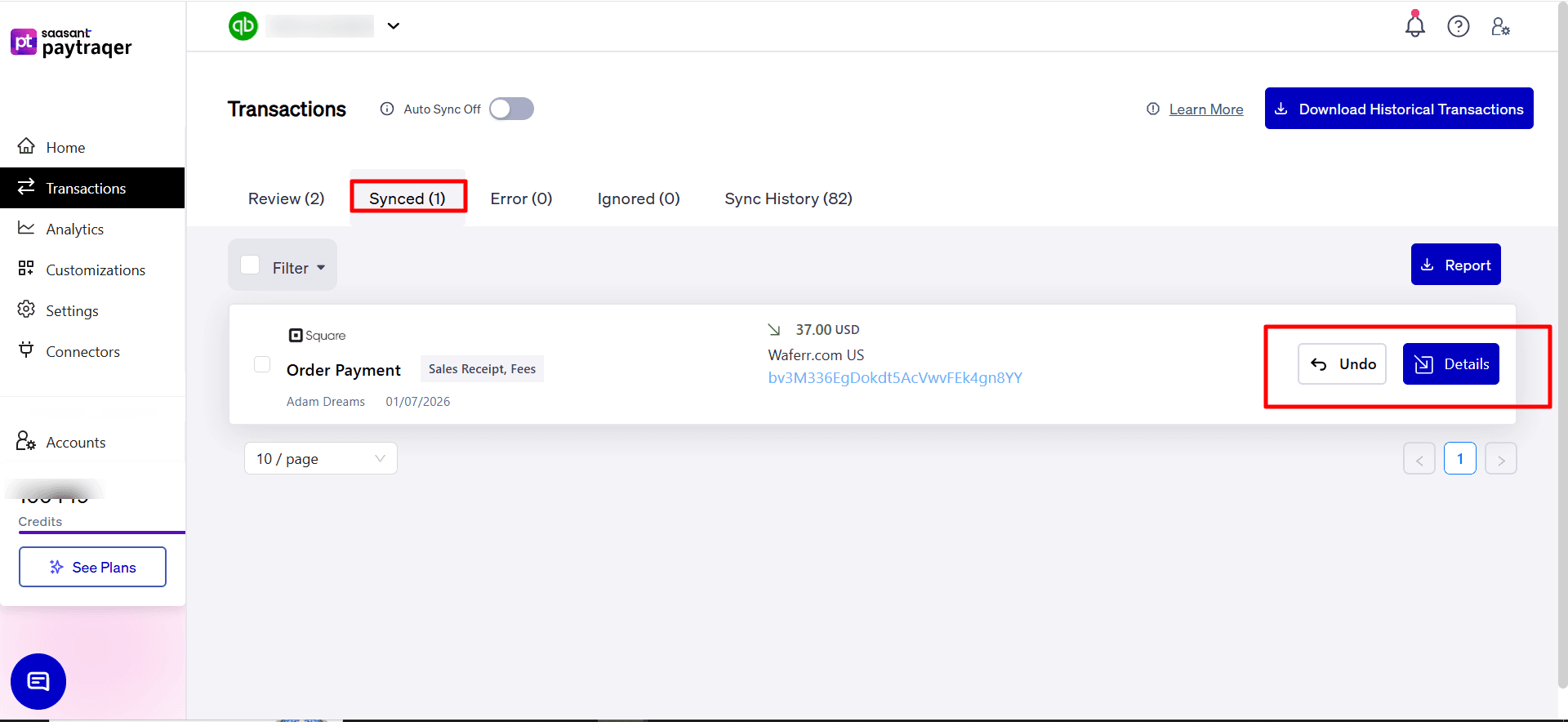
Go to the Synced tab to check the Square transactions that are already in QuickBooks Online.
Select Report if you want to see the sync summary.
If the transaction was mistakenly posted, use Undo to reverse the sync from PayTraQer.
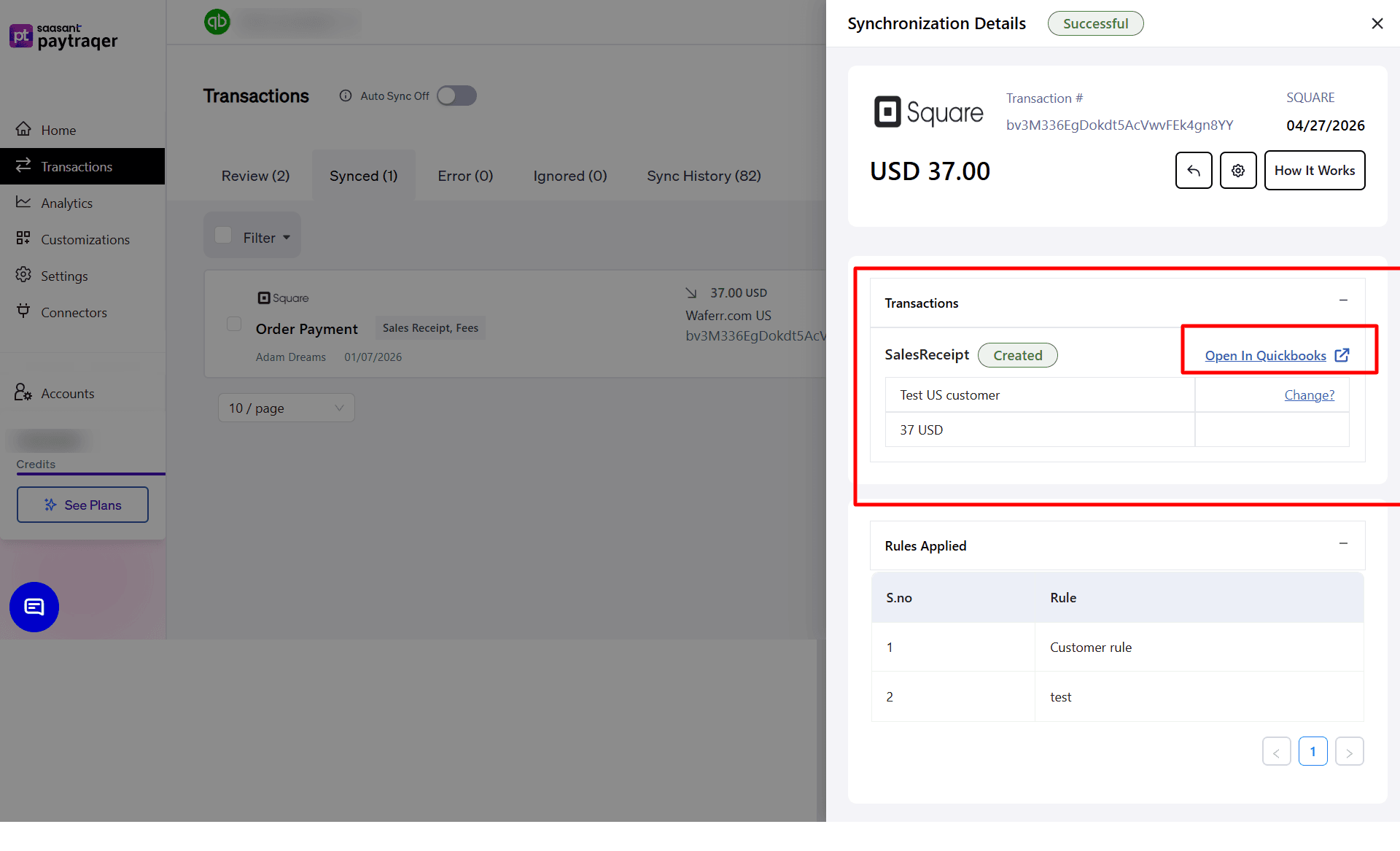
Use Details to review what was generated for the synced record.
Click on Open in QuickBooks check the record directly in QuickBooks Online.
Step 7: Review past sync
Go to the Sync History tab to look at previous Square sync activities.
Look at the sync date, the types of transactions made, and the count of successful or failed records.
This page helps you monitor earlier sync operations and verify what was posted.
If needed, you can use Undo here to reverse a Square transaction that was synced earlier.
Step 8: Open the Square Sync Settings page
In the left menu, select Settings.
Choose Sync Settings from the list of options.
Find the Square connector card on the page.
Click Change Settings to access the Square sync configuration.
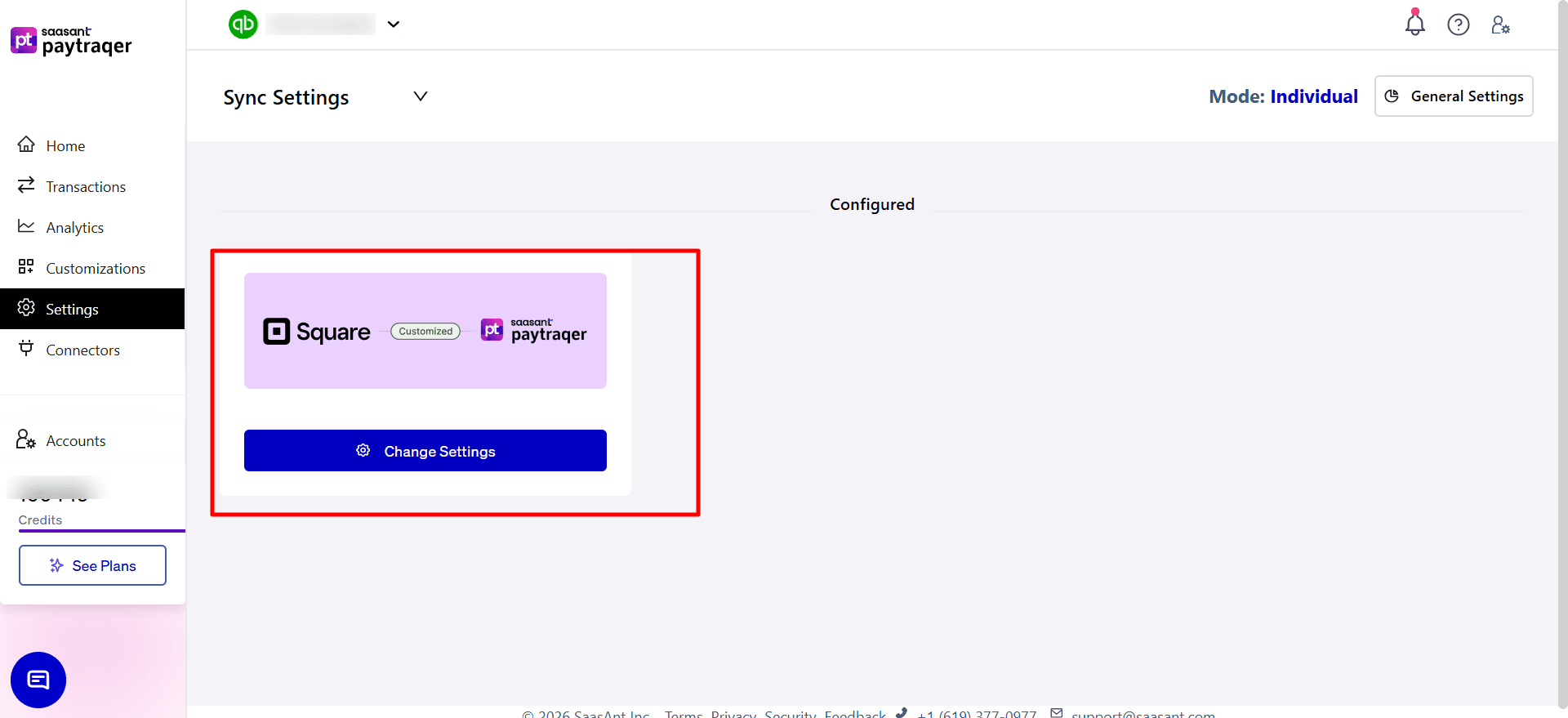
Ensure the Square settings screen is displayed before making any changes.
This page allows you to manage how Square sales, items, customers, taxes, and fees sync with QuickBooks Online.
Step 9: Configure the Sales tab
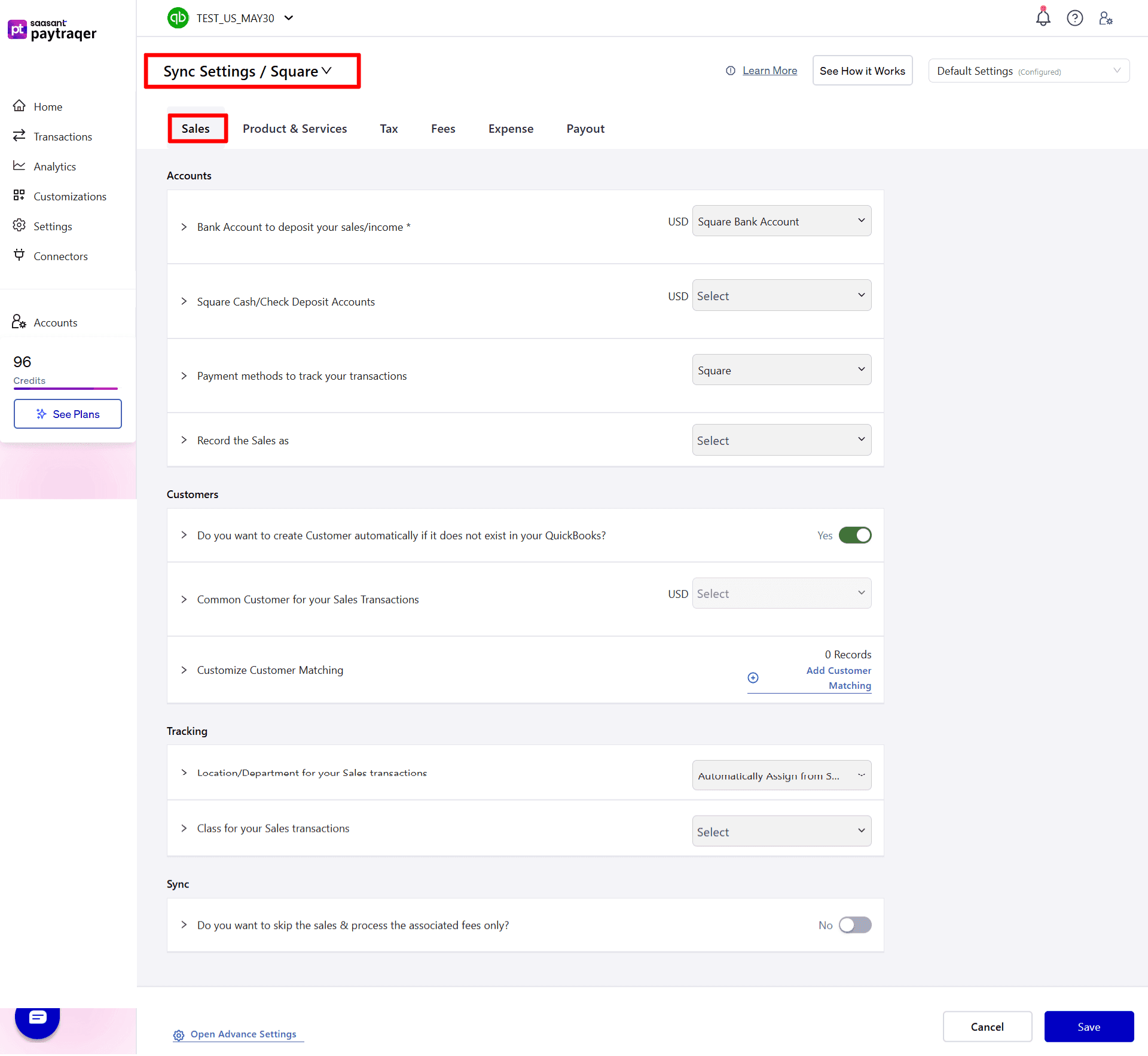
Open the Sales tab in the Square Sync Settings screen.
Under Accounts, choose the Bank Account for depositing your sales or income. This is generally your Square clearing bank account.
Next, select the Square Cash/Check Deposit Accounts option if you wish to choose the bank account for Square Cash or check payments.
If you use multi-currency, make sure you assign a separate clearing account for each currency. Choose the Payment method to track these transactions in QuickBooks.
Choose Record the Sales as per the QuickBooks sales form that fits your workflow the best. Sales Receipts are generally used for POS sales, while Invoices are preferable for bill-then-pay methods.
In the Customers section, decide if PayTraQer should automatically create customers if they don't exist in QuickBooks Online.
If you prefer all sales to go to one customer, select a Common Customer for sales transactions.
Use “Customize Customer Matching” if you want PayTraQer to match Square customers with existing QuickBooks customers based on your chosen matching rule.
In the Tracking section, choose the correct Location or Department if you use locations in QuickBooks.
Select a Class if you want all synced sales to be assigned to a specific class.
In the Sync section, decide if you want to skip the sales and only process the related fees.
Click Save after finishing the Sales tab settings.
Step 11: Configure the Product and Services tab
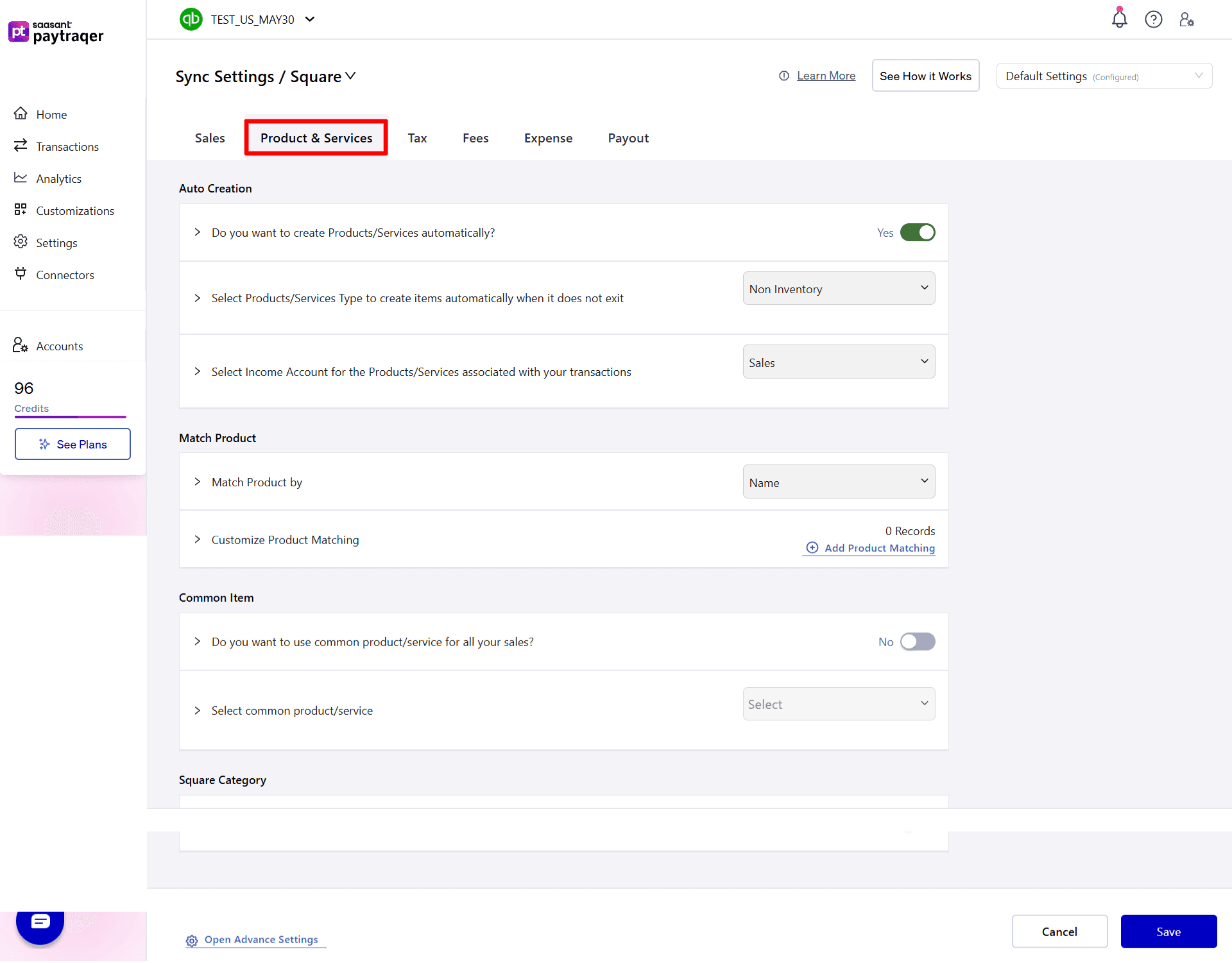
Open the Product & Services tab.
Enable the option to automatically create products or services if the Square item isn't already in QuickBooks Online.
Select the type of product or service that PayTraQer should generate, like Non-Inventory, if it suits your workflow.
Pick the income account that will be associated with the products or services created from Square transactions.
Choose Name or SKU to connect Square items with QuickBooks products. Use SKU when both Square and QuickBooks have stable, consistent SKU values.
Use Customize Product Matching to establish precise matching rules between Square items and QuickBooks products or services.
If you prefer all Square sales to use a common item in QuickBooks Online, enable the common product or service option and choose that item.
Carefully review the product setup to ensure that new and existing Square items sync properly.
Click “Save” once the Product and Services settings are finalized.
Step 12: Configure the Tax tab
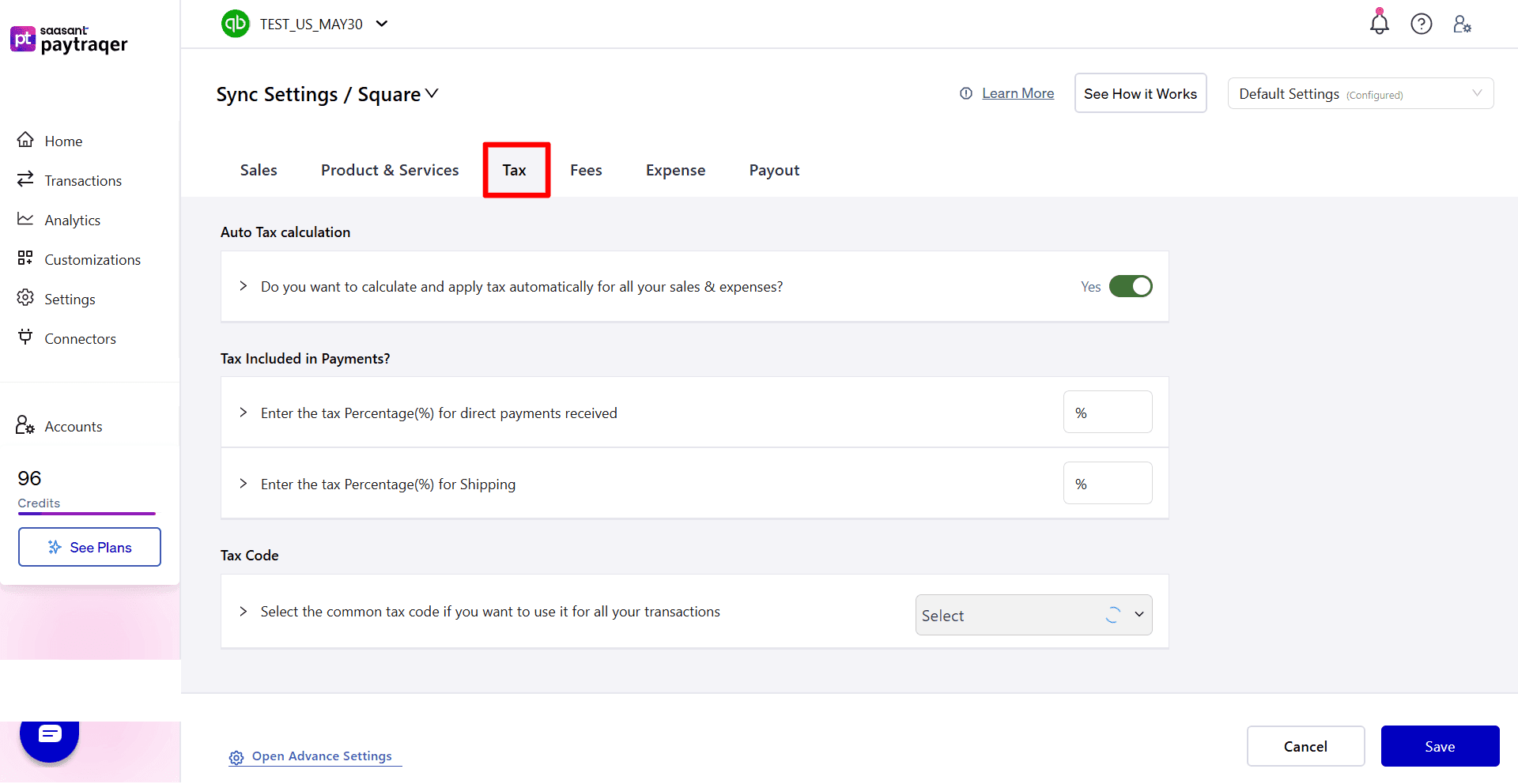
Open the Tax tab.
Turn on the automatic tax calculation and application feature if you want PayTraQer to automatically find and apply tax on synced sales and expenses.
Enter the percentage of tax included in payments if tax is part of the direct payment amounts.
Enter the shipping tax percentage if you want tax to be charged on shipping fees.
Choose a tax code if you want to apply a default tax code for all transactions. Keep in mind that a fixed tax code will override the automatic tax detection.
Make sure the tax code you select here matches the tax setup in QuickBooks Online.
Check the full tax mapping before saving, as incorrect tax settings can affect transaction totals and reporting.
Click “Save” after you finish with the Tax tab.
Step 13: Configure the Fees tab
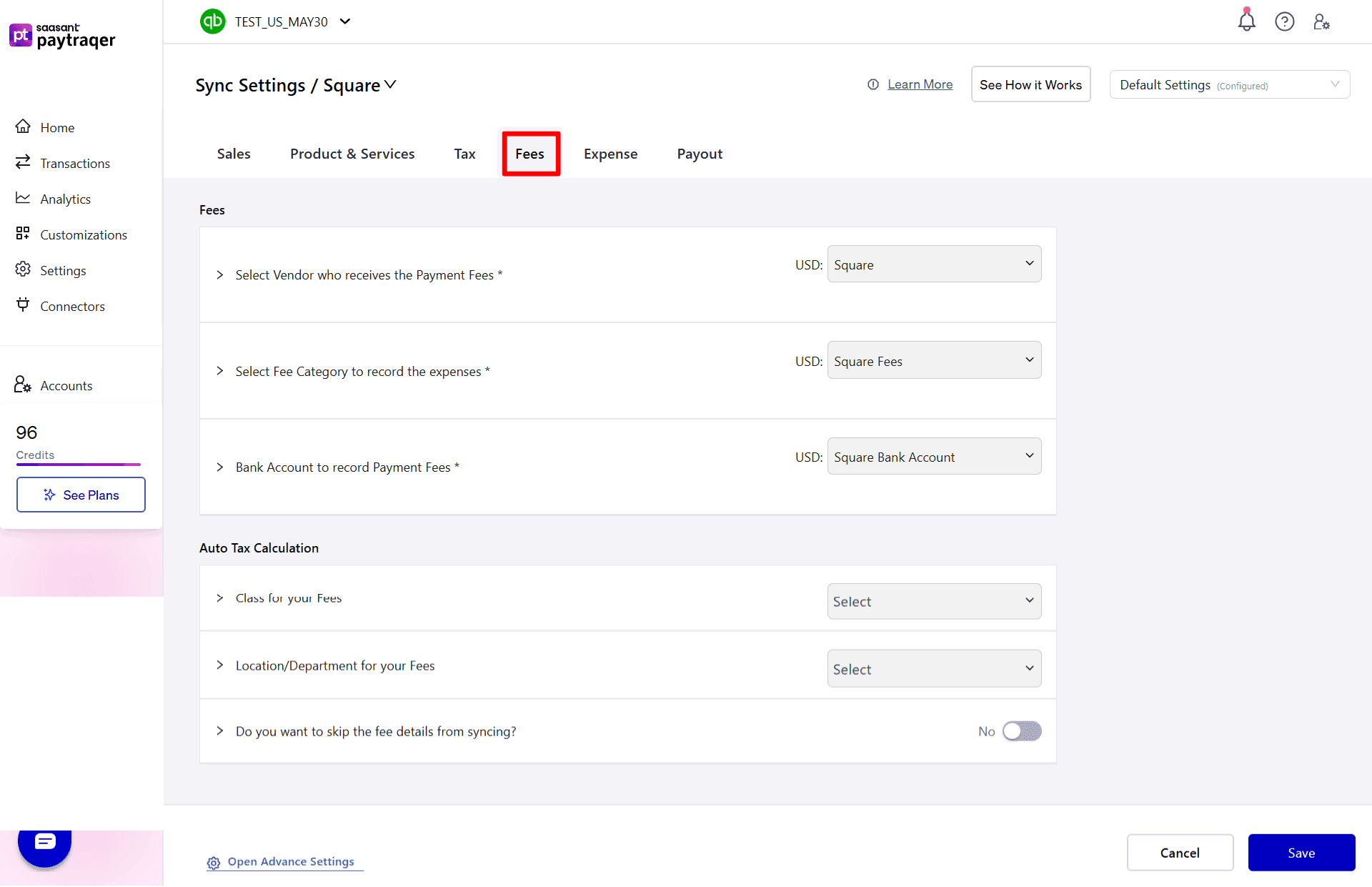
Choose the vendor that will get the Square payment fees, pick the fee category to log those expenses, and specify the bank account for recording the payment fees in QuickBooks.
If you want all synced fee entries to be assigned to one class for reporting, select a class for your fees.
Select a location or department for your fees, or enable the option to skip syncing fee details.
Check the fees tab thoroughly, then click Save.
Step 14: Configure the Expense tab
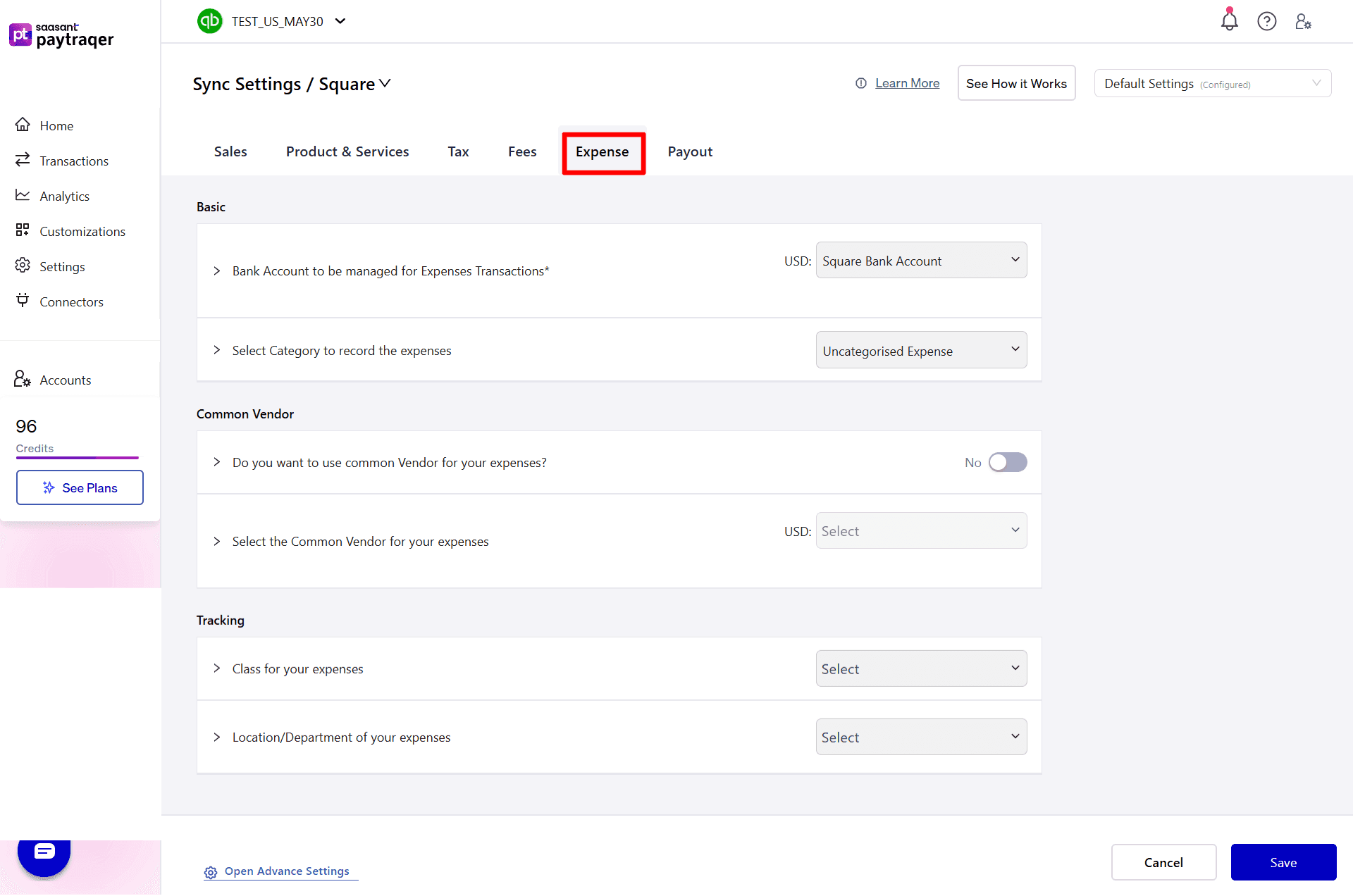
Choose the vendor that gets the payment fees and the category for recording them.
Select the bank account in QuickBooks for recording Square payment fees.
Assign a class and location for the fees, or choose not to sync fee details.
Click “Save” after you finish with the Expense tab.
Step 15: Configure the Payout tab
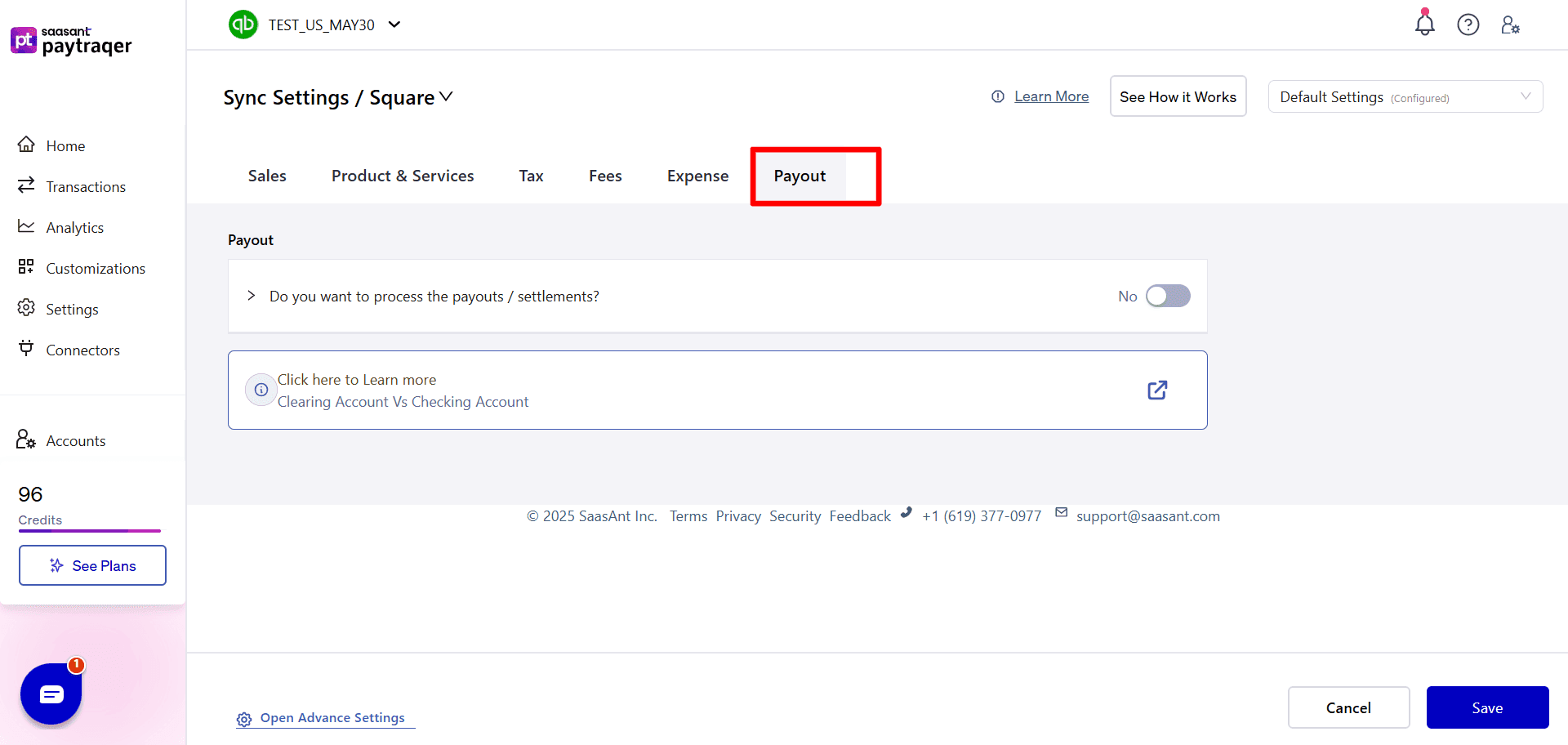
Next, open the Payout tab.
Decide if you want to handle payouts or settlements from Square.
Turn on this option if you want PayTraQer to sync payouts as transfer transactions to your chosen checking account.
Check the payout settings thoroughly, then click Save.
FAQ
1) Where do I connect my Square account in PayTraQer?
Go to the connector area in PayTraQer, select Square, and complete the authorization steps so that PayTraQer can retrieve your Square sales and payout data.
2) What Square data can PayTraQer sync into QuickBooks Online?
PayTraQer can connect Square sales, items, services, tax calculations, processing fees, payouts, customer refunds, and other transaction details to QuickBooks Online.
3) Can I sync individual Square transactions into QuickBooks?
Yes. PayTraQer allows you to sync individual Square transactions with QuickBooks Online, providing line-level detail and enhanced visibility into transactions.
4) Can I sync summarized Square transactions instead of individual ones?
Yes. PayTraQer supports summarized Square syncing, too, so you can choose the method that works best for your reporting and bookkeeping workflow.
5) Where do I open the Square sync settings page?
Go to Settings, select Sync Settings, locate the Square connector card, and click Change Settings to open the complete Square configuration screen.
6) Can I sync multiple Square transactions at the same time?
Yes. Once you choose the transactions you want, use Sync to upload all selected Square transactions to QuickBooks Online at once.
7) What happens if I click Ignore on selected Square transactions?
If you select Ignore, the chosen Square transactions will not be included in the sync process and will be removed from your active review list.
8) Can I undo a synced Square transaction later?
Yes. If a Square transaction was mistakenly posted, you can reverse it by using Undo from the Synced tab or Sync History.
9) Does PayTraQer support multi-currency Square transactions?
Yes. PayTraQer supports transactions in multiple currencies for Square sales and can automatically change them to your base currency for improved syncing with QuickBooks.
10) Can I use PayTraQer if I sell through Square and other channels too?
Yes. PayTraQer works with various payment processors and e-commerce platforms, making it beneficial if Square is just one component of your sales system.